

Table of Contents
ToggleSingle Wheel vs Dual Wheel Deck-Over Trailers: What’s the Difference?
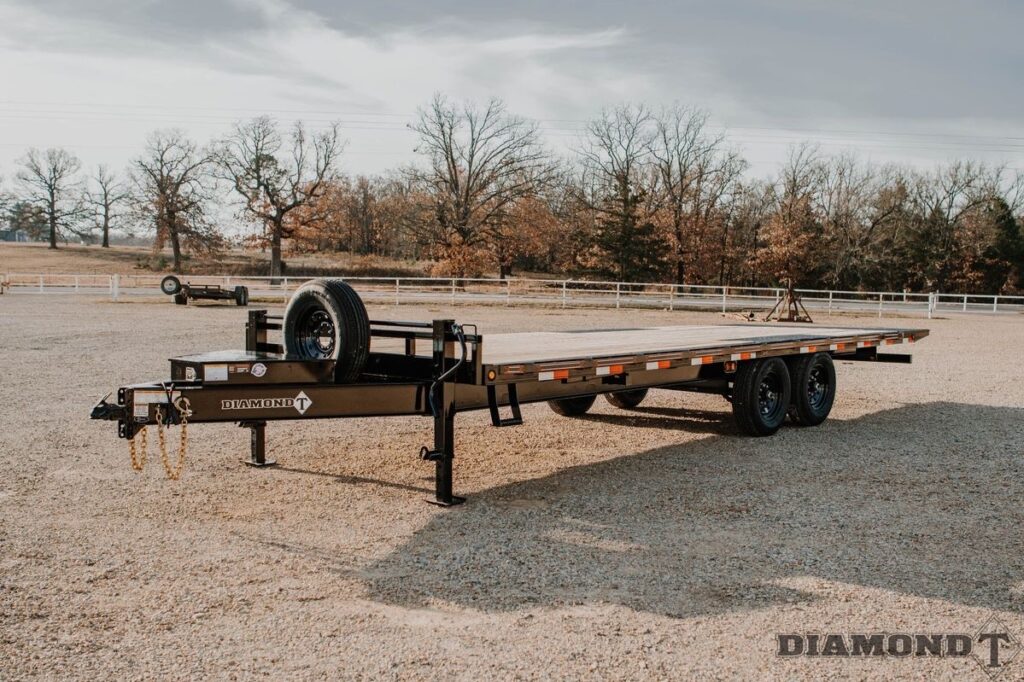
When shopping for a deck-over trailer, one of the decisions you may encounter is whether to choose a single-wheel or dual-wheel configuration.
Both designs can be useful for hauling equipment, vehicles, construction materials, landscaping machinery, and other heavy loads. However, the two configurations can differ in load capacity, stability, tire setup, maintenance, towing characteristics, and intended applications.
Understanding these differences before purchasing can help you choose a trailer that matches the type of work you actually plan to do.
If you’re new to deck-over trailers, start with our Deck-Over Trailer Buying Guide: How to Choose the Best Trailer for Heavy Equipment and Wide Loads. It explains the major factors involved in selecting a deck-over trailer.
Once you understand the basic design, wheel configuration becomes another important consideration.
What Is a Single-Wheel Deck-Over Trailer?
A single-wheel deck-over trailer uses one tire on each side of the axle.
The deck still extends over the wheels, providing a wide loading surface, but the axle assembly uses a single tire arrangement on each side.
Single-wheel configurations can be useful for buyers who want:
- A simpler wheel setup
- Lower tire count
- Easier tire inspection
- Potentially lower maintenance costs
- Good maneuverability
- A trailer suited to lighter or moderate hauling requirements
The exact capacity depends on the trailer’s axles, frame, tires, brakes, suspension, GVWR, and other components.
What Is a Dual-Wheel Deck-Over Trailer?
A dual-wheel deck-over trailer uses two tires on each side of the axle.
This configuration is commonly associated with heavier-duty trailer applications because the additional tire contact points can support higher-rated axle and trailer configurations when designed accordingly.
Dual-wheel deck-over trailers can be useful for:
- Heavy equipment
- Construction machinery
- Large vehicles
- Commercial hauling
- Higher-capacity applications
- Loads where additional wheel and tire support is appropriate
However, simply having more tires does not automatically mean that a particular trailer can carry any specific amount of weight.
Always check the manufacturer’s GVWR, axle ratings, tire ratings, and payload specifications.
Single Wheel vs Dual Wheel: Key Differences
The biggest differences can be summarized as follows:
Feature | Single-Wheel Deck-Over | Dual-Wheel Deck-Over |
|---|---|---|
Tires per side | 1 | 2 |
Typical application | Light to moderate/heavy-duty applications depending on specification | Heavy-duty applications depending on specification |
Tire count | Lower | Higher |
Maintenance | Fewer tires to inspect and maintain | More tires and components to maintain |
Potential capacity | Depends on axle/tire/frame ratings | Often available in higher-capacity configurations |
Maneuverability | Can be easier in some applications | May feel more substantial when heavily loaded |
Operating cost | Potentially lower tire replacement cost | Potentially higher tire-related costs |
Heavy-load suitability | Depends on exact specifications | Often selected for higher-capacity configurations |
The important point is that wheel configuration should be considered together with the trailer’s complete specification.
Does a Dual-Wheel Trailer Carry More Weight?
Not necessarily.
This is one of the most common misconceptions.
A dual-wheel trailer may be built with higher-rated axles, tires, suspension, frame components, and brakes, allowing it to support a higher GVWR. But the wheel configuration itself does not determine the entire trailer’s capacity.
For example, when comparing two trailers, you should examine:
- GVWR
- GAWR
- Axle rating
- Tire load rating
- Empty trailer weight
- Payload
- Frame construction
- Braking system
If you’re specifically researching how much weight your deck-over trailer can handle, How Much Weight Can a Deck-Over Trailer Carry? provides the next important piece of the puzzle.
Why this matters
Imagine two deck-over trailers:
Trailer A
- Single-wheel configuration
- Lower-rated axles
- Lower GVWR
Trailer B
- Dual-wheel configuration
- Higher-rated axles
- Higher GVWR
The difference in capacity comes from the overall engineering and component ratings, not simply from the number of tires.
How Wheel Configuration Affects Stability
Stability is another factor buyers consider when comparing single-wheel and dual-wheel trailers.
A properly configured trailer should provide stable support for its intended load. However, stability is affected by much more than the number of tires.
Important factors include:
- Axle placement
- Trailer width
- Suspension
- Tire ratings
- Load distribution
- Tongue weight
- Cargo height
- Overall trailer design
- Road conditions
A dual-wheel configuration can provide additional tire contact points, but improper loading can still make any trailer difficult or unsafe to tow.
That’s why cargo should always be distributed appropriately across the deck and secured correctly.
Single-Wheel Deck-Over Trailer Advantages
A single-wheel setup can make sense for certain applications.
1. Fewer Tires
There are fewer tires to inspect, maintain, and replace.
For owners who don’t regularly operate at the upper end of trailer capacity, this can simplify routine maintenance.
2. Simpler Configuration
A single-wheel arrangement can be a straightforward setup for buyers whose hauling requirements don’t call for a heavier dual-wheel configuration.
3. Potentially Lower Tire Costs
With fewer tires, replacing a complete set may cost less than replacing the larger number of tires found on a comparable dual-wheel configuration.
Actual costs vary based on tire size, brand, rating, and market prices.
4. Good for General Equipment Hauling
Depending on the specifications, single-wheel deck-over trailers can work well for equipment, landscaping machinery, materials, and other loads that remain within the trailer’s rated capacity.
Dual-Wheel Deck-Over Trailer Advantages
Dual-wheel configurations can provide several benefits for demanding applications.
1. Higher-Capacity Configurations
Dual-wheel deck-over trailers are commonly available in configurations designed for substantial payloads.
However, always verify the actual GVWR and payload rather than assuming capacity from appearance.
2. Additional Tire Support
Having two tires on each side can provide additional contact points between the trailer and road.
This can be useful when operating with substantial loads, provided the trailer is correctly designed and loaded.
3. Heavy-Duty Applications
Dual-wheel configurations are often considered for applications involving:
- Construction machinery
- Large equipment
- Commercial hauling
- Heavy vehicles
- Substantial material loads
4. Redundancy Within the Wheel Setup
With multiple tires supporting an axle, the wheel arrangement provides additional tire contact points. However, a tire failure can still be dangerous, and damaged or underinflated tires should never be ignored.
Which One Is Easier to Maintain?
Maintenance requirements depend on the specific trailer, but the number of tires and wheels naturally affects the amount of equipment that needs inspection.
Maintenance Area | Single Wheel | Dual Wheel |
|---|---|---|
Tires to inspect | Fewer | More |
Wheels to inspect | Fewer | More |
Tire rotation/replacement | Simpler | More involved |
Wheel-bearing service | Depends on axle design | Depends on axle design |
Brake inspection | Depends on configuration | Depends on configuration |
Suspension inspection | Required | Required |
Regardless of wheel configuration, routine inspection should include:
- Tire pressure
- Tire condition
- Lug nuts
- Wheel bearings
- Brakes
- Suspension components
- Lights
- Coupler
- Safety chains
- Frame
- Deck
Single Wheel vs Dual Wheel for Construction Equipment
Construction work often requires transporting equipment that is both heavy and wide.
Examples include:
- Skid steers
- Compact excavators
- Tractors
- Loaders
- Construction attachments
- Generators
- Compressors
For these applications, don’t start by asking whether single wheel or dual wheel is better.
Instead, determine:
1. What does the equipment weigh?
2. How wide is it?
3. How long is it?
4. What is the trailer’s payload?
5. What is the trailer’s GVWR?
6. What can the tow vehicle safely handle?
For equipment sizing, What Size Deck-Over Trailer Do You Need? A Complete Guide can help you match your cargo dimensions with the appropriate trailer size.
Single Wheel vs Dual Wheel for Landscaping
Landscaping businesses may haul equipment such as:
- Zero-turn mowers
- Compact tractors
- Skid steers
- Aerators
- Tillers
- Landscaping materials
- Small construction equipment
For lighter equipment, a properly rated single-wheel trailer may meet the requirements.
For heavier combinations or commercial equipment, a dual-wheel configuration may be available with the capacity required.
The key is to calculate the total loaded weight, rather than selecting based only on the type of equipment.
What About Towing?
Wheel configuration can influence how a trailer feels behind a tow vehicle, but towing performance depends on the complete combination.
Consider:
- Trailer weight
- Cargo weight
- GVWR
- Axle configuration
- Tire pressure
- Suspension
- Hitch type
- Tow vehicle
- Road conditions
- Load distribution
A larger dual-wheel trailer may require a more capable towing vehicle than a smaller single-wheel trailer.
Before buying, make sure the tow vehicle is rated for the actual loaded trailer, not just the empty trailer.
Tire Maintenance Is Especially Important
Regardless of whether you choose single or dual wheels, tires are critical safety components.
Before every major trip, inspect:
Tire Pressure
Use the pressure recommended for the tire and trailer configuration.
Tire Condition
Look for:
- Cuts
- Cracks
- Bulges
- Uneven wear
- Objects embedded in the tread
Tire Age
Trailer tires can deteriorate over time even when they don’t appear heavily worn.
Load Rating
Never exceed the tire’s rated capacity.
For a dual-wheel trailer, remember that having more tires doesn’t mean you can exceed the manufacturer’s trailer, axle, or tire ratings.
How Cargo Loading Changes the Equation
A properly rated trailer can still behave poorly when loaded incorrectly.
Heavy cargo should be positioned according to the trailer manufacturer’s recommendations.
Avoid:
- Concentrating excessive weight at the rear
- Overloading one side
- Exceeding axle ratings
- Exceeding GVWR
- Exceeding tire ratings
- Allowing cargo to move during transportation
Your cargo should also be secured using appropriate tie-down equipment.
If you are deciding whether a deck-over trailer fits your intended application, What Are Deck-Over Trailers Used For? is another useful supporting article in this cluster.
Which Configuration Should You Consider?
Instead of choosing solely based on the number of tires, use your workload as the starting point.
Your Hauling Requirement | Factors to Prioritize |
|---|---|
Small equipment | Trailer size, payload, towing requirements |
Landscaping equipment | Deck space, payload, maneuverability |
Skid steer | Width, weight, GVWR, ramps |
Compact tractor | Weight, dimensions, axle ratings |
Heavy construction equipment | GVWR, payload, axles, brakes, tow vehicle |
Commercial hauling | Durability, capacity, maintenance, workload |
Wide loads | Deck width and legal requirements |
This approach helps you choose based on actual requirements rather than appearance.
8 Questions to Ask Before Buying
Before choosing a single-wheel or dual-wheel deck-over trailer, ask:
1. What is the heaviest load I will carry?
This determines the minimum capacity you need.
2. What is my equipment’s width?
A deck-over trailer’s wide deck can be especially useful for wide machinery.
3. What is my equipment’s length?
Make sure there is enough usable deck space.
4. What is the trailer’s GVWR?
Never assume capacity from the wheel configuration.
5. What is the axle rating?
The axles must be appropriate for the trailer’s intended load.
6. What are the tire load ratings?
The tires must be properly rated for the trailer configuration.
7. What can my truck tow?
Your truck must be capable of handling the loaded combination.
8. What will I haul in the future?
Buying based only on today’s workload can leave you with insufficient capacity later.
Single Wheel or Dual Wheel: A Practical Decision Guide
Consider a single-wheel deck-over trailer when your hauling requirements fit within a properly rated configuration and you value a simpler tire and wheel setup.
Consider a dual-wheel deck-over trailer when your application calls for a configuration designed around higher-capacity hauling, additional tire support, or demanding commercial workloads.
But remember:
Wheel configuration is only one part of the trailer specification.
The final decision should be based on the complete combination of GVWR, payload, axles, tires, brakes, frame, dimensions, and tow vehicle compatibility.
Shop Deck-Over Trailers
Once you know the size, capacity, and wheel configuration that fits your hauling requirements, you can compare available models in the Deck-Over Trailers category.
Look at each trailer’s specifications carefully, especially:
- Deck dimensions
- GVWR
- Payload
- Axle configuration
- Wheel configuration
- Tire size and rating
- Brake system
- Coupler
- Suspension
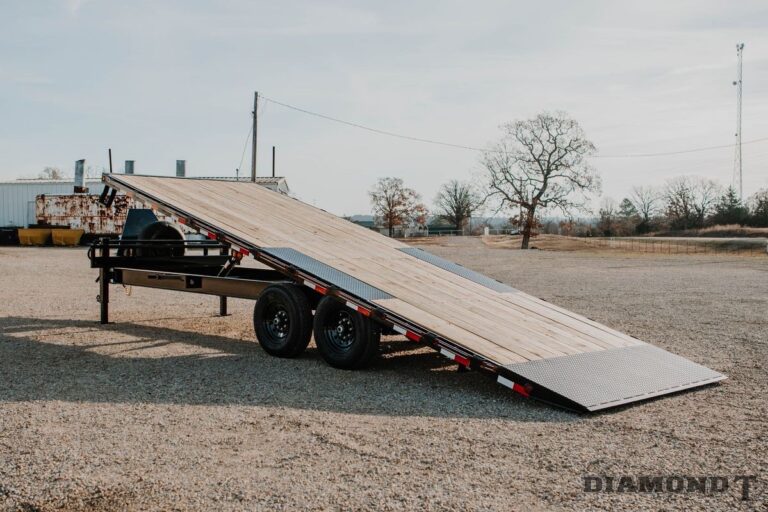
- Ramp configuration
- Overall trailer weight
This makes it easier to compare trailers based on actual specifications rather than simply choosing the one that looks the most heavy-duty.
Final Thoughts
The choice between single-wheel and dual-wheel deck-over trailers ultimately comes down to the type of work you need the trailer to perform.
A single-wheel configuration can provide a simpler setup for applications that fall comfortably within its rated capacity. A dual-wheel configuration may be appropriate for applications requiring a trailer designed around greater load requirements and additional tire support.
However, more tires do not automatically mean a trailer is better or capable of carrying any particular load.
Always look at the complete specification: GVWR, payload, axle ratings, tire ratings, brakes, suspension, trailer weight, deck dimensions, and your tow vehicle’s capabilities.
For buyers who are still comparing trailer sizes, What Size Deck-Over Trailer Do You Need? A Complete Guide should be your next reference. And for a broader understanding of the category, Deck-Over Trailer Buying Guide: How to Choose the Best Trailer for Heavy Equipment and Wide Loads provides the foundation for evaluating your options.
When you’re ready to see available models, Deck-Over Trailers takes you directly to the relevant product category.
Choose the wheel configuration based on your actual hauling requirements, not simply the number of tires. The right combination of capacity, dimensions, axle ratings, and towing compatibility is what makes a deck-over trailer suitable for the job.
For other hauling requirements, explore our Utility Trailers, Deck-Over Trailers, Lowdeck Trailers, Enclosed Cargo Trailers, Horse Trailers & Stock Trailers, and Accessories.
For safe towing and loading practices, visit the NHTSA trailer safety guidelines.
