
Table of Contents
ToggleDeck-Over Trailer Buying Guide: How to Choose the Best Trailer for Heavy Equipment and Wide Loads
If you need to transport heavy equipment or oversized loads, this deck-over trailer buying guide will help you choose the right trailer for maximum performance and safety.
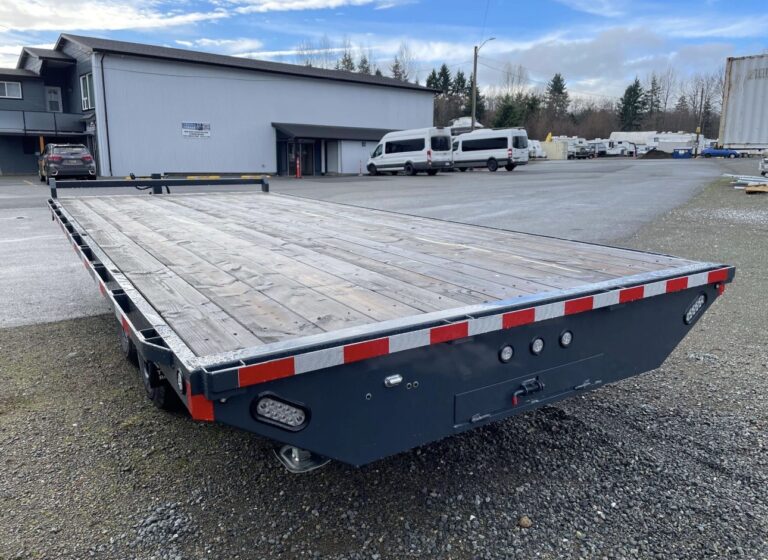
Unlike standard trailers, Deck-Over Trailers feature a full-width deck positioned above the wheels. This design allows for wider loads and higher weight capacity, making them ideal for commercial and industrial use.
If you’re still comparing trailer types, don’t miss our complete Trailer Buying Guide for a full overview.
What Is a Deck-Over Trailer?
A deck-over trailer is designed with the deck sitting above the wheels instead of between them. This creates a wider, unobstructed loading surface.
These trailers are commonly used for:
Heavy machinery
Construction equipment
Palletized loads
Large materials
Explore available Deck-Over Trailers to compare sizes and configurations.
Why Choose a Deck-Over Trailer?
1. Maximum Width for Oversized Loads
Because the deck sits above the wheels, you get full-width loading capability—perfect for wide equipment.
2. Higher Weight Capacity
Deck-over trailers are built for heavy-duty use, often supporting more weight than Utility Trailers or light-duty trailers.
3. Ideal for Commercial Use
Contractors, construction companies, and logistics businesses rely on deck-over trailers for transporting large loads efficiently.
4. Versatility in Hauling
They can handle everything from machinery to bulk materials, making them a flexible solution for demanding jobs.
Key Features to Consider Before Buying
Weight Capacity (GVWR)
Always choose a trailer that exceeds your expected load. Deck-over trailers are built for heavy-duty hauling, but capacity varies by model.
For extreme loads, some buyers also compare with Lowdeck Trailers, which offer a lower center of gravity.
Axle Configuration
Most deck-over trailers use tandem or triple axles for:
Better weight distribution
Increased durability
Improved road stability
Gooseneck vs Bumper Pull
Gooseneck: higher capacity, better balance
Bumper pull: easier to tow, more common
Deck Material
Wood decks → traditional and durable
Steel decks → stronger but heavier
Loading Options
Look for:
Heavy-duty ramps
Fold-down sides
Hydraulic tilt systems (on some models)
Essential Accessories for Deck-Over Trailers
Enhance performance with Accessories:
Heavy-duty tie-down chains
Winches
Toolboxes
Spare tires
These accessories improve safety and efficiency on the job.
How to Choose the Right Deck-Over Trailer
Your choice depends on your workload:
Medium equipment → standard deck-over
Heavy machinery → gooseneck deck-over
Frequent hauling → reinforced heavy-duty models
For dumping materials like gravel or debris, you may also need Dump Trailers (see our full Dump Trailer Buying Guide).
For enclosed and protected transport, consider pairing with Enclosed Cargo Trailers (learn more in our Enclosed Cargo Trailer Buying Guide).
Common Mistakes to Avoid
Choosing insufficient weight capacity
Ignoring axle configuration
Not securing loads properly
Overlooking towing compatibility
Avoiding these mistakes ensures better safety and long-term performance.
Deck-Over vs Other Trailer Types
Utility trailers: lighter, everyday use → see Utility Trailer Buying Guide
Dump trailers: material unloading → see Dump Trailer Buying Guide
Enclosed trailers: protected transport → see Enclosed Cargo Trailer Buying Guide
For a full comparison, revisit the Trailer Buying Guide.
Why Deck-Over Trailers Are a Smart Investment
Deck-over trailers offer:
Maximum hauling capacity
Flexibility for oversized loads
Long-term durability
High commercial value
They are essential for serious hauling operations.
Conclusion
This deck-over trailer buying guide shows why these trailers are the best choice for heavy-duty and oversized hauling. By focusing on capacity, configuration, and features, you can choose a trailer that meets your exact needs.
For cargo safety and load securement, review the FMCSA cargo securement rules.
