
Table of Contents
ToggleWhat Are Deck-Over Trailers Used For? A Complete Guide
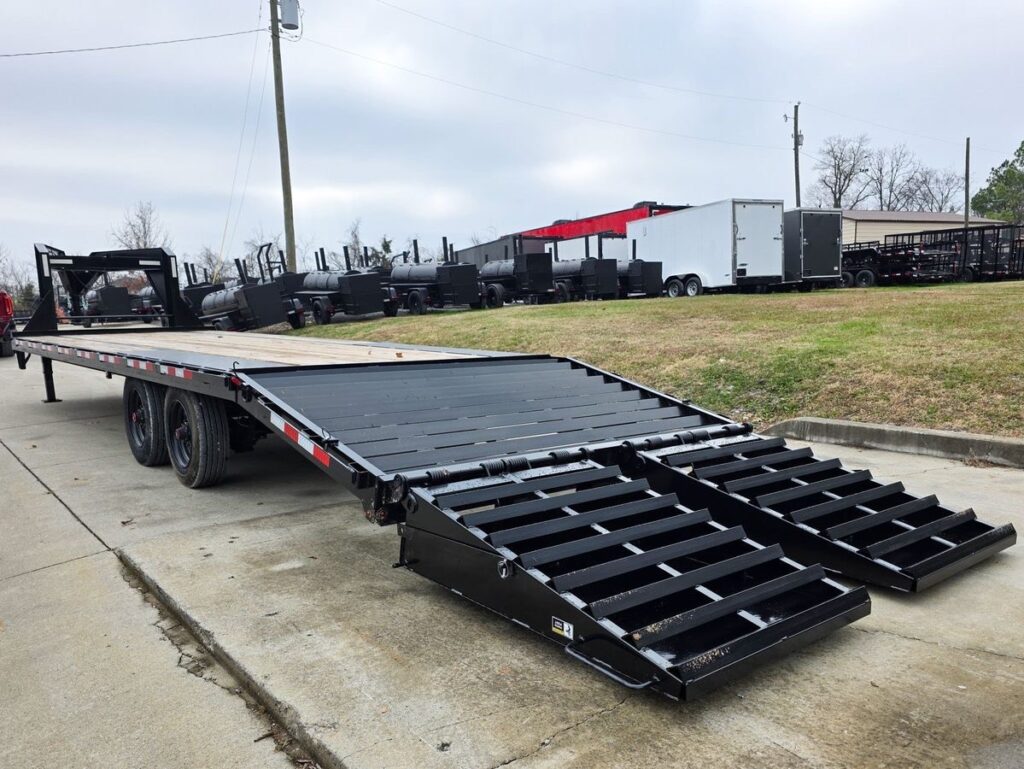
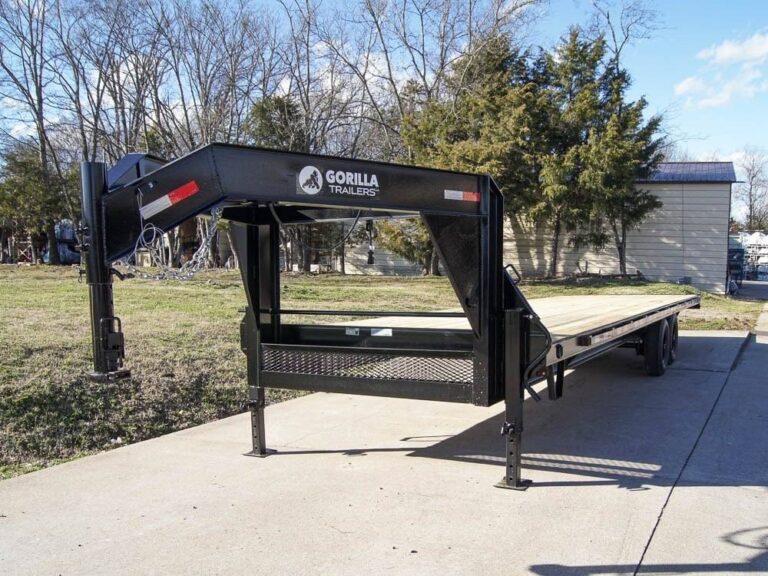
Deck-over trailers are designed for hauling loads that benefit from a wide, unobstructed deck, making them particularly useful for equipment, machinery, vehicles, materials, and other large cargo.
Unlike many conventional trailers that have fenders extending around the wheels, a deck-over trailer places the deck over the wheels. This creates more usable deck width and can make loading wide equipment much easier.
But what exactly are deck-over trailers used for?
They are commonly used by contractors, landscapers, farmers, equipment operators, businesses, and individualswho need to transport equipment or cargo that may be too wide, long, or bulky for a conventional trailer.
If you’re considering purchasing one, our Deck-Over Trailer Buying Guide: How to Choose the Best Trailer for Heavy Equipment and Wide Loads provides a complete overview of what to consider before buying.
In this guide, we’ll look at the most common applications, the types of loads deck-over trailers can handle, and what to consider when deciding whether one is right for your work.
What Is a Deck-Over Trailer?
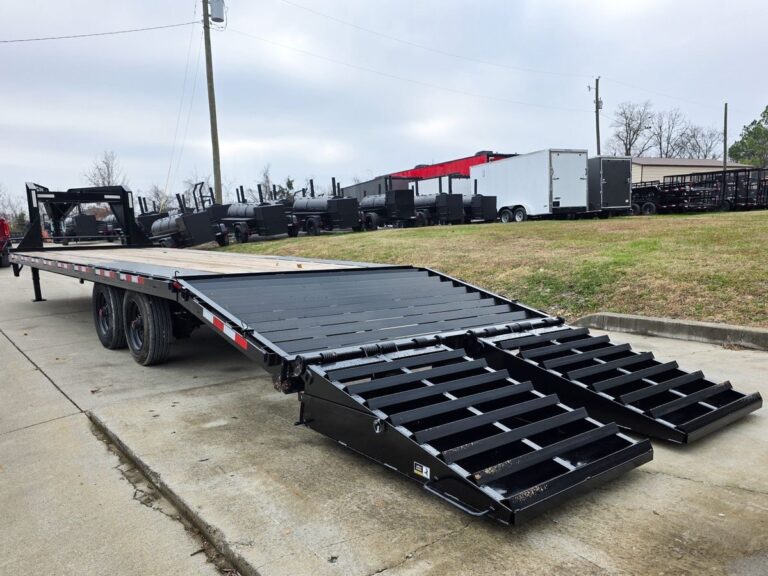
A deck-over trailer is a trailer where the main deck sits above and over the wheels rather than between wheel wells.
This design creates a relatively wide, flat loading surface.
The additional usable width can be particularly valuable when hauling equipment such as:
- Skid steers
- Compact tractors
- Excavators
- Zero-turn mowers
- Vehicles
- Construction equipment
- Agricultural equipment
- Building materials
- Palletized cargo
- Large machinery
The exact dimensions and capacity vary by trailer model, so buyers should always check the manufacturer’s specifications.
For a basic introduction to the design itself, What Is a Deck-Over Trailer? Everything You Need to Know explains the construction, benefits, and characteristics of this type of trailer.
Why Are Deck-Over Trailers So Useful?
The biggest advantage is the usable deck space.
With no large fenders occupying the sides of the loading area, the trailer can provide a wide platform that makes it easier to position certain types of cargo.
This can be especially helpful when your equipment is:
- Wide
- Heavy
- Long
- Difficult to maneuver
- Equipped with wide tires or attachments
A deck-over trailer can therefore be a practical choice when conventional trailer dimensions become restrictive.
1. Hauling Construction Equipment
One of the most common uses for deck-over trailers is transporting construction equipment.
Contractors and equipment operators may use them to transport:
- Skid steers
- Compact excavators
- Mini excavators
- Tractors
- Loaders
- Generators
- Compressors
- Construction attachments
Construction equipment can be both heavy and wide, which makes the open deck of a deck-over trailer particularly useful.
Before loading equipment, however, you must verify the trailer’s GVWR, payload, axle ratings, tire ratings, and braking system.
Never assume that a large deck automatically means the trailer can carry a heavy machine.
2. Transporting Skid Steers
Skid steers are another common example.
A skid steer can be relatively compact while still being heavy and wide. Its tires or tracks and attachments also need to fit properly on the trailer.
When choosing a deck-over trailer for a skid steer, consider:
- Operating weight
- Width
- Length
- Bucket or attachment
- Trailer payload
- GVWR
- Ramp capacity
- Tow vehicle capacity
A trailer should provide enough room for the equipment while remaining within its rated capacity.
3. Hauling Tractors and Agricultural Equipment
Farmers and agricultural businesses often need to move equipment between properties, fields, storage facilities, and job locations.
Depending on the trailer’s specifications, deck-over trailers can be used for equipment such as:
- Compact tractors
- Utility tractors
- Small implements
- Mowers
- Tillers
- Agricultural attachments
- Other farm machinery
The key consideration is the actual weight and dimensions of the equipment.
A tractor with an attachment may have considerably different dimensions from the tractor alone.
4. Moving Landscaping Equipment
Landscaping businesses frequently need to transport several pieces of equipment at the same time.
Examples include:
- Zero-turn mowers
- Riding mowers
- Walk-behind mowers
- Compact tractors
- Aerators
- Tillers
- Sod equipment
- Landscaping materials
A deck-over trailer can provide an open platform that makes arranging multiple pieces of equipment easier.
For landscaping businesses, choosing the right deck length is particularly important because the trailer needs to accommodate the combined footprint of the equipment.
5. Hauling Vehicles
Deck-over trailers can also be used to transport certain vehicles, depending on the trailer’s dimensions and weight ratings.
Potential applications include:
- Cars
- Trucks
- ATVs
- UTVs
- Small utility vehicles
- Other wheeled equipment
When hauling a vehicle, measure the vehicle’s:
Length + width + height + weight
Don’t forget to consider accessories such as:
- Mirrors
- Toolboxes
- Spare tires
- Racks
- Attachments
- Oversized wheels or tires
The vehicle must fit within the trailer’s usable dimensions and remain within all applicable weight ratings.
6. Transporting Wide Loads
This is where deck-over trailers can have a significant advantage.
The deck-over design provides a wide loading platform without conventional fenders taking up as much usable deck space.
This can make them suitable for certain wide equipment and cargo.
Examples can include:
- Construction machinery
- Agricultural equipment
- Large landscaping equipment
- Industrial equipment
- Palletized materials
- Machinery components
However, a wide deck does not automatically make every wide load legal to transport on public roads.
Depending on the cargo and jurisdiction, additional requirements may apply.
Always verify applicable width, weight, lighting, marking, and securement requirements before transporting an oversized load.
7. Hauling Building Materials
Deck-over trailers can also be useful for transporting construction and building materials.
Examples include:
- Lumber
- Roofing materials
- Pipes
- Steel
- Concrete-related materials
- Building supplies
- Pallets
- Machinery components
The open deck allows materials to be loaded using appropriate equipment and secured for transportation.
For long materials, trailer length becomes especially important.
For heavy materials, payload and axle ratings become the priority.
8. Moving Palletized Cargo
Businesses can also use deck-over trailers for palletized goods.
A wide, flat deck can make it easier to position pallets using suitable loading equipment.
Possible cargo includes:
- Machinery parts
- Building supplies
- Agricultural products
- Industrial materials
- Landscaping supplies
- Commercial equipment
Before loading pallets, consider the weight distribution.
Several heavy pallets concentrated in one area can create excessive loading on an axle or section of the trailer.
9. Equipment Rental and Delivery
Equipment rental companies and contractors may use deck-over trailers to move machinery between locations.
For example, a contractor may need to transport a compact excavator from one job site to another.
A deck-over trailer can provide:
- Open loading access
- Wide deck space
- Ramp compatibility
- Equipment tie-down points
- Configurations suitable for heavier loads
The specific trailer must still be selected based on the equipment being transported.
10. Commercial and Business Hauling
Deck-over trailers can be useful for businesses that regularly transport equipment and materials.
Potential users include:
- Construction companies
- Landscaping businesses
- Agricultural operations
- Equipment rental companies
- Contractors
- Property maintenance companies
- Equipment dealers
For commercial users, reliability and capacity become particularly important because the trailer may be used frequently.
A trailer that is suitable for occasional personal use may not necessarily be the right configuration for daily commercial hauling.
What Can You Haul on a Deck-Over Trailer?
Here’s a practical overview:
Cargo Type | Why a Deck-Over Can Be Useful |
|---|---|
Skid steers | Wide, open deck |
Compact tractors | Space for equipment and attachments |
Excavators | Open loading area |
Zero-turn mowers | Easy positioning |
Vehicles | Wide platform |
Construction materials | Flat loading surface |
Agricultural equipment | Useful deck width |
Palletized cargo | Open loading area |
Machinery | Configurations available for substantial loads |
Landscaping equipment | Flexible deck space |
The important limitation is that not every deck-over trailer can haul every item listed above.
Always match the cargo’s weight and dimensions with the specific trailer’s ratings.
Deck Length Matters
Your intended use should influence the length you choose.
A contractor who only transports a compact skid steer may have different requirements from a business transporting several machines.
Consider:
- Cargo length
- Cargo width
- Cargo weight
- Number of items
- Attachment dimensions
- Loading method
- Available storage space
A longer trailer can provide additional flexibility, but it also adds trailer weight and overall length.
That’s why you should choose based on your actual hauling requirements rather than simply buying the longest trailer available.
Deck Width Matters Too
One of the primary reasons buyers consider a deck-over design is the wide loading platform.
Before purchasing, measure the widest part of the equipment.
For example, don’t measure only the body of a tractor if its tires extend farther outward.
Also consider:
- Tracks
- Wheels
- Attachments
- Buckets
- Mirrors
- Racks
- Other accessories
A few inches can make a significant difference when loading wide equipment.
Weight Capacity Is Just as Important as Size
A trailer can have enough deck space but still be unsuitable for your equipment because of its weight.
Consider the following:
Cargo Weight
- ●
Trailer Weight
=
Loaded Trailer Weight
The loaded trailer must remain within the appropriate GVWR and other component ratings.
Important specifications include:
- GVWR
- GAWR
- Axle ratings
- Tire ratings
- Payload
- Brake capacity
- Coupler rating
For a deeper explanation of capacity, How Much Weight Can a Deck-Over Trailer Carry? explains how GVWR, payload, axles, and other ratings work together.
Deck-Over Trailer vs Other Trailer Types
A deck-over isn’t necessarily the right trailer for every job.
The best design depends on what you need to haul.
Trailer Type | Common Strength |
|---|---|
Deck-Over Trailer | Wide, open loading surface |
Utility Trailer | General-purpose hauling |
Dump Trailer | Hauling and unloading loose materials |
Enclosed Cargo Trailer | Protecting cargo from weather and theft |
Lowdeck Trailer | Applications where lower deck height is important |
Horse & Stock Trailer | Livestock and animal transportation |
For example, if your primary requirement is carrying loose material and unloading it hydraulically, a dump trailer may be more appropriate.
If you need weather protection, an enclosed cargo trailer may make more sense.
If your priority is wide equipment and an open platform, a deck-over configuration can be worth considering.
Who Should Consider a Deck-Over Trailer?
A deck-over trailer may be worth considering if you regularly haul:
Contractors
Construction equipment, machinery, tools, and materials.
Landscapers
Mowers, tractors, equipment, and landscaping supplies.
Farmers
Tractors, implements, and agricultural equipment.
Equipment Operators
Machinery between job sites.
Businesses
Commercial equipment and palletized materials.
Property Owners
Large equipment, vehicles, and materials for projects.
The important question isn’t simply “Can I buy a deck-over trailer?”
It’s:
“Does a deck-over trailer match what I actually need to transport?”
When a Deck-Over Trailer May Not Be the Right Choice
A deck-over trailer may not be ideal if your main requirement is:
- Enclosed weather protection
- Carrying loose materials with automatic unloading
- Livestock transportation
- Extremely low loading height
- Very light recreational hauling
In these cases, another trailer category may better match the application.
Choosing the correct trailer type before worrying about individual features can save you money and prevent capacity problems.
What Should You Check Before Buying?
Before purchasing a deck-over trailer, create a list of your most common loads.
Cargo checklist
☐ What is the heaviest item?
☐ What is the widest item?
☐ What is the longest item?
☐ Will I haul multiple items at once?
☐ Will I need ramps?
☐ How will the equipment be secured?
☐ What type of towing vehicle will I use?
☐ What is the trailer’s GVWR?
☐ What is its payload?
☐ What are the axle and tire ratings?
Answering these questions will give you a much clearer idea of the trailer configuration you need.
Final Thoughts
So, what are deck-over trailers used for?
They are versatile open-deck trailers designed for applications where usable deck width, loading flexibility, and equipment-hauling capability are important.
They can be used for transporting construction equipment, tractors, landscaping machinery, vehicles, building materials, pallets, machinery, and other large cargo—provided the specific trailer is properly rated for the load.
The biggest advantage is the wide, unobstructed deck. But the trailer’s dimensions are only part of the decision.
You also need to consider:
- Cargo dimensions
- Cargo weight
- GVWR
- Payload
- Axle ratings
- Tire ratings
- Brakes
- Ramp capacity
- Tow vehicle capability
- Load securement
If you’re deciding what size you need, continue with What Size Deck-Over Trailer Do You Need? A Complete Guide.
And when you’re ready to compare available models, explore Deck-Over Trailers for the products that match this type of hauling.
For buyers who are still at the beginning of their research, What Is a Deck-Over Trailer? Everything You Need to Know provides the basic explanation of the trailer’s design before moving into size, capacity, and configuration.
A deck-over trailer can be an extremely useful hauling tool when its size, capacity, and configuration are matched correctly to the equipment and cargo you transport.
For other hauling requirements, explore our Utility Trailers, Deck-Over Trailers, Lowdeck Trailers, Enclosed Cargo Trailers, Horse Trailers & Stock Trailers, and Accessories.
For safe towing and loading practices, visit the NHTSA trailer safety guidelines.
