

Table of Contents
ToggleEnclosed Cargo Trailer vs. Utility Trailer: Which Is Better for Your Needs?
Choosing between an enclosed cargo trailer and a utility trailer can make a significant difference in how you transport equipment, materials, tools, and other cargo.
Both trailer types are useful for personal and commercial applications, but they serve different purposes.
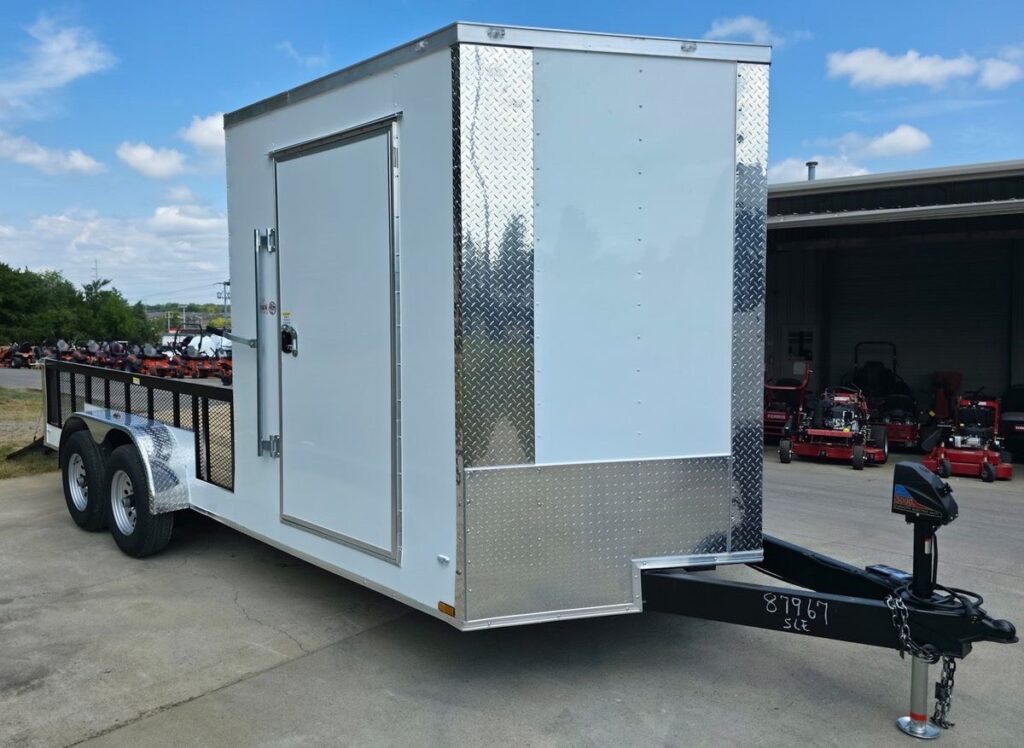
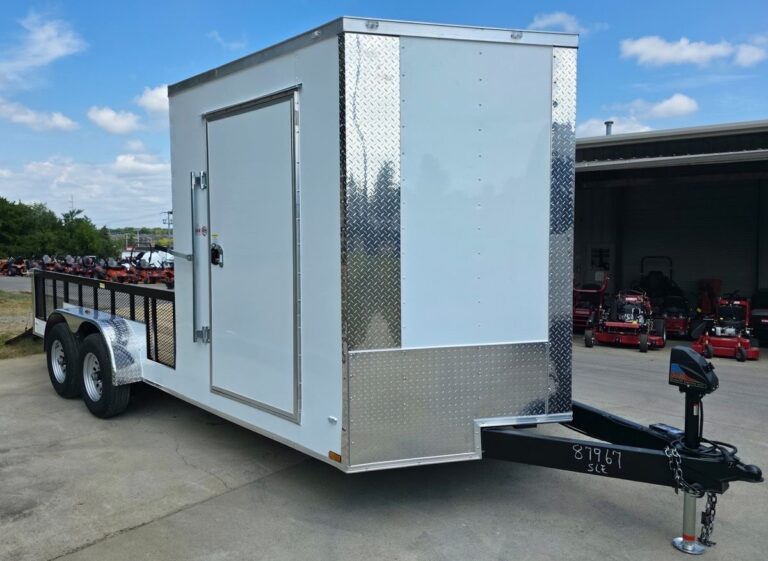
An enclosed cargo trailer provides a covered, lockable space that helps protect cargo from weather and unauthorized access. A utility trailer has an open design that makes loading bulky items, landscaping equipment, building materials, and other cargo more convenient.
So, which one should you choose?
The answer depends on what you plan to haul, how often you use your trailer, whether your cargo needs protection, and how much you’re willing to spend.
If you’re still exploring enclosed trailer options, start with our Enclosed Cargo Trailer Buying Guide: How to Choose the Right Trailer for Secure Transport.
In this guide, we’ll compare enclosed cargo trailers and utility trailers across the factors that matter most to buyers.
1. Enclosed Cargo Trailer vs. Utility Trailer at a Glance
Here’s a quick comparison of the two trailer types.
Feature | Enclosed Cargo Trailer | Utility Trailer |
|---|---|---|
Design | Fully or mostly enclosed | Open deck |
Weather protection | Excellent when properly sealed | Limited |
Cargo security | Can be locked | Generally more exposed |
Loading bulky equipment | Depends on door configuration | Often easier |
Loading loose materials | Requires more planning | Often convenient |
Tool storage | Excellent | Usually requires additional storage |
Visibility of cargo | Limited when doors are closed | Cargo is visible |
Cleaning | Interior and exterior require attention | Often easier to wash |
Initial cost | Generally higher | Generally lower |
Aerodynamic drag | Depends on shape and towing conditions | Often lower, but varies |
Best for | Tools, equipment, protected cargo | Landscaping, building materials, general hauling |
The main difference: An enclosed cargo trailer prioritizes protection and security, while a utility trailer prioritizes accessibility and convenient loading.
Neither type is automatically better for every job.
2. What Is an Enclosed Cargo Trailer?
An enclosed cargo trailer is designed with a roof, walls, and doors that create a protected cargo space.
Many models include rear ramp doors or barn doors, side entry doors, interior lighting, and tie-down points.
They are commonly used to transport:
- Power tools
- Construction equipment
- Business inventory
- Furniture
- Appliances
- Motorcycles
- Event equipment
- Landscaping tools
- Moving supplies
Because the cargo area is enclosed, equipment can remain protected from direct exposure to rain, sunlight, road debris, and other environmental conditions.
A lockable enclosed trailer can also help deter theft, although the level of security depends on the locks, doors, construction, and where the trailer is parked.
Advantages of Enclosed Cargo Trailers
- Protection from weather
- Better cargo privacy
- Lockable storage
- Suitable for valuable tools and equipment
- Useful for transporting goods between job sites
- Potential for organized interior storage
- Professional appearance for commercial businesses
Disadvantages of Enclosed Cargo Trailers
- Generally more expensive
- Can be heavier than a comparable open trailer
- Interior dimensions limit access to oversized cargo
- Roof, walls, and seals require maintenance
- Loading may be less convenient for certain equipment
If you’re considering one for regular commercial use, our Best Enclosed Cargo Trailer for Contractors: How to Choose the Right Work Trailer explains which features are particularly useful for professional work.
3. What Is a Utility Trailer?
A utility trailer is an open-deck trailer designed for general hauling.
Depending on the model, it may have removable or fixed side rails, a mesh ramp gate, a solid deck, or other features that make loading and unloading easier.
Utility trailers are commonly used for:
- Lawn mowers
- Landscaping equipment
- ATVs and UTVs
- Firewood
- Building materials
- Furniture
- Yard waste
- General equipment transportation
Because the trailer is open, loading tall or awkward items may be easier than with an enclosed trailer.
However, cargo is more exposed to weather, road debris, and potential theft.
Advantages of Utility Trailers
- Generally lower purchase price
- Convenient loading and unloading
- Open access from multiple sides
- Suitable for bulky items
- Often easier to clean
- No enclosed roof or walls to maintain
- Available in many sizes and configurations
Disadvantages of Utility Trailers
- Limited weather protection
- Cargo is more visible
- Tools and equipment may require separate security measures
- Loose items need careful securing
- Some cargo may be difficult to transport safely in poor weather
Explore our Utility Trailers category to compare open trailers for everyday hauling, landscaping, and equipment transportation.
4. What Are the Main Differences?
Let’s examine the factors that should influence your decision.
Cargo Protection
If your cargo needs protection from rain, direct sunlight, and road debris, an enclosed cargo trailer is usually the stronger option.
This is particularly important for power tools, electronics, furniture, packaged goods, and other items that could be damaged by exposure.
A utility trailer can still transport these items, but you may need weather-resistant covers, waterproof containers, or other protective equipment.
Keep in mind that an enclosed trailer is not necessarily waterproof under every condition. Roof seams, doors, seals, and ventilation openings must be maintained properly.
Security
An enclosed trailer allows you to lock the cargo area.
This is useful when transporting expensive equipment or leaving tools at a job site.
A utility trailer leaves cargo more exposed. You can secure individual items with locks and chains, but this generally does not provide the same level of protection as a properly secured enclosed trailer.
Accessibility
Utility trailers are often easier to load from the sides and rear because there are no enclosed walls restricting access.
This makes them convenient for transporting large equipment, long materials, and irregularly shaped items.
Enclosed trailers can also offer excellent accessibility when equipped with suitable doors, but the interior space and opening dimensions must accommodate the cargo.
Appearance
Businesses that transport tools, inventory, or customer goods may prefer enclosed trailers because they provide a more finished appearance and can offer space for business branding.
Utility trailers are often more practical for work that involves frequent loading, unloading, and transporting materials that do not require an enclosed space.
5. Enclosed Cargo Trailer vs. Utility Trailer: Cost Comparison
Price is an important factor when choosing a trailer.
Generally, enclosed cargo trailers cost more than comparable utility trailers because they require additional materials and construction for the walls, roof, doors, and enclosed cargo space.
However, actual prices vary according to size, materials, axle configuration, payload capacity, brand, and features.
Cost Factor | Enclosed Cargo Trailer | Utility Trailer |
|---|---|---|
Initial purchase | Generally higher | Generally lower |
Construction | Roof, walls, doors, frame, and deck | Frame, deck, and applicable rails or gates |
Security accessories | Locks and security upgrades may be useful | Separate cargo security may be needed |
Weather protection | Built into the design, subject to condition | Usually requires additional protection |
Maintenance | Includes walls, roof, seals, and doors | Primarily deck, frame, tires, and running gear |
Cargo organization | Interior shelving and storage options | Often requires separate storage solutions |
Which Offers Better Value?
An enclosed trailer may offer better value if you regularly transport expensive tools, sensitive equipment, or goods that need protection.
A utility trailer may provide better value if you primarily haul landscaping equipment, building materials, or other cargo that can safely travel in the open.
The best comparison is not simply the purchase price. Consider how each trailer will perform in your actual work.
6. Which Trailer Is Better for Landscaping?
Both trailer types are useful for landscaping businesses, but the right choice depends on the equipment and working conditions.
Choose a Utility Trailer If You Transport:
- Riding lawn mowers
- Zero-turn mowers
- Trimmers
- Leaf blowers
- Wheelbarrows
- Soil and landscaping materials
- Yard waste
An open deck can make it easier to load equipment and unload materials throughout the day.
Choose an Enclosed Cargo Trailer If You Need:
- Secure tool storage
- Protection for expensive equipment
- Space for organized shelves
- Protection for electrical tools
- A lockable mobile workspace
For landscapers who transport equipment between several job sites, an enclosed trailer can help keep tools organized and protected.
Read our Best Enclosed Cargo Trailer for Landscapers: How to Choose the Right Trailer for a more detailed look at the features that matter for landscaping work.
Important: Before loading a mower or other heavy equipment, check the trailer’s payload capacity, ramp rating, axle capacity, and the equipment’s actual weight.
7. Which Trailer Is Better for Contractors?
Contractors often transport valuable tools and materials, making cargo security an important consideration.
An enclosed cargo trailer is often the better option for contractors who carry:
- Power tools
- Electrical equipment
- Plumbing supplies
- Carpentry tools
- Job-site equipment
- Packaged materials
The enclosed space makes it easier to organize equipment and lock it away when the trailer is unattended.
However, a utility trailer may be preferable for contractors transporting:
- Long lumber
- Large building materials
- Bulky equipment
- Materials that can safely remain exposed
- Items that are frequently loaded and unloaded
Some businesses benefit from owning both trailer types because their work involves different cargo requirements.
If security is a priority, see our Best Enclosed Cargo Trailer for Contractors: How to Choose the Right Work Trailer.
8. Which Trailer Is Better for Moving?
If you’re moving furniture, household belongings, or business inventory, an enclosed cargo trailer is generally the better choice.
The roof and walls help protect your belongings from rain, dust, and road debris.
The enclosed space also helps keep smaller items contained during transportation, provided everything is properly packed and secured.
A utility trailer can transport furniture and large objects, but these loads require appropriate weather protection and secure tie-downs.
For a more detailed guide, read our How to Choose the Right Enclosed Cargo Trailer for Moving.
Moving Comparison
Moving Requirement | Better Option |
|---|---|
Boxes and personal belongings | Enclosed cargo trailer |
Furniture requiring weather protection | Enclosed cargo trailer |
Loose household items | Enclosed cargo trailer |
Large outdoor equipment | Often utility trailer |
Bulky items that exceed enclosed door dimensions | Potentially utility trailer |
Cargo needing privacy | Enclosed cargo trailer |
The cargo’s size, weight, and loading requirements should determine the final choice.
9. Capacity and Dimensions: Which Trailer Can Carry More?
Neither trailer type automatically carries more weight.
Payload capacity depends on the trailer’s specifications, not simply whether it is enclosed or open.
For example, a large utility trailer may have a higher payload capacity than a small enclosed cargo trailer. However, a properly equipped enclosed trailer may be capable of carrying substantial loads as well.
Before purchasing, consider:
- Gross Vehicle Weight Rating (GVWR)
- Empty trailer weight
- Payload capacity
- Axle ratings
- Tire load ratings
- Braking equipment
- Tow vehicle capacity
- Hitch and tongue-weight limits
Payload is generally calculated as:
Payload capacity = GVWR − empty trailer weight
Always use the actual specifications for the trailer you’re considering.
Example
Suppose a trailer has:
- GVWR: 7,000 pounds
- Empty weight: 2,500 pounds
Its nominal payload capacity would be:
7,000 − 2,500 = 4,500 pounds
That does not mean every tow vehicle can safely tow it at its maximum rating. The tow vehicle, hitch, tires, axle ratings, and applicable regulations must also be considered.
For more information, see our Enclosed Cargo Trailer GVWR & Payload Explained: How Much Can You Carry?
10. Loading and Unloading: Which Is Easier?
The answer depends on what you’re transporting.
Utility trailers often make loading easier because the cargo area is open.
You may be able to approach the trailer from the side or load items that extend beyond the deck, provided the load is legal, properly supported, and securely tied down.
Enclosed cargo trailers may require you to work through the rear door or a side access door.
However, a trailer equipped with a properly rated ramp door can make loading wheeled equipment straightforward.
Loading Comparison
Cargo Type | Enclosed Cargo Trailer | Utility Trailer |
|---|---|---|
Hand tools | Excellent | Good with secure storage |
Boxes | Excellent | Requires secure containment |
Riding mower | Good with a suitable ramp | Excellent with a suitable ramp or gate |
Long lumber | Limited by interior dimensions | Often more convenient |
Furniture | Excellent for protected transport | Requires additional protection |
Loose landscaping materials | Less convenient | Often more convenient |
Motorcycles | Excellent with suitable tie-downs | Excellent with suitable tie-downs |
Regardless of trailer type, never exceed the trailer’s ratings or use a ramp that is not rated for the equipment being loaded.
11. Towing and Fuel Considerations
The trailer’s design can influence towing behavior and fuel consumption.
Enclosed trailers have a larger frontal area than many open utility trailers, which can increase aerodynamic drag.
However, the actual difference depends on:
- Trailer dimensions
- Trailer shape
- Towing speed
- Wind conditions
- Cargo weight
- Tow vehicle
- Tire pressure
- Road conditions
An open utility trailer may create less aerodynamic drag in some situations, but an enclosed trailer’s aerodynamic performance varies considerably by design.
Don’t assume an open trailer will always be cheaper to tow.
A poorly balanced or heavily loaded utility trailer can still affect towing performance and fuel consumption.
For either type, distribute cargo appropriately, maintain correct tire pressure, observe speed limits, and stay within the tow vehicle’s rated limits.
12. Maintenance Requirements
Both trailer types require regular maintenance.
However, their maintenance needs differ because of their construction.
Enclosed Cargo Trailer Maintenance
Important areas include:
- Roof and seams
- Door seals
- Walls
- Flooring
- Interior moisture
- Locks and hinges
- Tires
- Brakes
- Wheel bearings
- Axles and suspension
- Electrical systems
Utility Trailer Maintenance
Important areas include:
- Deck condition
- Frame
- Side rails
- Loading ramp or gate
- Tires
- Brakes
- Wheel bearings
- Axles and suspension
- Lights and wiring
- Tie-down points
A utility trailer’s open design can make cleaning and visual inspection easier. An enclosed trailer requires additional attention to leaks and moisture.
Neither design eliminates the need for routine inspections.
13. Can You Use an Enclosed Cargo Trailer for Business?
Absolutely.
Enclosed cargo trailers are commonly useful for businesses that need to transport equipment, inventory, and supplies.
They can help businesses:
- Keep equipment organized
- Protect cargo from weather
- Secure tools between jobs
- Transport goods between locations
- Maintain a professional appearance
The interior can also be organized with suitable shelving, tool racks, and tie-down systems.
However, any modifications must be appropriate for the trailer’s construction and must not compromise its structural integrity or weight limits.
If you plan to use your trailer commercially, our How to Choose the Right Enclosed Cargo Trailer for Your Business provides additional buying guidance.
14. What About Other Trailer Types?
Enclosed cargo and utility trailers are not the only options.
Depending on your work, another trailer category may be more suitable.
Deck-Over Trailers
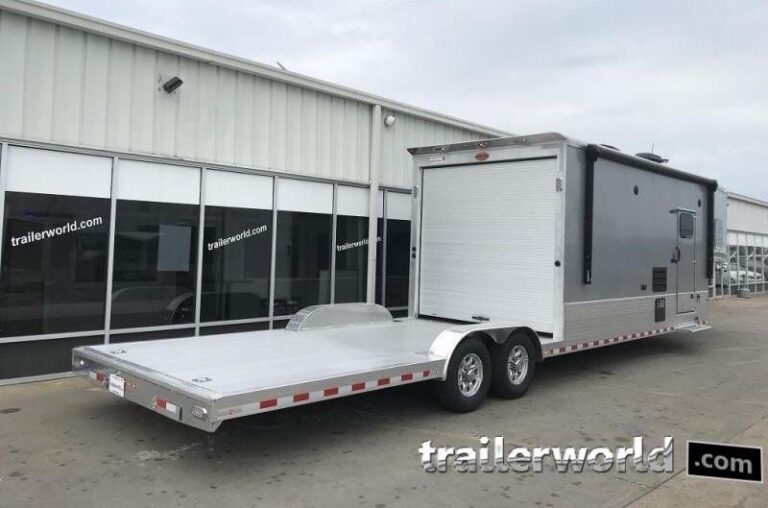
A Deck-Over Trailer can be useful when you need a wide, open deck for heavy equipment or wider loads.
Dump Trailers
A Dump Trailer is designed for hauling and unloading materials such as dirt, gravel, debris, and other suitable bulk loads.
Horse and Stock Trailers
If you transport horses or livestock, a Horse & Stock Trailers option is more appropriate than a standard enclosed cargo trailer. Animal transport requires a trailer designed for that specific purpose.
Lowdeck Trailers
A Lowdeck Trailer may be useful when loading height and equipment access are important considerations.
Choose the trailer category according to the cargo, loading method, and working conditions rather than selecting a trailer based on appearance alone.
15. How to Choose the Right Trailer for Your Needs
Before making a purchase, answer these questions.
Question 1: What Will You Transport?
Identify the cargo you expect to haul most frequently.
Tools and sensitive equipment often favor an enclosed trailer, while landscaping materials and bulky outdoor equipment may favor a utility trailer.
Question 2: Does Your Cargo Need Protection?
If you need to protect cargo from weather, road debris, and unauthorized access, an enclosed trailer is usually the better choice.
Question 3: How Will You Load It?
Consider whether you’ll use a forklift, hand truck, mower, ATV, or other equipment.
The trailer’s deck height, ramp, door opening, and loading angle all matter.
Question 4: How Much Weight Will You Carry?
Calculate the combined weight of the cargo, accessories, and anything else added to the trailer.
Then confirm the trailer’s payload capacity and the tow vehicle’s limits.
Question 5: What’s Your Budget?
Consider both the purchase price and the accessories or protective equipment you may need.
A lower initial cost isn’t necessarily the best value if the trailer cannot perform the job you need.
Frequently Asked Questions
Is an enclosed cargo trailer better than a utility trailer?
An enclosed cargo trailer is generally better for protecting and securing tools, furniture, inventory, and other goods. A utility trailer is often better for open access, bulky loads, and landscaping materials.
Is a utility trailer cheaper than an enclosed cargo trailer?
Generally, yes. Utility trailers often cost less because they have an open design and require fewer materials. Actual prices depend on size, capacity, construction, and features.
Can a utility trailer carry more weight than an enclosed cargo trailer?
Sometimes. Payload capacity depends on the trailer’s GVWR, empty weight, axles, tires, and other specifications—not simply its design.
Can I transport a riding lawn mower in an enclosed cargo trailer?
Yes, provided the trailer has sufficient interior dimensions, payload capacity, and a properly rated loading ramp or other suitable loading arrangement.
Which trailer is better for contractors?
An enclosed cargo trailer is often preferable when contractors need to secure tools and equipment. A utility trailer may be better for transporting long materials, bulky loads, or items that do not require weather protection.
Which trailer is better for landscaping?
A utility trailer is often convenient for mowers, yard waste, and landscaping materials. An enclosed trailer can be better for securing tools and protecting valuable equipment.
Does an enclosed trailer protect cargo from rain?
An enclosed trailer offers substantially more weather protection than an open utility trailer, but it is not automatically waterproof. Roof seams, door seals, and other openings must be maintained.
Final Thoughts
Choosing between an enclosed cargo trailer and a utility trailer comes down to what you haul, how you load it, and how much protection your cargo needs.
An enclosed cargo trailer is usually the better investment when you need secure storage, weather protection, and a convenient way to transport valuable tools, business inventory, furniture, and equipment.
A utility trailer is often the more practical option for landscaping, yard work, construction materials, and bulky cargo that benefits from an open deck.
Before making your decision, compare the purchase price, payload capacity, dimensions, loading arrangement, maintenance requirements, and towing compatibility.
If you need to protect your cargo and keep equipment secure, begin with our Enclosed Cargo Trailer Buying Guide: How to Choose the Right Trailer for Secure Transport.
If an open deck better suits your work, explore our Utility Trailers category.
The best trailer isn’t necessarily the most expensive or the most versatile. It’s the one that safely and efficiently handles the work you need it to do.
For open-deck equipment hauling, Utility Trailers provide a different configuration. For wide equipment, Deck-Over Trailers may be worth considering. And for horses or livestock, Horse & Stock Trailers are designed specifically for that type of transportation.
For safe towing and loading practices, visit the NHTSA trailer safety guidelines.
