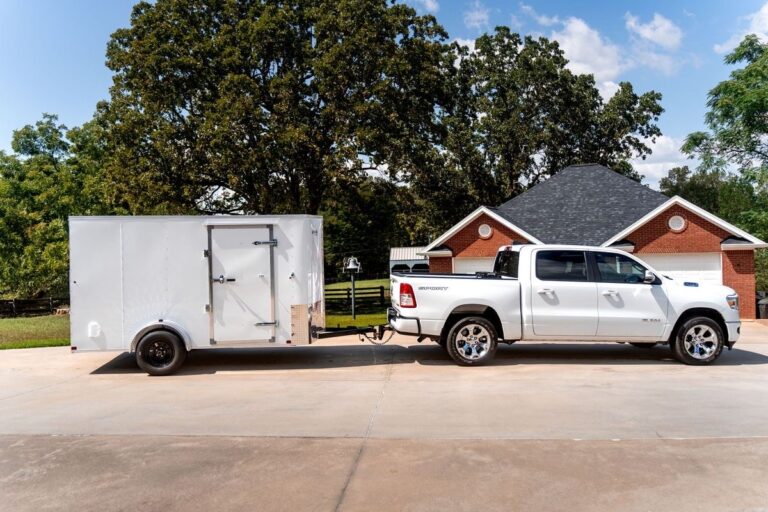

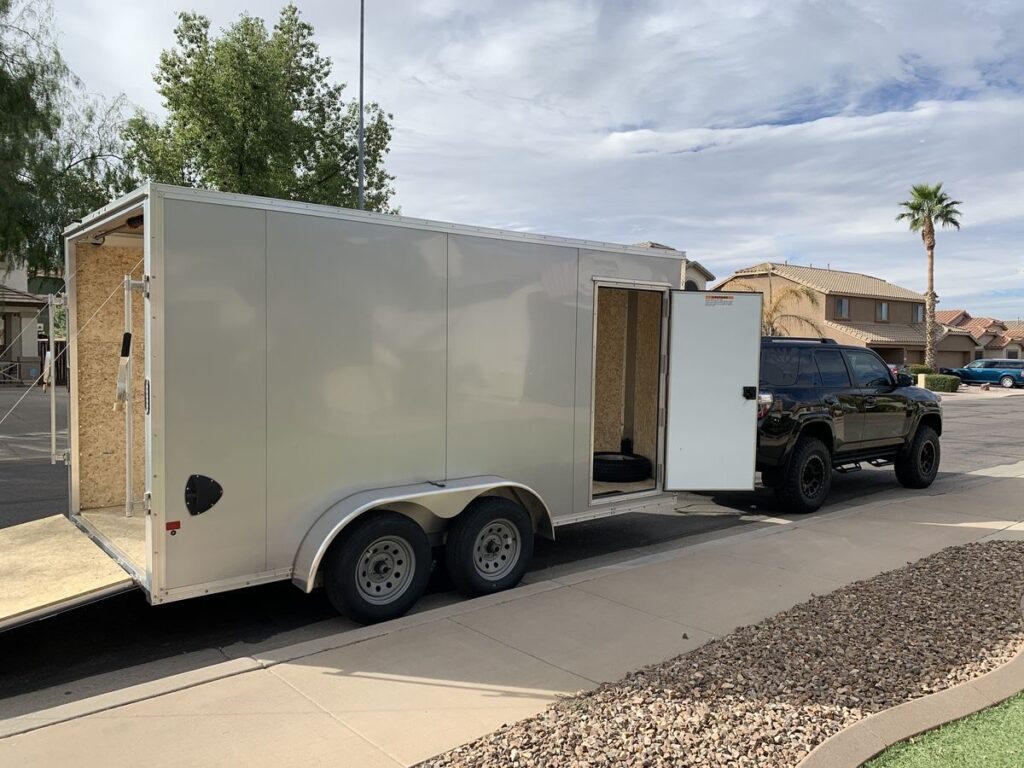
Whether you’re moving to a new home, transporting furniture for a business, helping a family member relocate, or moving equipment between properties, an enclosed cargo trailer can make the process much easier.
Unlike an open trailer, an enclosed trailer provides a protected space for your belongings while they’re being transported. It can help keep furniture, boxes, appliances, tools, and other household items protected from direct exposure to weather and road debris.
But choosing the right trailer for moving requires more than simply selecting the longest trailer available.
You need to consider:
- Interior dimensions
- Door opening dimensions
- Payload capacity
- GVWR
- Cargo weight
- Ramp configuration
- Interior height
- Loading access
- Cargo organization
- Tow vehicle capacity
If you’re still comparing the basics of enclosed trailers, start with Enclosed Cargo Trailer Buying Guide: How to Choose the Right Trailer for Secure Transport.
Why Use an Enclosed Cargo Trailer for Moving?
An enclosed cargo trailer can provide several advantages when moving.
The enclosed cargo area can help protect your belongings from:
- Rain
- Direct sun
- Road debris
- Wind
- Dust
- Certain weather conditions
It also gives you a dedicated storage area that can be locked when you’re away from the trailer.
For someone moving household belongings, this can be particularly useful because furniture, electronics, clothing, boxes, and other possessions can all be transported inside one enclosed space.
For a general explanation of how enclosed trailers work, see What Is an Enclosed Cargo Trailer? Complete Guide for Buyers.
What Can You Move With an Enclosed Trailer?
Depending on the trailer’s size and weight rating, you can potentially transport:
- Furniture
- Mattresses
- Tables
- Chairs
- Boxes
- Appliances
- Tools
- Bicycles
- Household supplies
- Business inventory
- Moving equipment
The important distinction is between what physically fits and what the trailer is rated to carry.
A large piece of furniture may fit inside the trailer but still contribute substantial weight.
That’s why both dimensions and weight need to be considered.
How Much Trailer Space Do You Need?
Start by making an inventory of everything you intend to move.
For example:
Item | Space Consideration | Weight Consideration |
|---|---|---|
Sofa | Long and wide | Moderate/heavy |
Mattress | Long and flexible | Moderate |
Refrigerator | Tall and bulky | Heavy |
Boxes | Stackable | Varies |
Dining table | Long/wide | Moderate |
Chairs | Stackable | Light/moderate |
Washer/dryer | Bulky | Heavy |
Don’t estimate your required trailer size based only on the number of boxes.
Furniture and appliances can consume much more floor space than expected.
Measuring Your Furniture and Belongings
Before selecting a trailer, measure your largest items.
Record:
- Length
- Width
- Height
- Weight
Pay particular attention to:
- Sofas
- Refrigerators
- Freezers
- Washers
- Dryers
- Cabinets
- Large beds
- Tables
- Large appliances
Then compare those measurements with the trailer’s interior dimensions and door opening.
An item might fit inside the trailer once loaded but still be impossible to get through the rear door.
Trailer Length vs. Usable Space
Trailer length is one of the most important specifications when moving.
Common enclosed trailer lengths include:
- 8 feet
- 10 feet
- 12 feet
- 14 feet
- 16 feet
- Larger configurations
But the advertised exterior length doesn’t necessarily represent usable interior floor space.
Interior dimensions can be affected by:
- Front wall design
- Wall thickness
- Interior cabinets
- Wheel wells
- Door configuration
- Trailer construction
For a broader comparison, see Enclosed Cargo Trailer Sizes: How to Choose the Right Size.
Trailer Width and Interior Layout
Width determines how easily you can arrange furniture and boxes.
A wider trailer can make it easier to:
- Position furniture
- Stack boxes
- Walk through the cargo area
- Load appliances
- Organize household items
However, wider trailers can also affect towing characteristics and overall dimensions.
Measure your largest items before deciding how much width you actually need.
Interior Height
Height becomes especially important when moving large furniture and appliances.
Consider:
- Refrigerator height
- Cabinet height
- Mattress orientation
- Tall boxes
- Shelving
- Stacked items
You also need to consider the door opening height.
A refrigerator may fit inside the trailer but still be difficult or impossible to load if the rear door opening is too short.
Payload and GVWR for Moving
Weight capacity is just as important as physical space.
A basic calculation is:
Payload = GVWR − Empty Trailer Weight
For example:
Specification | Example |
|---|---|
GVWR | 7,000 lbs |
Empty trailer weight | 2,800 lbs |
Theoretical remaining capacity | 4,200 lbs |
These are illustrative numbers.
Your actual trailer specifications should always be used when calculating capacity.
When moving, remember that everything counts:
- Furniture
- Appliances
- Boxes
- Tools
- Moving blankets
- Shelving
- Tie-down equipment
For a detailed explanation, see Enclosed Cargo Trailer GVWR & Payload: Complete Weight Guide.
Ramp Door vs. Barn Doors
A ramp door can make moving heavy or wheeled items much easier.
It allows you to roll:
- Appliances
- Dollies
- Carts
- Toolboxes
- Heavy equipment
into the trailer.
Barn doors can provide a large rear opening and can work well when cargo is manually loaded or moved with appropriate equipment.
For a complete comparison, read Ramp Door vs. Barn Doors: Which Enclosed Trailer Door Is Best?
Moving Furniture With an Enclosed Trailer
Furniture needs careful planning because it can take up a large amount of space without always weighing as much as expected.
Examples include:
- Sofas
- Beds
- Dressers
- Tables
- Chairs
- Cabinets
Disassemble furniture when appropriate.
For example, removing table legs can significantly reduce the space required.
Protect furniture using appropriate:
- Moving blankets
- Furniture pads
- Stretch wrap
- Protective covers
Then secure items so they don’t shift during transportation.
Moving Appliances
Appliances require additional planning because they can be both heavy and awkward.
Common appliances include:
- Refrigerators
- Freezers
- Washing machines
- Dryers
- Dishwashers
- Ovens
Measure each appliance before choosing the trailer.
For particularly heavy appliances, consider:
- Trailer payload
- Door opening
- Ramp capacity
- Floor capacity
- Loading equipment
- Proper securement
Don’t assume that because an appliance fits through the door, the trailer can safely carry it.
Moving Boxes
Boxes are usually easier to organize because they can be stacked.
However, avoid simply filling every available space.
Heavy boxes should generally be positioned carefully and secured so that the load remains stable.
Consider grouping boxes by:
- Room
- Weight
- Fragility
- Priority
For example:
Heavy: books, tools, canned goods
Medium: kitchen items, household supplies
Light: clothing, bedding, cushions
This can make unloading significantly easier.
Protecting Your Cargo
An enclosed trailer provides a protective environment, but your cargo still needs protection from movement and impact.
Use appropriate:
- Moving blankets
- Padding
- Furniture covers
- Straps
- Tie-downs
- Cargo barriers
Place protective materials between furniture pieces when necessary.
Don’t allow heavy items to press directly against fragile surfaces.
Organizing the Trailer
A well-organized trailer can make moving faster.
One approach is to divide the trailer into zones.
Front
Place items that aren’t needed immediately.
Middle
Place larger furniture and heavier cargo according to the trailer’s loading guidance.
Rear
Keep items you may need first.
For example, you might load:
- Bedding
- Cleaning supplies
- Basic tools
- Important boxes
near the rear so they’re easy to access when you arrive.
Securing Your Belongings
Cargo should not be allowed to move freely during transportation.
Use appropriate tie-down equipment and secure heavy objects according to the trailer and cargo manufacturer’s guidance.
Pay particular attention to:
- Appliances
- Furniture
- Large boxes
- Equipment
- Tall items
The National Highway Traffic Safety Administration’s Secure Your Load guidance provides useful general information about cargo securement.
Choosing the Right Trailer Size
Here is a general starting point:
Trailer Size | Potential Moving Use |
|---|---|
5×8 | Small moves, boxes, limited furniture |
5×10 | Small apartment or partial move |
6×12 | Apartment/condo moves and moderate household cargo |
7×14 | Larger household moves |
7×16 | Larger moves and substantial furniture |
Larger than 7×16 | Major household or commercial moves |
These are general guidelines, not guarantees.
The actual amount you can transport depends on the trailer’s interior dimensions, GVWR, payload, and the size and weight of your belongings.
Single Axle vs. Tandem Axle
Axle configuration can affect the trailer’s capacity and towing characteristics.
A smaller moving setup may work with a single-axle trailer if the trailer’s certified ratings are appropriate.
For heavier household loads, a tandem-axle configuration may provide a different combination of capacity and stability.
Compare the complete specifications before deciding.
For a detailed explanation, see Single Axle vs. Tandem Axle Enclosed Cargo Trailers: How to Choose.
Towing a Loaded Moving Trailer
A trailer that feels easy to tow when empty can feel very different when fully loaded.
Before moving, check:
- Tow vehicle rating
- Trailer GVWR
- Actual loaded weight
- Hitch rating
- Tongue weight
- Tire condition
- Brake configuration
Don’t assume that your vehicle’s maximum tow rating means you should load the trailer to its maximum GVWR.
The entire towing combination needs to be appropriate.
Enclosed Trailer vs. Utility Trailer for Moving
A utility trailer can work for certain moving jobs, but an enclosed trailer offers additional protection.
Feature | Enclosed Cargo Trailer | Utility Trailer |
|---|---|---|
Weather protection | Excellent | Limited |
Security | Better | More exposed |
Furniture protection | Better | Requires additional covering |
Loading access | Depends on doors | Open access |
Cargo organization | Excellent | More limited |
Large awkward items | Good | Excellent |
Best for | Protected moving | Open hauling |
If you’re moving furniture, electronics, clothing, and household belongings, an enclosed trailer is often more convenient.
If you’re moving oversized equipment that doesn’t require weather protection, Utility Trailers may be worth considering.
Common Moving Trailer Mistakes
Choosing Based Only on Trailer Length
A longer trailer isn’t automatically better.
Check width, height, door dimensions, payload, and interior configuration too.
Forgetting Appliance Weight
Refrigerators, washers, dryers, ovens, and other appliances can add substantial weight.
Include them in your calculations.
Ignoring Door Dimensions
Always measure the actual door opening.
Overloading the Floor
Don’t exceed the manufacturer’s weight ratings.
Leaving Cargo Unsecured
Furniture and appliances can shift during transportation.
Buying Too Much Trailer
A trailer that’s unnecessarily large can cost more and require a more capable tow vehicle.
Choose the size that fits your actual needs.
Moving Trailer Buying Checklist
Before choosing your trailer, verify:
- Interior length
- Interior width
- Interior height
- Rear door opening
- Door type
- Ramp capacity
- GVWR
- Empty weight
- Payload
- Axle configuration
- Tire ratings
- Brake system
- Tow vehicle capacity
- Cargo weight
- Largest furniture dimensions
- Appliance dimensions
- Cargo securement options
Frequently Asked Questions
What size enclosed trailer is best for moving?
It depends on how much you’re moving. A 5×8 may work for a small move, while a 6×12, 7×14, or 7×16 may be more appropriate for larger household moves.
Can I move appliances in an enclosed cargo trailer?
Yes, provided the trailer’s dimensions, payload, floor, doors, and loading equipment are appropriate for the appliances.
Is a ramp door useful for moving?
Yes. A ramp can make it easier to load heavy or wheeled items such as appliances, carts, and equipment.
Should I use a single or tandem axle trailer for moving?
Choose based on the trailer’s rated capacity and your expected loaded weight rather than axle count alone.
Can furniture fit in a 6×12 enclosed trailer?
Many furniture configurations can fit in a 6×12, but the actual suitability depends on the dimensions and quantity of your furniture.
Is an enclosed trailer better than a utility trailer for moving?
An enclosed trailer generally provides better weather protection and security, while a utility trailer provides open access and can be useful for oversized items.