

Table of Contents
ToggleHow to Choose the Right Utility Trailer for Landscaping and Lawn Equipment
If you’re still comparing different trailer options, start with our Utility Trailer Buying Guide: How to Choose the Right Utility Trailer for Your Needs.
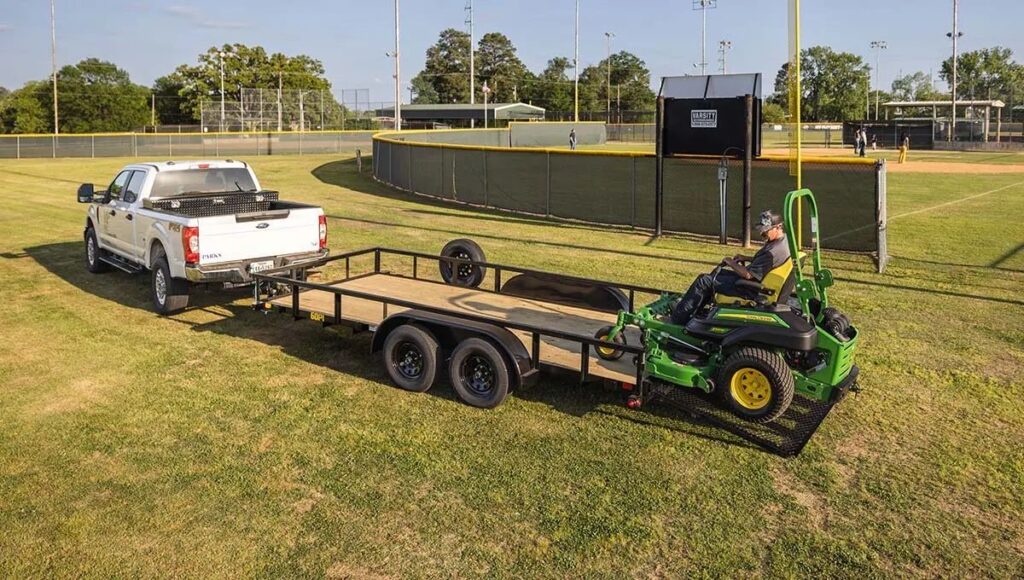
One of the most common reasons buyers choose a utility trailer is for transporting landscaping and lawn equipment. Whether you are a homeowner moving a mower occasionally or a landscaping professional hauling equipment every day, choosing the right trailer can make loading, transportation, and unloading much easier.
However, the best utility trailer for landscaping depends on more than simply choosing a large trailer.
You need to consider the equipment you haul, its total weight, the amount of space required, how frequently you use the trailer, and the features that will make your daily work easier.
What Should a Landscaping Utility Trailer Be Able to Carry?
Before choosing a trailer, make a list of the equipment you expect to haul regularly.
This may include:
- Push mowers
- Riding lawn mowers
- Zero-turn mowers
- Stand-on mowers
- String trimmers
- Leaf blowers
- Edgers
- Wheelbarrows
- Pressure washers
- Landscaping tools
- Mulch and soil
The trailer you choose should be based on your actual equipment and workload.
What Can You Haul With a Utility Trailer? provides a broader look at the different types of equipment and cargo that utility trailers can transport.
Landscaping Equipment and Trailer Requirements
Type of Equipment | Main Trailer Requirement | Important Feature |
|---|---|---|
Push mower | Compact bed space | Easy loading |
Riding mower | Adequate width and length | Loading ramp |
Zero-turn mower | Wide deck and sufficient capacity | Strong ramp and tie-down points |
Multiple mowers | Larger trailer bed | Higher payload capacity |
Trimmers and blowers | Additional cargo space | Side rails or secure storage |
Wheelbarrows | Enough deck space | Easy loading access |
Mulch and landscaping supplies | Adequate payload capacity | Strong trailer construction |
This table provides a useful starting point, but the right trailer depends on the combined size and weight of everything you transport.
Choose the Right Trailer Size for Landscaping
Trailer size is one of the first things you should consider.
You need enough room to comfortably load your equipment without creating an unnecessarily large trailer that becomes difficult to maneuver or store.
Important factors include:
- Length of your largest mower
- Width of your equipment
- Number of machines you transport
- Space required for tools
- Room needed to secure equipment safely
A trailer that barely fits your equipment may quickly become inconvenient, especially as your landscaping operation grows.
For a detailed look at measurements, see Utility Trailer Dimensions Explained: Length, Width & Bed Size Guide.
You can also review What Size Utility Trailer Do You Need? A Complete Size Guide to understand how different trailer sizes match different hauling requirements.
Common Trailer Sizes for Landscaping Equipment
Trailer Size | Best For | Typical Landscaping Use |
|---|---|---|
5×8 | Light-duty use | Push mowers, basic tools and yard equipment |
6×10 | Small lawn-care setups | Lawn mowers and landscaping tools |
6×12 | General landscaping work | Riding mowers, equipment and supplies |
7×14 | Professional landscaping | Multiple machines and commercial equipment |
7×16 | Larger operations | Multiple mowers and heavier equipment |
These are general examples. Always compare your equipment’s actual dimensions with the usable trailer bed space before making a purchase.
Consider the Weight of Your Landscaping Equipment
Size is important, but weight capacity is equally important.
A trailer may have enough physical space for your landscaping equipment while still lacking enough payload capacity to safely carry everything.
Consider the combined weight of:
- Lawn mowers
- Commercial equipment
- Tools
- Fuel
- Landscaping materials
- Additional accessories
Before choosing a trailer, review How Much Weight Can a Utility Trailer Carry? Understanding Payload and GVWR.
Understanding payload capacity and GVWR helps prevent the mistake of choosing a trailer based only on its dimensions.
Single Axle or Tandem Axle for Landscaping?
The weight and frequency of your hauling should help determine the axle configuration.
Trailer Type | Often Better For | Typical Landscaping Use |
|---|---|---|
Single Axle | Lighter loads | Homeowners and smaller lawn-care operations |
Tandem Axle | Heavier loads | Commercial landscaping and multiple machines |
A single axle trailer can be practical for lighter equipment and occasional hauling.
A tandem axle configuration may be more appropriate when carrying heavier commercial equipment or operating the trailer frequently.
For a detailed comparison, see Single Axle vs Tandem Axle Utility Trailers: Which One Should You Choose?
Choose a Trailer With the Right Loading Ramp
Landscaping equipment needs to be loaded and unloaded regularly.
For that reason, the loading ramp is an important feature to consider.
A good loading setup can make it easier to transport:
- Riding mowers
- Zero-turn mowers
- Lawn tractors
- Wheelbarrows
- Other wheeled equipment
When comparing trailers, consider whether the ramp provides enough:
- Width
- Strength
- Loading space
- Convenience for daily use
For a landscaping professional loading equipment several times a day, a practical ramp can save considerable time and effort.
Look for Enough Tie-Down Points
Your equipment needs to remain secure during transportation.
A landscaping trailer should provide practical locations for securing:
- Lawn mowers
- Tools
- Pressure washers
- Other landscaping equipment
Having enough space is not sufficient if you cannot safely secure your cargo.
Tie-down points are particularly important when transporting expensive commercial equipment.
Consider Open Access and Equipment Organization
One of the main advantages of a utility trailer is easy access.
An open trailer makes it easier to:
- Load equipment
- Access tools
- Secure cargo
- Carry oversized items
You can explore available options in our Utility Trailers category.
However, an open trailer is not always the best solution.
If you regularly transport valuable equipment and need protection from weather, an Enclosed Cargo Trailers category may be worth considering.
Think About Future Growth
If you operate a landscaping business, consider your future equipment needs.
You may eventually purchase:
- Larger mowers
- Additional machines
- More tools
- Extra landscaping equipment
A trailer that only barely meets your current requirements may become too small quickly.
This does not mean you should automatically buy the biggest trailer available. Instead, choose a trailer that meets your current workload while allowing reasonable flexibility for future growth.
Important Features for a Landscaping Utility Trailer
Feature | Why It Matters |
|---|---|
Loading ramp | Makes it easier to load mowers and wheeled equipment |
Tie-down points | Helps secure expensive equipment |
Adequate bed space | Allows equipment to fit comfortably |
Strong payload capacity | Supports heavier landscaping loads |
Durable flooring | Handles frequent equipment loading |
Side rails | Can help with cargo organization and security |
The best features depend on the type of landscaping work you perform.
When Should You Consider Another Trailer Type?
A utility trailer works well for many landscaping operations, but another trailer category may sometimes be more suitable.
Your Main Need | Trailer Category to Consider |
|---|---|
General lawn and landscaping equipment | |
Valuable tools needing weather protection | |
Mulch, dirt, gravel and landscaping debris | |
Larger or wider equipment |
For example, landscaping businesses that regularly transport mulch, soil, gravel, or debris may find a Dump Trailer more practical because unloading bulk materials becomes much easier.
For larger or wider equipment, a Deck-Over Trailer may provide additional usable deck space.
How to Choose the Best Utility Trailer for Landscaping
Before making your final decision, ask yourself:
- What equipment will I haul most often?
- How much does my equipment weigh?
- What trailer size do I need?
- Do I need a single or tandem axle?
- Do I need a loading ramp?
- How often will I use the trailer?
- Will I need more space in the future?
These questions will help you narrow your choices and avoid purchasing a trailer that does not match your actual workload.
Final Thoughts
The best utility trailer for landscaping is one that matches your equipment, hauling requirements, and daily workload.
For light lawn care, a smaller trailer may provide everything you need. For professional landscaping operations, you may need additional bed space, greater payload capacity, stronger loading features, and a configuration suitable for frequent use.
The most important thing is to choose based on your real hauling needs.
Consider your equipment size, total weight, loading requirements, and how frequently you plan to use the trailer.
For the complete buying process, return to Utility Trailer Buying Guide: How to Choose the Right Utility Trailer for Your Needs.
You can also explore our Utility Trailers category to compare available options for your landscaping and hauling requirements.
For other hauling requirements, explore our Utility Trailers, Deck-Over Trailers, Lowdeck Trailers, Enclosed Cargo Trailers, Horse Trailers & Stock Trailers, and Accessories.
For safe towing and loading practices, visit the NHTSA trailer safety guidelines.
