

Table of Contents
ToggleSteel vs Aluminum Utility Trailers: Which Is Better?
When choosing a utility trailer, buyers often focus on size, payload capacity, and axle configuration. However, the material used to build the trailer is another important decision.
The two most common options are steel and aluminum utility trailers.
Both can be excellent choices, but they offer different advantages depending on how you plan to use your trailer, what you haul, where you live, and how much maintenance you are willing to perform.
If you are still deciding which type of utility trailer is right for you overall, start with our Utility Trailer Buying Guide: How to Choose the Right Utility Trailer for Your Needs.
This article focuses specifically on the differences between steel and aluminum and helps you decide which material makes more sense for your hauling needs.
Steel vs Aluminum Utility Trailers at a Glance
Feature | Steel Utility Trailer | Aluminum Utility Trailer |
|---|---|---|
Weight | Generally heavier | Generally lighter |
Strength | Excellent for demanding applications | Strong but depends on design |
Corrosion Resistance | Requires protection against rust | Naturally corrosion resistant |
Maintenance | May require more maintenance | Generally lower maintenance |
Initial Cost | Often less expensive | Often more expensive |
Towing Weight | Adds more weight to the towing setup | Reduces overall trailer weight |
Long-Term Appearance | Can rust if not maintained | Often maintains appearance longer |
The best choice depends on your priorities.
Steel Utility Trailers: Main Advantages
Steel has been widely used in trailer construction for many years.
One of its biggest advantages is strength.
Steel utility trailers can be a practical choice for buyers who regularly haul:
- Landscaping equipment
- Construction materials
- Heavy tools
- ATVs
- Lawn mowers
- General cargo
Steel construction can be particularly attractive for demanding applications where durability is a major priority.
You can explore our Utility Trailers category to compare different trailer options based on your hauling requirements.
The Main Disadvantage of Steel: Rust
The biggest concern with steel is corrosion.
Steel can rust when exposed to moisture, especially when a trailer is frequently used in:
- Rain
- Snow
- Humid environments
- Coastal areas
- Roads treated with salt
This does not mean steel trailers are unsuitable for these conditions.
However, they may require regular maintenance and inspection.
Depending on the finish and construction, owners may need to:
- Clean the trailer regularly
- Inspect painted surfaces
- Repair damaged coatings
- Address rust early
- Keep the trailer stored in a suitable location
For buyers who want to minimize corrosion concerns, aluminum can be an attractive alternative.
Aluminum Utility Trailers: Main Advantages
The biggest advantage of aluminum is its lighter weight.
A lighter trailer can offer benefits such as:
- Less weight for the towing vehicle to pull
- Potentially more available payload within the trailer’s overall rating
- Easier maneuverability in some situations
- Reduced corrosion concerns
Aluminum also does not rust in the same way as steel.
This can make aluminum particularly attractive for people who frequently use their trailer in wet or humid environments.
However, lighter weight does not automatically mean an aluminum trailer is the right choice for every hauling application.
The overall trailer design, frame construction, and rated capacity are still extremely important.
Which Trailer Is Better for Towing?
Trailer weight can affect your towing experience.
A heavier steel trailer adds more weight before any cargo is loaded.
A lighter aluminum trailer may reduce the amount of weight your towing vehicle needs to pull.
However, the most important factor is always the complete towing setup.
You should consider:
- Trailer empty weight
- Cargo weight
- Trailer GVWR
- Towing vehicle capacity
- Tongue weight
For a deeper explanation of trailer capacity, see How Much Weight Can a Utility Trailer Carry? Understanding Payload and GVWR.
A lighter trailer does not mean you can automatically exceed its rated capacity.
Always stay within the manufacturer’s specifications.
Steel vs Aluminum: Which Is Better for Landscaping?
Both materials can work for landscaping.
The better choice depends on how frequently you use the trailer and the conditions it faces.
Landscaping Need | Potentially Better Choice |
|---|---|
Heavy commercial use | Steel may be preferred depending on trailer design |
Reducing trailer weight | Aluminum may be beneficial |
Wet and humid environments | Aluminum offers corrosion advantages |
Lower initial purchase cost | Steel is often more affordable |
Frequent transportation of equipment | Either can work depending on capacity |
For landscaping buyers, trailer size, ramps, tie-down points, and payload capacity may be just as important as the material.
Read How to Choose the Right Utility Trailer for Landscaping and Lawn Equipment for a complete guide to selecting a landscaping trailer.
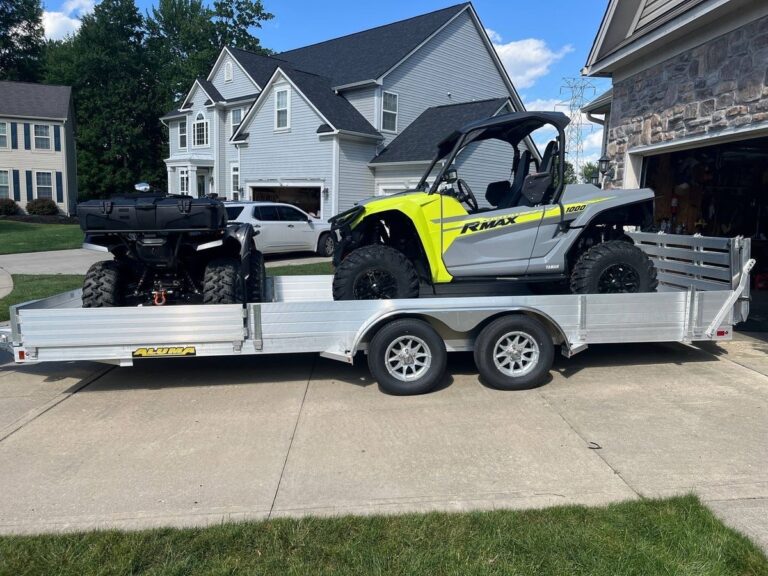
Steel vs Aluminum for ATVs and UTVs
When hauling ATVs and UTVs, both steel and aluminum trailers can be suitable.
The most important factors include:
- Equipment weight
- Trailer dimensions
- Usable deck width
- Payload capacity
- Loading ramp
- Tie-down points
A lighter aluminum trailer may reduce the total weight being towed.
A steel trailer may appeal to buyers looking for a more traditional heavy-duty construction.
For help selecting a trailer for recreational equipment, see How to Choose a Utility Trailer for ATVs, UTVs and Recreational Equipment.
Cost: Is Aluminum Worth the Extra Money?
Aluminum utility trailers often have a higher initial purchase price than comparable steel models.
The question is whether the additional cost makes sense for your situation.
An aluminum trailer may be worth considering if:
- Reducing trailer weight is important
- Corrosion resistance is a priority
- You live in a wet or coastal environment
- You plan to keep the trailer for many years
A steel trailer may make more sense if:
- Your initial budget is more important
- You need a durable trailer for demanding work
- You are comfortable performing regular maintenance
- The additional trailer weight is not a major concern
The best value is not always the trailer with the lowest purchase price.
Consider how you plan to use and maintain the trailer over time.
Maintenance Comparison
Maintenance Area | Steel | Aluminum |
|---|---|---|
Rust prevention | Important | Not required in the same way |
Cleaning | Recommended | Recommended |
Surface inspection | Important | Recommended |
Damage repair | Depends on the type of damage | Depends on the type of damage |
Long-term corrosion concerns | Higher in harsh environments | Generally lower |
Regardless of material, regular maintenance can help extend the life of any trailer.
You should regularly inspect:
- Tires
- Lights
- Brakes
- Coupler
- Safety chains
- Deck
- Frame
- Tie-down points
You can also explore our Trailer Accessories category for equipment that can help improve everyday trailer use and maintenance.
Does Trailer Material Affect the Size You Should Choose?
The material itself does not determine the dimensions you need.
You should choose trailer size based on:
- What you are hauling
- Equipment dimensions
- Available storage space
- Towing requirements
For help understanding trailer measurements, read Utility Trailer Dimensions Explained: Length, Width & Bed Size Guide.
You can also review What Size Utility Trailer Do You Need? A Complete Size Guide before choosing a specific trailer.
When Should You Choose Steel?
A steel utility trailer may be the better choice if you prioritize:
- Lower initial cost
- Traditional heavy-duty construction
- Demanding work applications
- Easy availability of certain configurations
However, you should be prepared to properly maintain the trailer and monitor it for corrosion.
When Should You Choose Aluminum?
An aluminum utility trailer may be the better choice if you prioritize:
- Lower trailer weight
- Corrosion resistance
- Long-term appearance
- Reduced maintenance requirements
The higher initial cost may be worthwhile depending on your environment and how frequently you use the trailer.
Steel vs Aluminum Utility Trailers: Final Comparison
Your Priority | Option to Consider |
|---|---|
Lower initial cost | Steel |
Lighter trailer weight | Aluminum |
Corrosion resistance | Aluminum |
Heavy-duty applications | Depends on the specific trailer design |
Wet or coastal environment | Aluminum |
Long-term maintenance | Aluminum may require less corrosion-related maintenance |
There is no single answer that works for every buyer.
The best choice depends on your specific needs.
Final Thoughts
When comparing steel vs aluminum utility trailers, the right choice comes down to balancing weight, cost, durability, maintenance, and the environment where you will use the trailer.
Steel can be an excellent choice for buyers looking for a durable and often more affordable option.
Aluminum can be an excellent choice for buyers who prioritize lighter weight and corrosion resistance.
Before making your final decision, consider your cargo, towing vehicle, climate, and how often you plan to use the trailer.
For the complete buying process, return to our Utility Trailer Buying Guide: How to Choose the Right Utility Trailer for Your Needs.
You can also browse our Utility Trailers category to compare available trailers and find an option that matches your hauling requirements.
For other hauling requirements, explore our Utility Trailers, Deck-Over Trailers, Lowdeck Trailers, Enclosed Cargo Trailers, Horse Trailers & Stock Trailers, and Accessories.
For safe towing and loading practices, visit the NHTSA trailer safety guidelines.
