

Table of Contents
ToggleBest Dump Trailer for Landscaping: How to Choose the Right Size, Capacity & Features
A reliable dump trailer can make landscaping work significantly easier, especially when your business regularly moves mulch, topsoil, gravel, stone, yard debris, and other bulk materials.
But choosing the best dump trailer for landscaping isn’t simply about buying the largest trailer available. The right choice depends on the type of landscaping work you perform, the materials you transport, how much you typically haul, your tow vehicle, and how frequently you use the trailer.
A small landscaping company performing residential cleanups may have completely different requirements from a commercial landscaping contractor handling multiple large projects every week.
In this guide, we’ll explain the most important factors to consider when choosing a landscaping dump trailer, including size, axle configuration, payload, GVWR, hydraulic systems, towing requirements, and useful accessories.
Why Landscapers Use Dump Trailers
Landscaping jobs frequently involve moving materials that are difficult and time-consuming to unload manually.
A dump trailer can make it easier to transport and unload:
- Mulch
- Topsoil
- Gravel
- Sand
- Stone
- Yard debris
- Brush
- Tree branches
- Landscaping waste
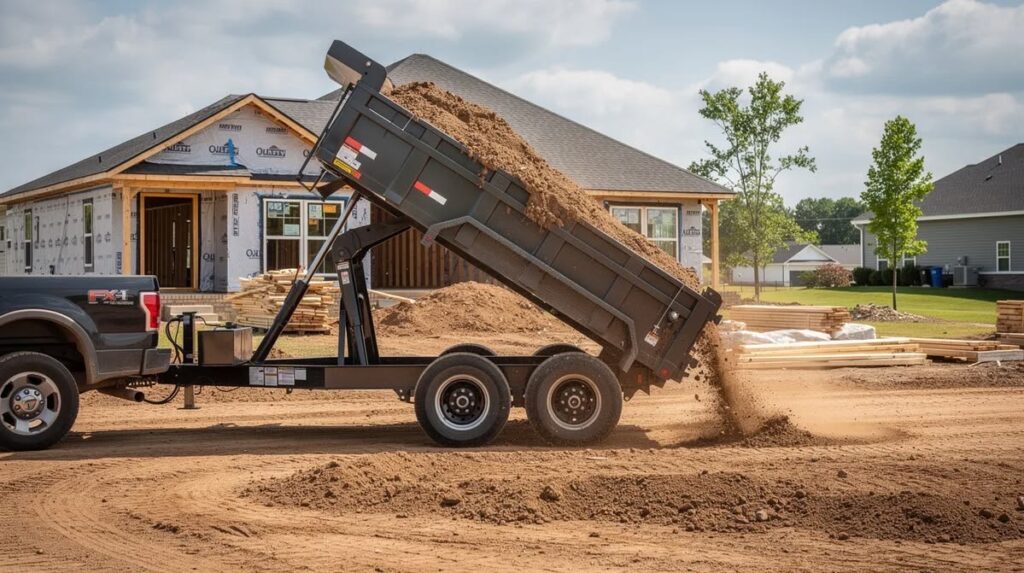
The hydraulic dump bed allows material to be discharged more efficiently than unloading everything by hand.
For a broader overview of dump trailers, visit our Dump Trailer Buying Guide.
What Size Dump Trailer Is Best for Landscaping?
There isn’t one perfect size for every landscaping company.
Your ideal trailer depends on the volume and weight of your typical loads.
5×8 Dump Trailer
A 5×8 dump trailer can be a practical choice for smaller landscaping operations and homeowners.
It can work well for:
- Residential landscaping
- Yard cleanup
- Mulch
- Light debris
- Small gravel loads
- Occasional hauling
Its smaller dimensions can also make it easier to maneuver in residential areas.
Learn more in our 5×8 Dump Trailer Buying Guide.
5×10 Dump Trailer
A 5×10 dump trailer provides additional bed length while remaining relatively compact.
It may be suitable for landscapers who need more space than a 5×8 but don’t require a large commercial trailer.
Common uses include:
- Mulch delivery
- Topsoil
- Yard debris
- Gravel
- Landscaping waste
See our 5×10 Dump Trailer Buying Guide for more information.
6×10 Dump Trailer
A 6×10 dump trailer offers additional width and length compared with smaller configurations.
It can be useful for landscapers handling:
- Larger mulch loads
- Soil
- Gravel
- Brush
- Heavy yard debris
Before choosing a 6×10, make sure the trailer’s GVWR and payload match your tow vehicle and intended loads.
Read our 6×10 Dump Trailer Buying Guide.
Single Axle vs. Tandem Axle for Landscaping
Single Axle Dump Trailer
A single axle trailer may be appropriate for lighter landscaping applications.
Advantages can include:
- Easier maneuverability
- Smaller footprint
- Lower weight
- Suitable for lighter loads
If you primarily handle residential landscaping and smaller cleanup projects, explore our Single Axle Dump Trailer Buying Guide.
Tandem Axle Dump Trailer
A tandem axle dump trailer can provide greater capacity and is commonly considered for more demanding applications.
It may be better suited to landscapers who regularly transport:
- Heavy gravel
- Large amounts of soil
- Stone
- Construction debris
- Large quantities of landscaping materials
Read our Tandem Axle Dump Trailer Buying Guide.
How Much Payload Do You Need?
Payload is one of the most important considerations when selecting a landscaping dump trailer.
You need to account for both:
Trailer weight + cargo weight = total trailer weight
A trailer’s GVWR tells you the maximum permitted combined weight of the trailer and its cargo.
For example, a trailer with a 14,000-pound GVWR doesn’t necessarily have a 14,000-pound payload.
The trailer itself weighs part of that amount.
See our Dump Trailer Capacity Guide for a detailed explanation of GVWR and payload.
Don’t Forget Material Density
This is particularly important for landscapers.
A trailer that can carry a large volume of mulch may not be able to carry the same volume of gravel.
Mulch
Generally lighter by volume.
Topsoil
Heavier, especially when wet.
Gravel
Dense and capable of reaching payload limits quickly.
Stone
Very dense and requires careful weight calculations.
Wet Yard Debris
Can become surprisingly heavy.
Always consider weight, not simply how full the dump bed looks.
Hydraulic Dump Systems
One of the biggest advantages of a dump trailer is its hydraulic unloading system.
A hydraulic system can allow the bed to rise and discharge material efficiently.
Important components include:
- Hydraulic pump
- Hydraulic cylinder
- Reservoir
- Hydraulic hoses
- Battery
- Controls
If you’re comparing hydraulic systems, our Hydraulic Dump Trailer Buying Guide provides additional information.
Electric Brakes Are Important
Landscaping trailers can become heavy when loaded with soil, gravel, stone, or other dense materials.
A properly equipped braking system is therefore important.
Depending on the trailer, you may encounter electric or other braking configurations.
Check:
- Number of braked axles
- Brake type
- Brake controller requirements
- Tow vehicle compatibility
Our Electric Brakes vs. Surge Brakes guide explains the differences.
What Tow Vehicle Do You Need?
Your truck must be capable of handling the trailer and its intended load.
Before purchasing, check your vehicle’s:
- Maximum towing capacity
- Payload capacity
- Hitch rating
- Tongue-weight rating
- Gross Combined Weight Rating
Don’t compare the truck with the trailer based only on the trailer’s empty weight.
You need to consider the loaded trailer.
Dump Trailer for Landscaping Equipment
A dump trailer is excellent for bulk materials, but landscaping companies also need to transport equipment.
For example:
- Zero-turn mowers
- Push mowers
- Edgers
- Trimmers
- Blowers
- Chainsaws
- Hand tools
If transporting equipment is your primary requirement, a Utility Trailer may be a better choice.
A landscaping business that regularly handles both bulk materials and equipment may benefit from having access to both trailer types.
Dump Trailer vs. Utility Trailer for Landscapers
Choose a Dump Trailer for:
- Mulch
- Topsoil
- Gravel
- Sand
- Yard debris
Choose a Utility Trailer for:
- Lawn mowers
- ATVs
- Landscaping equipment
- Tools
- General cargo
For a complete comparison, read our Dump Trailer vs. Utility Trailer guide.
Should Landscapers Buy a Tri Axle Dump Trailer?
For most small landscaping businesses, a tri axle trailer may be more capacity than they actually need.
However, larger commercial operations that routinely transport substantial quantities of heavy materials may consider one.
A tri axle configuration should only be selected when the trailer, tow vehicle, tires, axles, brakes, and payload ratings are appropriate for the intended application.
See our Tri Axle Dump Trailer Buying Guide for more information.
What About Gooseneck Dump Trailers?
A gooseneck configuration may be useful for certain heavy-duty landscaping and commercial applications.
Gooseneck trailers connect to a hitch installed in the truck bed and can provide a different towing arrangement than a conventional bumper-pull trailer.
If you’re considering this configuration, read our Gooseneck Dump Trailer Buying Guide.
Useful Dump Trailer Accessories for Landscapers
The right accessories can improve daily productivity.
Consider:
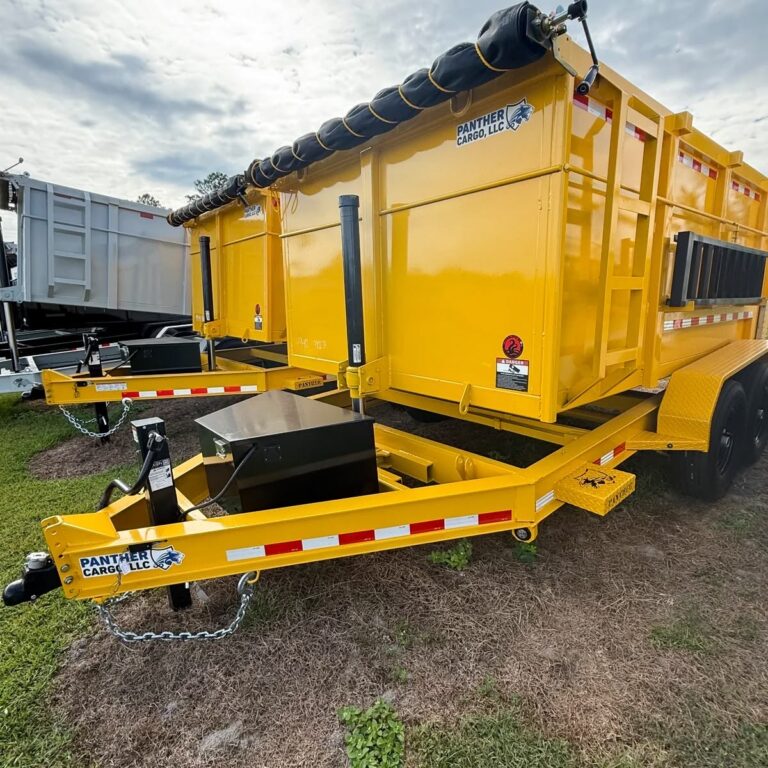
Tarp System
Can help cover materials during transportation.
Toolbox
Provides convenient storage for tools and equipment.
Spare Tire
Useful for unexpected tire problems.
Battery Charger
Can help maintain the dump trailer’s onboard battery.
Tie-Down Equipment
Useful when transporting equipment or other cargo.
Explore our Accessories category for trailer equipment and upgrades.
Dump Trailer Maintenance for Landscaping Businesses
Landscaping trailers can be exposed to dirt, moisture, mud, gravel, and debris on a regular basis.
Important maintenance areas include:
- Tires
- Bearings
- Brakes
- Hydraulic hoses
- Hydraulic fluid
- Battery
- Suspension
- Lights
- Wiring
- Dump bed
- Frame
Regular cleaning is also important because soil, mud, and organic debris can accumulate around components.
For a complete checklist, see our Dump Trailer Maintenance Guide.
How Often Should a Landscaping Trailer Be Inspected?
The more frequently you use the trailer, the more important regular inspections become.
Before Each Trip
Check:
- Tires
- Lights
- Hitch
- Safety chains
- Electrical connection
- Brakes
Regularly
Inspect:
- Bearings
- Suspension
- Hydraulic system
- Battery
- Frame
- Dump bed
Always follow the manufacturer’s recommended maintenance schedule.
When an Enclosed Trailer Makes More Sense
If you’re primarily transporting expensive landscaping equipment rather than bulk materials, consider an Enclosed Cargo Trailer.
An enclosed trailer can provide additional protection from:
- Rain
- Sun
- Road debris
- Theft
- Weather exposure
Many landscaping businesses use different trailers depending on the job.
Choosing the Best Dump Trailer for Your Business
Consider these questions before buying:
1. What do you haul most?
Mulch and soil require different considerations than heavy stone or gravel.
2. How much do you normally haul?
Choose enough capacity for your typical workload without unnecessarily purchasing a trailer that’s too large.
3. What can your truck tow?
Your tow vehicle must be properly matched to the loaded trailer.
4. How frequently do you use it?
Daily commercial use may justify a more robust configuration.
5. Do you also transport equipment?
If yes, consider whether a utility trailer or enclosed trailer would complement your dump trailer.
Quick Landscaping Trailer Guide
Landscaping Need | Recommended Trailer Type |
|---|---|
Small yard cleanup | 5×8 Dump Trailer |
Residential landscaping | 5×8 or 5×10 Dump Trailer |
Larger landscaping jobs | 5×10 or 6×10 Dump Trailer |
Heavy bulk materials | Tandem/appropriate higher-capacity Dump Trailer |
Lawn equipment | Utility Trailer |
Equipment requiring weather protection | Enclosed Cargo Trailer |
Heavy machinery | Deck-Over or Lowdeck Trailer |
Livestock | Horse & Stock Trailer |
The specific trailer should always be selected according to the manufacturer’s weight ratings and your tow vehicle’s capabilities.
Final Thoughts
The best dump trailer for landscaping is the one that matches your actual workload.
For smaller residential landscaping projects, a compact 5×8 or 5×10 dump trailer may provide the right combination of capacity and maneuverability.
For larger commercial operations, a 6×10, tandem axle, or higher-capacity configuration may be more appropriate.
The most important factors are payload, GVWR, trailer dimensions, axle configuration, braking system, hydraulic equipment, tow vehicle compatibility, and the materials you regularly transport.
Don’t automatically choose the largest trailer. Choose the trailer that gives your business the capacity you need while remaining appropriate for your vehicle and daily work.
Explore our Dump Trailers category to compare available options.
Before making your decision, explore our Dump Trailer Buying Guide, 5×8 Dump Trailer Buying Guide, 5×10 Dump Trailer Buying Guide, 6×10 Dump Trailer Buying Guide, Single Axle Dump Trailer Buying Guide, and Tandem Axle Dump Trailer Buying Guide.
For other hauling requirements, explore our Utility Trailers, Deck-Over Trailers, Lowdeck Trailers, Enclosed Cargo Trailers, Horse Trailers & Stock Trailers, and Accessories.
For safe towing and loading practices, visit the NHTSA trailer safety guidelines.
