

Table of Contents
ToggleDump Trailer vs. Utility Trailer: Which One Is Right for Your Hauling Needs?
Choosing between a dump trailer and a utility trailer depends largely on what you transport and how you need to unload it.
Both trailer types are useful for contractors, landscapers, farmers, property owners, and businesses, but they are designed for different jobs.
A dump trailer is designed primarily for transporting and unloading loose materials, while a utility trailer is better suited for carrying equipment, machinery, tools, ATVs, and general cargo.
In this guide, we’ll compare dump trailers vs. utility trailers, including their designs, capacities, unloading methods, towing considerations, applications, and which option may be the better investment for your work.
What Is a Dump Trailer?
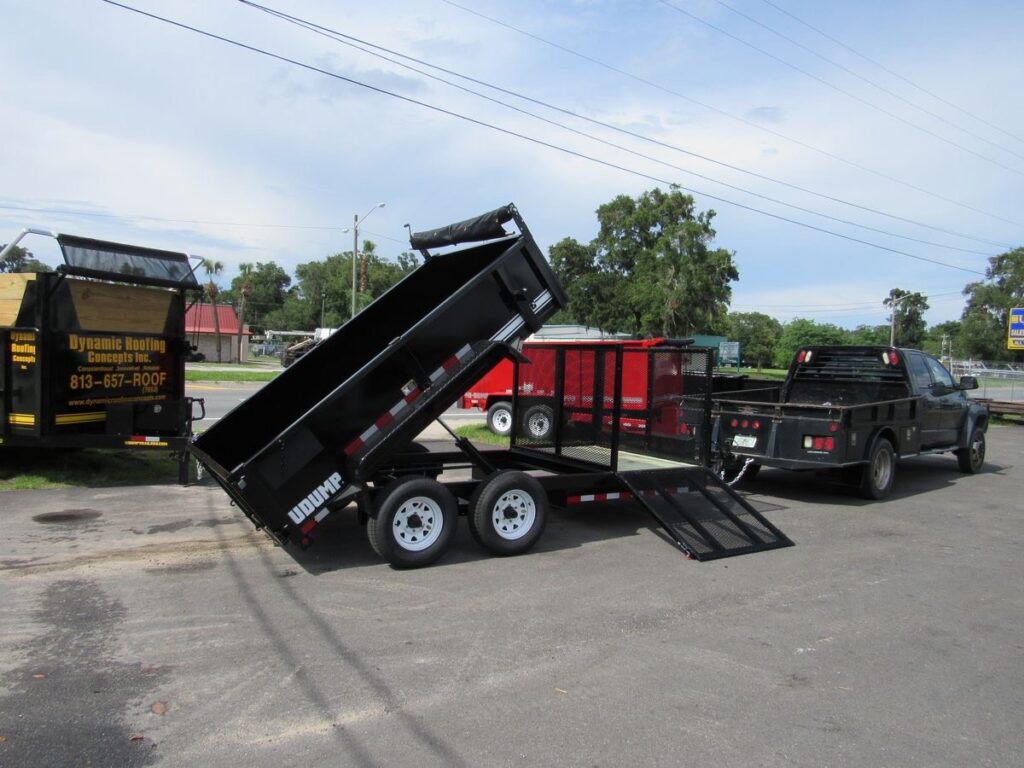
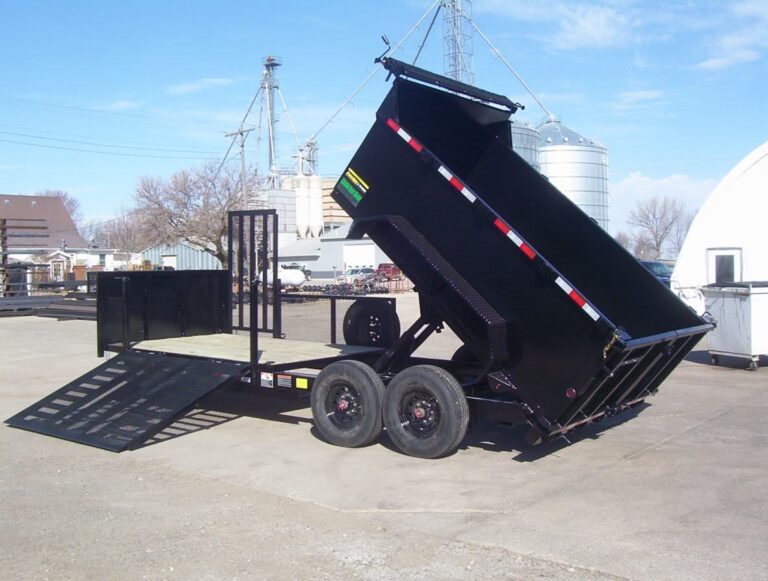
A dump trailer features a hinged bed that can be raised, typically using a hydraulic system, allowing the contents to slide or fall out of the trailer.
Dump trailers are commonly used for:
- Dirt
- Gravel
- Sand
- Mulch
- Concrete debris
- Asphalt
- Construction waste
- Firewood
The ability to unload material quickly is one of the biggest advantages of a dump trailer.
For a deeper look at these trailers, see our Dump Trailer Buying Guide.
What Is a Utility Trailer?
A utility trailer is generally an open trailer designed for transporting equipment, machinery, landscaping supplies, and general cargo.
Depending on its configuration, a utility trailer can be used for:
- Lawn equipment
- ATVs
- Motorcycles
- Small machinery
- Building materials
- Furniture
- Landscaping equipment
- General cargo
Unlike a dump trailer, a standard utility trailer doesn’t have a powered dumping bed.
Explore our Utility Trailers category to see available configurations.
Dump Trailer vs. Utility Trailer: The Main Difference
The biggest difference is how the trailer is designed to handle cargo.
Dump Trailer
Load → Transport → Raise bed → Dump
Utility Trailer
Load → Secure cargo → Transport → Manually unload
If your business regularly transports loose materials, a dump trailer can save considerable time during unloading.
If you primarily transport equipment that needs to remain on the trailer during transportation, a utility trailer may be more practical.
Dump Trailer Advantages
Faster Unloading
The hydraulic dump mechanism allows you to unload many loose materials without manually removing them.
This can be particularly valuable for contractors who complete multiple jobs in a day.
Excellent for Loose Materials
Dump trailers are particularly suited to:
- Gravel
- Dirt
- Mulch
- Sand
- Debris
If you’re regularly hauling these materials, the dumping function can make the trailer much more efficient.
For specific sizes, explore our 5×8 Dump Trailer Buying Guide, 5×10 Dump Trailer Buying Guide, and 6×10 Dump Trailer Buying Guide.
Utility Trailer Advantages
Better for Equipment
If you regularly transport equipment rather than loose materials, a utility trailer can be the better choice.
For example, a landscaper may use a utility trailer to transport:
- Zero-turn mower
- Push mower
- String trimmer
- Leaf blower
- Edger
- Other lawn equipment
Easier Loading for Certain Cargo
Utility trailers can be particularly convenient for wheeled equipment.
With an appropriate ramp configuration, equipment can often be driven directly onto the trailer.
Versatility
A utility trailer can handle many different types of cargo.
That makes it attractive to homeowners and contractors who don’t have one specific type of material they transport.
Dump Trailer vs. Utility Trailer for Landscaping
Landscapers may actually benefit from both, depending on the job.
Choose a Dump Trailer for:
- Mulch
- Topsoil
- Gravel
- Sand
- Yard debris
Choose a Utility Trailer for:
- Lawn mowers
- ATVs
- Landscaping equipment
- Tools
- Materials that need to remain secured
A landscaping company that handles both equipment and bulk materials could potentially use both trailer types.
Dump Trailer vs. Utility Trailer for Construction
Construction contractors also need to consider the type of material being transported.
Dump Trailer
Better for:
- Dirt
- Concrete debris
- Gravel
- Sand
- Demolition material
Utility Trailer
Better for:
- Lumber
- Tools
- Equipment
- Machinery
- Building materials
If your primary job is hauling heavy machinery, you may also want to consider our Deck-Over Trailers or Lowdeck Trailers.
Which Trailer Has More Capacity?
There isn’t a universal answer.
Trailer capacity depends on the specific model and its:
- GVWR
- Empty weight
- Axle ratings
- Tire ratings
- Payload rating
For dump trailers, read our Dump Trailer Capacity Guide before making a decision.
A trailer with a physically larger bed isn’t necessarily capable of carrying a greater payload.
Towing Considerations
Both dump trailers and utility trailers need to be matched to the tow vehicle.
Before purchasing, check:
- Maximum towing capacity
- Vehicle payload capacity
- Hitch rating
- Tongue-weight limits
- Brake requirements
The fully loaded trailer—not just its empty weight—must be compatible with your tow vehicle.
Which Is Easier to Unload?
Dump Trailer: ⭐⭐⭐⭐⭐
The hydraulic bed provides fast unloading for loose materials.
Utility Trailer: ⭐⭐⭐
Unloading depends on the type of cargo and equipment used.
For example, driving a mower down a ramp can be straightforward, while removing a large pile of gravel manually would be extremely inefficient.
Which Is More Versatile?
This depends on what you consider versatility.
A utility trailer is often more versatile for transporting different types of equipment and general cargo.
A dump trailer is more specialized but extremely effective for loose materials.
So:
General cargo → Utility Trailer
Loose materials → Dump Trailer
Dump Trailer vs. Utility Trailer Cost
Prices vary significantly based on:
- Size
- GVWR
- Axle configuration
- Brakes
- Construction
- Hydraulic system
- Accessories
- Manufacturer
Dump trailers generally have more mechanical components because of the hydraulic dumping system.
A utility trailer may have a simpler design, particularly in smaller configurations.
When comparing prices, consider the trailer’s intended workload rather than choosing solely based on the lowest purchase price.
Maintenance Differences
Dump Trailer Maintenance
A dump trailer may require inspection of:
- Hydraulic components
- Battery
- Hydraulic hoses
- Pump
- Cylinder
- Brakes
- Bearings
- Tires
- Suspension
Read our Dump Trailer Maintenance Guide for a detailed maintenance checklist.
Utility Trailer Maintenance
Utility trailer maintenance commonly involves:
- Tires
- Bearings
- Brakes
- Lights
- Wiring
- Suspension
- Coupler
- Safety chains
Both types require regular inspections.
What About Enclosed Cargo Trailers?
If your main concern is protecting equipment from weather and road debris, neither an open utility trailer nor a dump trailer may be ideal.
An Enclosed Cargo Trailer can provide:
- Weather protection
- Additional security
- Protection from road debris
- Enclosed storage
This can be particularly useful for contractors transporting expensive tools and equipment.
What About Deck-Over Trailers?
If you’re transporting wide or heavy equipment, a Deck-Over Trailer may be a better fit.
Deck-over trailers provide a wider deck because the deck sits over the wheels.
They’re commonly considered for:
- Construction equipment
- Machinery
- Large loads
- Agricultural equipment
What About Lowdeck Trailers?
A Lowdeck Trailer can be useful when loading heavy machinery where a lower deck height is advantageous.
If your primary requirement is equipment transportation rather than loose materials, compare the lowdeck option with utility and deck-over configurations.
Quick Comparison
Feature | Dump Trailer | Utility Trailer |
|---|---|---|
Loose materials | Excellent | Good |
Equipment | Good | Excellent |
Hydraulic dumping | Yes | No |
General cargo | Good | Excellent |
Landscaping | Excellent | Excellent |
Construction debris | Excellent | Good |
Lawn equipment | Good | Excellent |
Manual unloading | Less necessary | Often required |
Mechanical complexity | Higher | Generally lower |
Which Trailer Should You Buy?
Choose a Dump Trailer If:
- You haul loose materials regularly.
- Fast unloading is important.
- You work in construction or landscaping.
- You transport dirt, gravel, mulch, or debris.
- You want hydraulic unloading capability.
Choose a Utility Trailer If:
- You transport equipment.
- You haul ATVs or lawn machinery.
- You need a general-purpose trailer.
- You frequently transport tools and materials.
- You want a simpler open trailer design.
Consider Both If:
Your business handles both bulk materials and equipment.
For example, a landscaping company may use a utility trailer for transporting mowers and a dump trailer for delivering mulch and topsoil.
Final Thoughts
The choice between a dump trailer and a utility trailer ultimately comes down to what you’re hauling and how you need to unload it.
Dump trailers are particularly effective for loose, heavy materials because their hydraulic beds make unloading fast and efficient.
Utility trailers are generally more versatile for equipment, machinery, tools, ATVs, and general cargo.
Before buying, consider your typical loads, payload requirements, tow vehicle, frequency of use, and future business needs.
Before making your decision, explore our Dump Trailer Buying Guide, 5×8 Dump Trailer Buying Guide, 5×10 Dump Trailer Buying Guide, 6×10 Dump Trailer Buying Guide, Single Axle Dump Trailer Buying Guide, and Tandem Axle Dump Trailer Buying Guide.
For other hauling requirements, explore our Utility Trailers, Deck-Over Trailers, Lowdeck Trailers, Enclosed Cargo Trailers, Horse Trailers & Stock Trailers, and Accessories.
For safe towing and loading practices, visit the NHTSA trailer safety guidelines.
