
Table of Contents
ToggleDump Trailer vs. Gooseneck Trailer: Which Is Better for Heavy-Duty Hauling?
Choosing the right trailer for heavy-duty hauling depends on more than just size. Your typical cargo, towing vehicle, payload requirements, unloading needs, and type of work all play an important role.
Two configurations that are frequently considered for demanding applications are dump trailers and gooseneck trailers.
Although these trailers can overlap in their uses, they are designed around different priorities. A conventional dump trailer is focused primarily on efficiently hauling and unloading loose materials, while a gooseneck configuration places the trailer’s connection point farther forward in the truck bed, which can provide a different towing arrangement and additional stability for certain heavy-duty applications.
In this guide, we’ll compare dump trailers vs. gooseneck trailers, explain their major differences, and help you determine which configuration may make more sense for your hauling needs.
What Is a Dump Trailer?
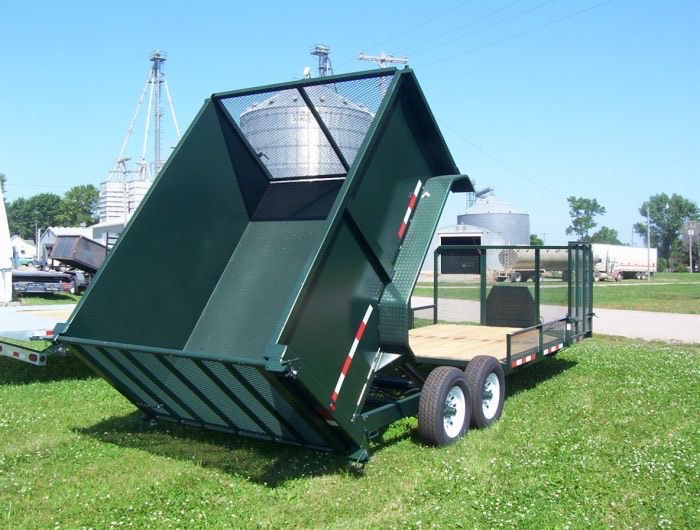
A dump trailer is designed to transport materials and unload them by raising the trailer bed.
Hydraulic systems are commonly used to lift the bed, allowing loose cargo to slide out without requiring manual unloading.
Dump trailers are commonly used for:
- Gravel
- Sand
- Dirt
- Mulch
- Concrete debris
- Asphalt
- Construction waste
- Landscaping materials
The main advantage is simple:
Load → Transport → Raise → Dump
If you’re new to dump trailers, our Dump Trailer Buying Guide is a good place to start.
What Is a Gooseneck Trailer?
A gooseneck trailer connects to a specialized hitch installed in the bed of a pickup truck rather than at the rear bumper.
The hitch location moves the connection point farther forward, closer to the truck’s rear axle.
Gooseneck configurations are commonly used for demanding hauling applications because they can provide a different weight distribution and towing arrangement compared with bumper-pull trailers.
Gooseneck trailers can be designed as:
- Dump trailers
- Equipment trailers
- Flatbed trailers
- Livestock trailers
- Other specialized configurations
That means gooseneck describes the hitch configuration, while dump trailer describes the trailer’s function.
This distinction is important.
A trailer can actually be both a dump trailer and a gooseneck trailer.
Dump Trailer vs. Gooseneck: The Key Difference
The biggest difference is that these terms describe different characteristics of a trailer.
Dump Trailer
Describes the trailer’s dumping function.
Gooseneck
Describes the trailer’s hitch configuration.
Therefore, comparing the two isn’t always an exact “either/or” decision.
For example, you can have a:
Gooseneck Dump Trailer
This combines the gooseneck hitch configuration with a hydraulic dump bed.
Our Gooseneck Dump Trailer Buying Guide covers this configuration in more detail.
Advantages of a Standard Dump Trailer
Easy Material Unloading
The biggest advantage of a dump trailer is its ability to unload loose materials quickly.
This is useful for:
- Construction
- Landscaping
- Excavation
- Property maintenance
- Demolition
Instead of manually removing material from the bed, the hydraulic system can raise the bed and allow the material to discharge.
Excellent for Bulk Materials
Dump trailers are particularly useful when your cargo consists of:
- Dirt
- Gravel
- Sand
- Mulch
- Debris
If you’re transporting these materials frequently, a dump trailer can save considerable unloading time.
Advantages of a Gooseneck Configuration
Different Weight Distribution
The gooseneck connection places the trailer’s coupling point farther forward in the truck.
This can change the way the trailer’s weight is distributed and can provide a stable towing arrangement when properly matched to the tow vehicle and load.
Useful for Heavy-Duty Applications
Gooseneck trailers are commonly considered by:
- Contractors
- Farmers
- Equipment operators
- Construction companies
- Commercial haulers
However, the specific trailer’s GVWR, axle ratings, payload, and tow vehicle compatibility still determine what it can safely carry.
Can a Gooseneck Trailer Also Be a Dump Trailer?
Yes.
This is an important distinction.
A gooseneck dump trailer combines:
Gooseneck hitch + dump bed + hydraulic lifting system
This can be an attractive configuration for operators who need the unloading capability of a dump trailer while also preferring a gooseneck towing arrangement.
Dump Trailer vs. Gooseneck Dump Trailer
If you’re specifically comparing a bumper-pull dump trailer with a gooseneck dump trailer, there are several factors to consider.
Feature | Bumper-Pull Dump Trailer | Gooseneck Dump Trailer |
|---|---|---|
Dumping capability | Yes | Yes |
Hitch location | Rear of tow vehicle | Truck bed |
Hydraulic bed | Common | Common |
Heavy-duty applications | Yes | Yes |
Tow vehicle requirements | Vary by model | Requires compatible pickup and gooseneck hitch |
Maneuverability | Generally easier for many users | Different turning characteristics |
Bed-space impact | Does not occupy truck bed | Uses truck-bed hitch area |
The right choice depends on your vehicle and workload.
Which Is Better for Construction?
For construction contractors, the answer depends on the job.
Standard Dump Trailer
A bumper-pull dump trailer can be useful for:
- Job-site cleanup
- Gravel
- Dirt
- Concrete debris
- Landscaping materials
Gooseneck Dump Trailer
A gooseneck dump configuration may be more appropriate when the operator regularly works with heavier loads and has a properly equipped heavy-duty pickup.
For transporting machinery rather than loose material, consider a Deck-Over Trailer or Lowdeck Trailer.
Which Is Better for Landscaping?
Landscapers often need flexibility.
A smaller dump trailer may be ideal for:
- Mulch
- Topsoil
- Gravel
- Yard debris
A utility trailer can be better for transporting:
- Mowers
- Trimmers
- Blowers
- Tools
- Landscaping equipment
If you need both capabilities, compare our Dump Trailers and Utility Trailers categories.
Which Is Better for Farmers?
Farmers may need trailers for many different jobs.
Dump trailers can transport:
- Soil
- Gravel
- Feed
- Fertilizer
- Firewood
- Farm debris
Gooseneck trailers can be attractive for certain heavier-duty hauling requirements.
For livestock, however, a dedicated Horse & Stock Trailer is generally more appropriate.
Towing Requirements
Before purchasing either configuration, make sure your tow vehicle is properly matched to the trailer.
Check:
- Towing capacity
- Payload capacity
- Hitch rating
- Gross Combined Weight Rating
- Tongue weight
- Trailer GVWR
- Axle ratings
- Brake requirements
The actual loaded weight matters.
A trailer’s empty weight alone does not tell you whether your truck can safely tow it when fully loaded.
Understanding GVWR and Payload
GVWR represents the maximum allowable weight of the trailer and its cargo.
Payload represents how much cargo the trailer can carry after accounting for the trailer’s own weight.
For example, if a trailer has a 14,000-pound GVWR, you cannot simply assume that it can carry 14,000 pounds of cargo.
The trailer itself contributes to the total weight.
Read our Dump Trailer Capacity Guide for a more detailed explanation.
What About Axle Configuration?
Your choice isn’t limited to the hitch style.
Dump trailers can also have different axle configurations.
Single Axle
Often appropriate for lighter applications.
Read our Single Axle Dump Trailer Buying Guide.
Tandem Axle
Provides additional capacity and is commonly used for heavier applications.
Read our Tandem Axle Dump Trailer Buying Guide.
Tri Axle
Designed for demanding hauling requirements where the specific trailer’s ratings support the intended load.
Read our Tri Axle Dump Trailer Buying Guide.
The number of axles should always be evaluated alongside the actual axle ratings, tires, GVWR, and payload.
Braking Systems
Heavy-duty trailers require appropriately rated braking systems.
Depending on the trailer, you may encounter different braking configurations.
Inspect and understand:
- Brake type
- Number of braked axles
- Brake controller requirements
- Electrical connections
- Tow vehicle compatibility
Our Electric Brakes vs. Surge Brakes guide provides additional information.
Hydraulic Dump Systems
If you’re purchasing a dump trailer, the hydraulic system deserves particular attention.
Important components include:
- Hydraulic pump
- Hydraulic cylinder
- Hydraulic reservoir
- Hydraulic hoses
- Battery
- Controls
The system should be appropriately rated for the trailer and its intended load.
For more information, see our Hydraulic Dump Trailer Buying Guide.
Maintenance Considerations
Both trailer configurations require regular inspections.
Check:
- Tires
- Wheels
- Bearings
- Brakes
- Suspension
- Lights
- Wiring
- Coupler or gooseneck connection
- Safety equipment
Dump trailers also require attention to their hydraulic systems.
Our Dump Trailer Maintenance Guide covers these inspections in more detail.
What If You Need Weather Protection?
Neither a standard open dump trailer nor an open utility trailer provides the same level of weather protection as an enclosed trailer.
If you’re transporting tools, equipment, or cargo that needs protection from weather, consider an Enclosed Cargo Trailer.
What If You Need to Haul Heavy Equipment?
If the main purpose of the trailer is transporting machinery rather than loose materials, a dump trailer may not be the most appropriate option.
Consider:
Deck-Over Trailers
Useful for wider equipment and heavy loads.
Lowdeck Trailers
Useful where lower loading height is advantageous.
The correct trailer depends on the machine’s dimensions, weight, loading method, and towing requirements.
Which One Should You Choose?
Choose a Dump Trailer If:
- You primarily haul loose materials.
- You want hydraulic unloading.
- You regularly transport dirt, gravel, mulch, or debris.
- Fast unloading is important.
Choose a Gooseneck Configuration If:
- Your truck is properly equipped for a gooseneck hitch.
- You prefer the gooseneck towing arrangement.
- Your work involves demanding hauling applications.
- The specific trailer and tow vehicle are properly matched.
Choose a Gooseneck Dump Trailer If:
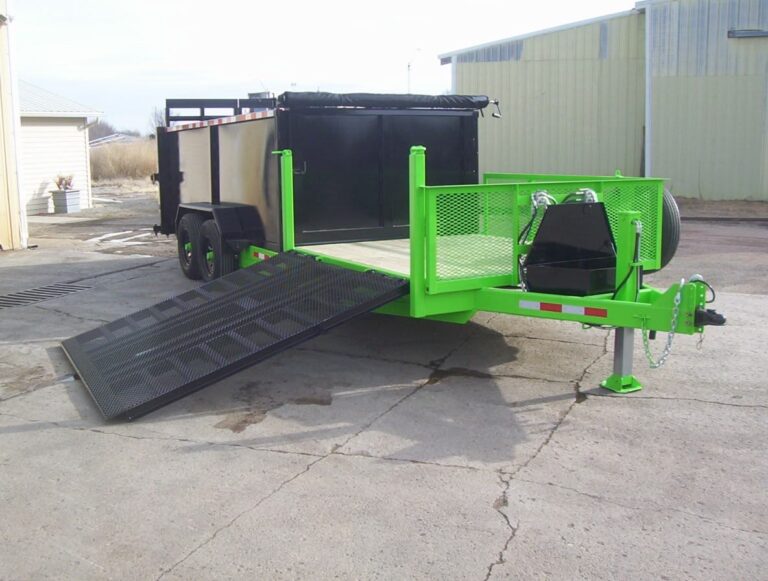
You want both a gooseneck hitch configuration and a hydraulic dumping bed.
Final Thoughts
The most important thing to understand is that dump trailer and gooseneck aren’t necessarily competing trailer types.
A dump trailer describes the trailer’s unloading function, while a gooseneck describes how the trailer connects to the tow vehicle.
For many heavy-duty operators, a gooseneck dump trailer can combine both features.
Before buying, evaluate your typical cargo, trailer GVWR, payload, axle configuration, tow vehicle, hitch setup, braking system, and intended application.
Before making your decision, explore our Dump Trailer Buying Guide, 5×8 Dump Trailer Buying Guide, 5×10 Dump Trailer Buying Guide, 6×10 Dump Trailer Buying Guide, Single Axle Dump Trailer Buying Guide, and Tandem Axle Dump Trailer Buying Guide.
For other hauling requirements, explore our Utility Trailers, Deck-Over Trailers, Lowdeck Trailers, Enclosed Cargo Trailers, Horse Trailers & Stock Trailers, and Accessories.
For safe towing and loading practices, visit the NHTSA trailer safety guidelines.
