

Table of Contents
ToggleDump Trailer Sizes Explained: How to Choose the Right Dump Trailer Size for Your Hauling Needs
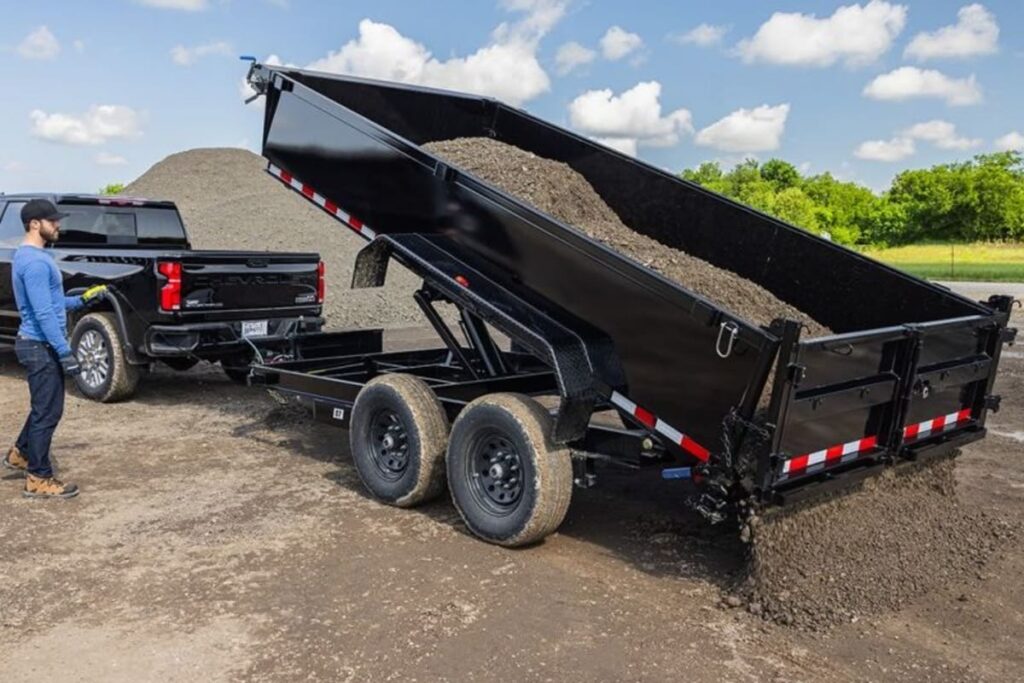
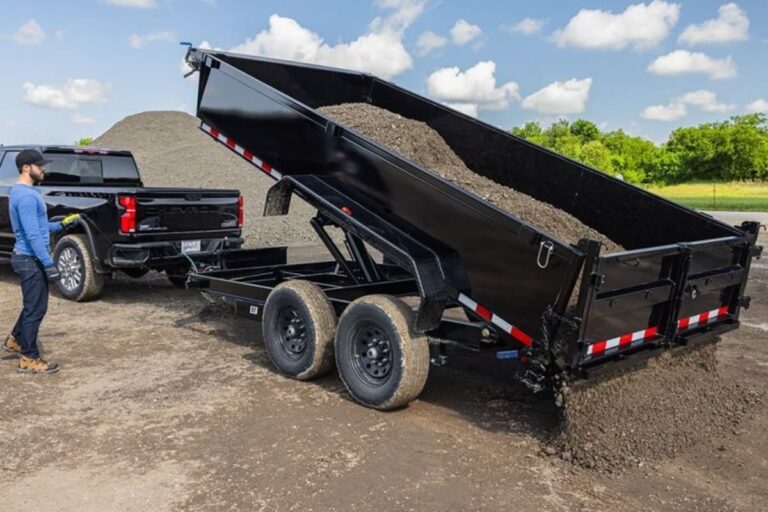
Choosing the right dump trailer size is one of the most important decisions you can make before purchasing a trailer. A trailer that is too small may require unnecessary trips, while a trailer that is larger than necessary can increase purchase costs, towing requirements, maintenance, and operating expenses.
This dump trailer sizes explained guide will help you understand the differences between common dump trailer dimensions and determine which configuration makes the most sense for your work.
From compact 5×8 dump trailers to larger 5×10 and 6×10 configurations, each size has advantages depending on your payload requirements, tow vehicle, job site, and budget.
If you’re still comparing trailer types, start with our Trailer Buying Guide for a broader overview of the different trailer categories available.
Why Dump Trailer Size Matters
The physical dimensions of a dump trailer affect much more than how much material fits inside the bed.
Trailer size can influence:
- Payload capacity
- GVWR
- Towing requirements
- Maneuverability
- Storage requirements
- Fuel consumption
- Purchase price
- Job-site accessibility
For example, a landscaper working primarily in residential neighborhoods may benefit from a compact dump trailer, while a construction contractor regularly hauling concrete or demolition debris may need a larger tandem axle configuration.
The goal isn’t to buy the biggest trailer available. It’s to choose the right trailer for the work you actually perform.
Understanding Dump Trailer Dimensions
When you see a trailer described as 5×8, 5×10, or 6×10, the numbers generally describe the approximate width and length of the dump bed.
5×8 Dump Trailer
Approximately:
- 5 feet wide
- 8 feet long
This is one of the most compact dump trailer configurations and is particularly useful for homeowners, landscapers, and light-duty contractors.
Read our 5×8 Dump Trailer Buying Guide for a more detailed look at this configuration.
5×10 Dump Trailer
Approximately:
- 5 feet wide
- 10 feet long
The additional two feet of length provide more room for material while maintaining relatively good maneuverability.
Our 5×10 Dump Trailer Buying Guide covers this size in greater detail.
6×10 Dump Trailer
Approximately:
- 6 feet wide
- 10 feet long
The additional width can make loading bulky materials and equipment easier.
See our 6×10 Dump Trailer Buying Guide for more information.
5×8 vs 5×10 Dump Trailer
One of the most common comparisons is between a 5×8 and a 5×10.
Choose a 5×8 if:
- You mainly perform residential work.
- You need easy maneuverability.
- You have limited storage space.
- Your typical loads are relatively small.
- You want lower ownership costs.
Choose a 5×10 if:
- You regularly haul larger loads.
- You want additional bed length.
- You’re making frequent trips to job sites.
- Your tow vehicle can safely handle the additional weight.
A 5×10 can reduce the number of trips required for larger landscaping and construction jobs.
5×10 vs 6×10 Dump Trailer
The primary difference between these two configurations is width.
A 6×10 provides an additional foot of width compared with a 5×10, which can be useful when loading wider or bulkier materials.
5×10 Advantages
- Slightly narrower footprint
- Easier maneuverability
- Often lighter
- Good balance between capacity and towing requirements
6×10 Advantages
- Wider bed
- More loading space
- Better suited to larger commercial workloads
- More room for bulky materials
The right choice depends on your tow vehicle and the materials you regularly transport.
Single Axle vs Tandem Axle
Trailer dimensions aren’t the only consideration.
The axle configuration also has a major effect on how the trailer performs.
Single Axle Dump Trailers
Single axle models are generally better suited for:
- Homeowners
- Small landscaping jobs
- Light-duty contractors
- Occasional hauling
They typically offer lower purchase and maintenance costs.
Read our Single Axle Dump Trailer Buying Guide for a complete comparison.
Tandem Axle Dump Trailers
Tandem axle models are generally better suited for:
- Commercial contractors
- Heavy landscaping
- Frequent hauling
- Larger payloads
- Longer-distance towing
Our Tandem Axle Dump Trailer Buying Guide explains the advantages in greater detail.
Don’t Choose Size Without Checking GVWR
A larger physical bed doesn’t automatically mean that you can safely carry more material.
Always check the trailer’s:
- GVWR
- Empty weight
- Payload capacity
- Axle ratings
- Tire ratings
- Brake configuration
For example, gravel, concrete, and other dense materials can reach the trailer’s maximum weight surprisingly quickly.
This is why choosing based solely on bed dimensions can lead to an inappropriate purchase.
Match the Trailer to Your Tow Vehicle
Your tow vehicle is just as important as the trailer itself.
Before purchasing, verify:
- Maximum towing capacity
- Vehicle payload rating
- Hitch capacity
- Tongue-weight limits
- Brake controller requirements
A trailer that looks ideal on paper may not be appropriate if your vehicle cannot safely tow it when fully loaded.
When in doubt, use the manufacturer’s specifications for both the trailer and tow vehicle rather than relying on estimates.
What Size Is Best for Landscaping?
For many landscaping applications, compact and medium-sized dump trailers are excellent choices.
5×8
Good for:
- Mulch
- Small gravel loads
- Yard cleanup
- Residential projects
5×10
Good for:
- Larger landscaping jobs
- Soil
- Gravel
- Commercial maintenance
6×10
Good for:
- Larger loads
- Frequent commercial work
- Bulk landscaping materials
Landscapers transporting mowers and lawn equipment may also find Utility Trailers more appropriate for certain jobs.
What Size Is Best for Construction?
Construction requirements can vary significantly.
A smaller trailer can be useful for residential remodeling, while larger tandem axle configurations may be more suitable for demolition and excavation.
Common applications include:
- Roofing debris
- Concrete
- Dirt
- Asphalt
- Lumber
- Demolition waste
If the primary job is transporting heavy machinery rather than loose materials, consider Deck-Over Trailers or Lowdeck Trailers.
What Size Is Best for Farms and Ranches?
Farm owners can use dump trailers for:
- Soil
- Feed
- Fertilizer
- Firewood
- Fence materials
- General property maintenance
For transporting horses and livestock, however, a dedicated Horse Trailers & stock Trailers configuration is the safer and more appropriate choice.
When Should You Choose a Larger Dump Trailer?
Consider moving to a larger configuration if:
- You’re making multiple trips per job.
- Your current trailer regularly reaches its payload limit.
- Your business workload is growing.
- You’re hauling larger quantities of bulk materials.
- Your tow vehicle can safely accommodate the upgrade.
However, don’t upgrade simply because a larger trailer looks more capable.
A larger trailer can also mean:
- Higher purchase cost
- Higher maintenance costs
- Increased towing requirements
- More storage space
- Greater operating expenses
Accessories That Can Make Any Dump Trailer More Useful
Regardless of the size you choose, the right accessories can improve productivity.
Useful additions include:
- Tarp systems
- Spare tires
- Toolboxes
- Loading ramps
- Battery chargers
- Tie-down equipment
- LED lighting
Browse our Accessories category when planning your trailer setup.
When a Different Trailer Type Makes More Sense
A dump trailer isn’t the best solution for every hauling application.
Enclosed Cargo Trailers
If you need protection from rain, snow, and road debris, explore Enclosed Cargo Trailers.
Utility Trailers
For general-purpose hauling, landscaping equipment, ATVs, and other cargo, Utility Trailers can be more practical.
Deck-Over Trailers
For wide equipment and machinery, Deck-Over Trailers provide a wider deck configuration.
Lowdeck Trailers
For heavy equipment that needs easier loading, Lowdeck Trailers may be the better option.
Horse & Stock Trailers
For livestock transportation, choose Horse Trailers & Stock Trailers rather than a dump trailer.
Common Dump Trailer Size Mistakes
Buying Too Small
A trailer that is constantly overloaded or requires multiple trips can quickly become inefficient.
Buying Too Large
An oversized trailer can create unnecessary towing and maintenance costs.
Ignoring Payload
Always consider the actual weight of the material you’re transporting.
Ignoring Future Needs
If your business is growing, consider whether the trailer will still meet your needs a few years from now.
Conclusion
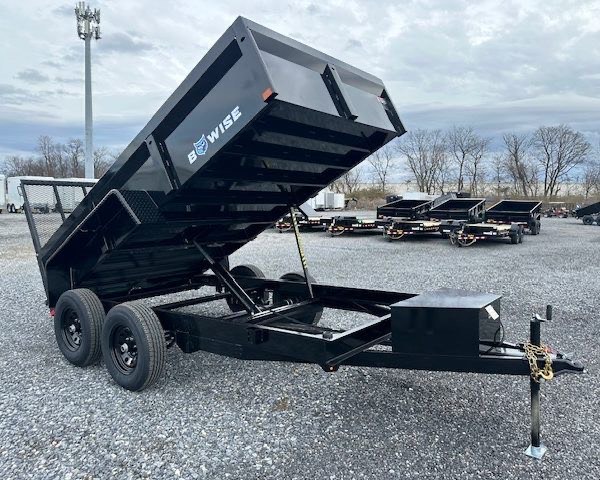
Understanding dump trailer sizes makes it much easier to choose a trailer that matches your workload, tow vehicle, budget, and long-term goals.
A 5×8 dump trailer can be ideal for compact residential projects, while a 5×10 provides additional capacity without becoming excessively large. A 6×10 offers even more width and loading space for buyers handling larger workloads.
For heavier commercial applications, a tandem axle configuration may provide the additional capacity and stability required.
Before making your decision, explore our Dump Trailer Buying Guide, 5×8 Dump Trailer Buying Guide, 5×10 Dump Trailer Buying Guide, 6×10 Dump Trailer Buying Guide, Single Axle Dump Trailer Buying Guide, and Tandem Axle Dump Trailer Buying Guide.
For other hauling requirements, explore our Utility Trailers, Deck-Over Trailers, Lowdeck Trailers, Enclosed Cargo Trailers, Horse Trailers & Stock Trailers, and Accessories.
