

Table of Contents
ToggleHow Much Does a Horse Trailer Cost? A Complete Buying Guide
Buying a horse trailer is an important investment, whether you transport horses for recreational riding, competitions, breeding, ranch work, or professional equestrian activities. Before choosing a trailer, it is essential to understand the costs involved and how different designs, materials, capacities, and features affect the price.
Our Horse Trailer Buying Guide: How to Choose the Right Horse Trailer provides a broader overview of choosing a trailer that suits your horses and transportation needs. In this article, we will focus specifically on horse trailer prices, the factors that influence them, and how to determine which option offers the best value for your budget.
There is no single price that applies to every horse trailer. A basic bumper-pull model designed for one or two horses will generally cost less than a larger gooseneck trailer equipped with living quarters, multiple stalls, or premium construction materials.
The key is to look beyond the initial purchase price and consider safety, towing compatibility, maintenance, durability, and the number of horses you need to transport.
1. How Much Does a Horse Trailer Cost?
Horse trailer prices vary considerably depending on the trailer’s configuration, condition, capacity, construction, and equipment.
A simple bumper-pull trailer may be suitable for owners who transport one or two horses occasionally. Larger gooseneck models may provide more room, additional stalls, improved storage, and features designed for frequent or professional use.
The following figures are general U.S. market estimates, not verified current listings or guaranteed selling prices. Actual prices can vary by manufacturer, location, availability, and condition.
Horse Trailer Type | Illustrative Price Range |
|---|---|
Basic bumper-pull horse trailer | $5,000–$15,000 |
Mid-range bumper-pull horse trailer | $10,000–$25,000 |
Larger gooseneck horse trailer | $15,000–$40,000 |
Premium aluminum horse trailer | $20,000–$60,000+ |
Horse trailer with living quarters | $30,000–$100,000+ |
Used horse trailer | $3,000–$30,000+ |
These ranges overlap because a small premium trailer may cost more than a larger basic model. Used trailers can also vary significantly in value depending on age, maintenance, structural condition, and equipment.
What should you expect at different budgets?
Your budget helps determine which features and configurations are realistic.
Illustrative Budget | What You Might Find | What to Check |
|---|---|---|
Under $5,000 | Older or smaller used trailers | Structural condition, floor integrity, brakes, tires, and documentation |
$5,000–$15,000 | Basic or older bumper-pull models | Horse capacity, towing compatibility, and repairs needed |
$15,000–$30,000 | More configurations, including some newer or larger trailers | Construction materials, ventilation, safety equipment, and warranty |
$30,000–$60,000 | Larger, premium, or well-equipped models | Features you genuinely need and total ownership cost |
Above $60,000 | Premium configurations and some trailers with living quarters | Build quality, equipment, maintenance, and resale considerations |
These are planning categories, not guarantees that a particular type or condition of trailer will be available at each price point.
Before comparing prices, establish how many horses you need to carry, how often you travel, and whether you require a bumper-pull or gooseneck configuration.
2. Horse Trailer Price Comparison by Type
Horse trailers are available in several configurations. Each serves a different purpose, and the right option depends on your transportation requirements.
Bumper-Pull Horse Trailers
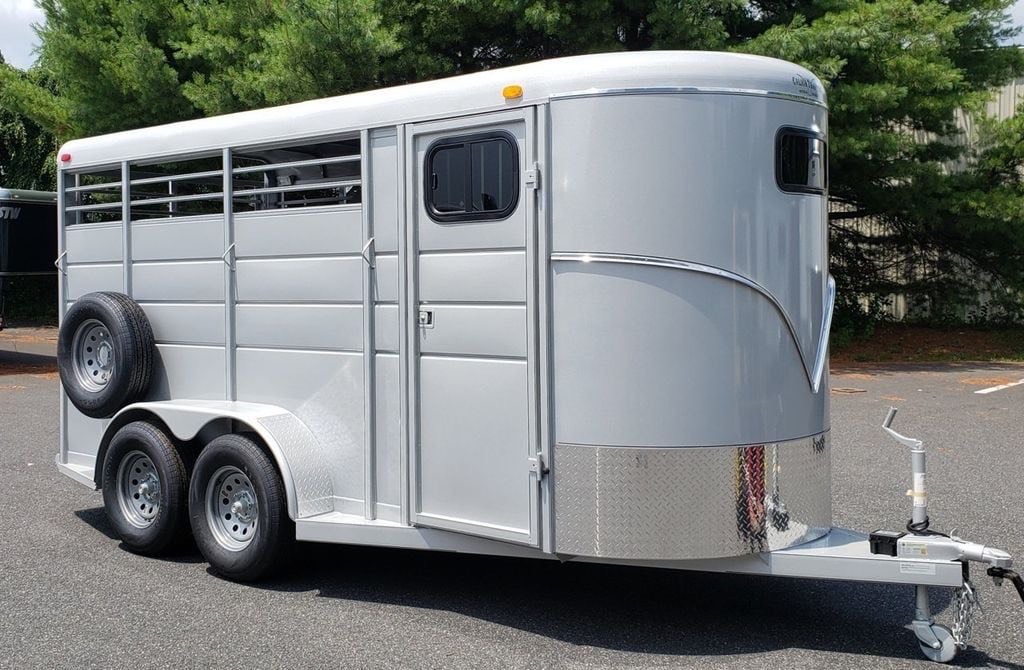
Bumper-pull horse trailers connect to a compatible hitch at the rear of a tow vehicle. They are popular among horse owners who transport a small number of horses and want a straightforward towing arrangement.
Potential advantages include:
- Generally lower purchase prices than comparable larger gooseneck models.
- A suitable option for many recreational horse owners.
- A range of compact designs.
- Compatibility with appropriately equipped tow vehicles.
However, the trailer must be matched to the tow vehicle’s towing capacity, hitch rating, payload limits, and braking requirements.
For a closer look at this configuration, read Gooseneck vs. Bumper-Pull Horse Trailers: Which Is Right for You?
Gooseneck Horse Trailers
Gooseneck horse trailers connect to a hitch installed in the bed of a suitable pickup truck. They commonly accommodate larger configurations and may offer additional storage or living space.
Potential advantages include:
- More configuration options for transporting multiple horses.
- Additional room in some designs.
- A hitch arrangement that may provide improved towing stability when properly matched and loaded.
- Options suited to frequent transportation or professional use.
Gooseneck trailers typically require a compatible pickup truck and appropriate hitch installation. The truck’s payload and rear-axle ratings are especially important because the hitch places a portion of the trailer’s weight on the truck.
Stock Trailers and Horse Trailers
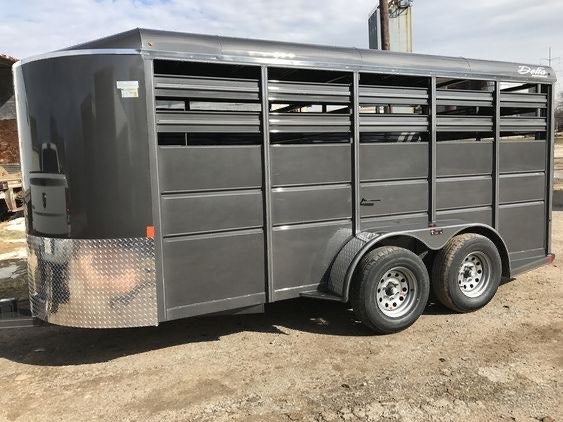
Stock trailers are often designed for livestock transportation, with configurations that may differ from trailers intended primarily for individual horses.
If you are comparing trailers for horses, cattle, or mixed livestock requirements, explore our Horse & Stock Trailers category.
Before selecting a stock trailer for horses, verify that its internal layout, flooring, partitions, ventilation, and loading arrangements are appropriate for the animals you intend to transport.
Horse Trailer Types at a Glance
Trailer Type | Typical Use | Main Price Considerations |
|---|---|---|
Bumper-pull | Recreational riding and smaller loads | Size, construction, and equipment |
Gooseneck | Larger loads and frequent transportation | Capacity, hitch configuration, and features |
Aluminum | Buyers prioritizing corrosion resistance and weight considerations | Material quality, design, and equipment |
Steel | Buyers seeking a range of practical and economical options | Frame construction, protective coatings, and maintenance |
Living quarters | Longer trips and overnight stays | Interior accommodation, utilities, and specialized equipment |
Stock trailer | Livestock transportation | Layout, capacity, ventilation, and intended use |
The most expensive configuration is not automatically the best. Choose based on your actual requirements rather than paying for features you may rarely use.
3. What Factors Affect Horse Trailer Prices?
Several factors influence the price of a horse trailer. Understanding them makes it easier to compare models accurately.
3.1 Number of Horses
The number of horses you need to transport affects the trailer’s dimensions, weight, stall configuration, and required equipment.
A trailer intended for one or two horses will generally have a different price from a larger model designed for several animals.
However, capacity alone does not determine cost. Materials, manufacturer, equipment, and overall construction quality also matter.
3.2 Construction Materials
Steel and aluminum are two common materials used in horse trailer construction.
Steel trailers may offer an economical purchase price and strong structural components, while aluminum models are often selected for their corrosion resistance and potential weight advantages.
The best choice depends on the complete design, maintenance requirements, intended usage, and total cost of ownership.
3.3 Trailer Size
Larger trailers may require more materials and stronger structural components. They can also have higher weight ratings, more extensive interiors, and additional equipment.
To avoid buying a trailer that is too small or unnecessarily large, review Horse Trailer Sizes Explained: How to Choose the Right Size.
3.4 Hitch Configuration
Bumper-pull and gooseneck trailers use different hitch arrangements. The configuration can affect the trailer’s design, compatible tow vehicle, purchase cost, and overall setup expenses.
Do not assume a gooseneck is automatically safer or better for every buyer. Correct matching, loading, maintenance, and driving practices remain essential.
3.5 Interior and Safety Features
Additional features can increase the purchase price, but some are important for safe and practical transportation.
Depending on the model, these may include:
- Adequate ventilation.
- Suitable stall dividers and partitions.
- Appropriate flooring and mats.
- Reliable brakes and lighting.
- Secure doors and latches.
- Non-slip loading surfaces.
- Well-designed loading ramps.
- Interior padding and protective components.
- Tack storage.
- Windows and access doors.
Prioritize features that improve horse safety, loading, ventilation, and everyday usability before choosing cosmetic upgrades.
3.6 Manufacturer and Build Quality
Manufacturers differ in construction methods, components, finishes, equipment, and warranty coverage.
When comparing two trailers with similar dimensions, inspect their specifications and build quality instead of relying only on their advertised capacity.
3.7 New or Used Condition
A used trailer may have a lower initial purchase price, but previous maintenance, hidden damage, worn components, or necessary repairs can affect its actual value.
A well-maintained used trailer can be a sensible purchase. However, a cheap trailer requiring extensive repairs may ultimately cost more than a better-maintained alternative.
4. Bumper-Pull vs. Gooseneck Horse Trailer Costs
One of the most important purchasing decisions is whether to choose a bumper-pull or gooseneck configuration.
The right choice depends on your horse transportation needs and the vehicle you already own or plan to purchase.
Consideration | Bumper-Pull | Gooseneck |
|---|---|---|
Hitch location | Rear of tow vehicle | Hitch in the bed of a compatible pickup |
Common applications | Recreational and smaller-scale transport | Larger configurations and frequent transport |
Initial cost | Often lower for comparable basic models | Often higher for comparable models |
Tow vehicle | Suitable SUV or truck, depending on ratings | Compatible pickup truck with appropriate hitch |
Hitch installation | Compatible rear hitch setup | Gooseneck hitch installation may be required |
Storage options | Vary by model | Some models offer more storage |
Horse capacity | Depends on design | Depends on design |
Best buying approach | Match the trailer to the vehicle and intended use | Check truck payload, axle ratings, hitch ratings, and towing capacity |
When is a bumper-pull trailer the better value?
A bumper-pull trailer may be appropriate if you:
- Transport one or two horses.
- Travel occasionally.
- Already own a properly rated tow vehicle.
- Prefer a simpler hitch arrangement.
- Do not need the extra capacity or features of a larger trailer.
When might a gooseneck be worth the additional cost?
A gooseneck may be worth considering if you:
- Transport several horses regularly.
- Need a larger trailer configuration.
- Require additional storage.
- Travel long distances frequently.
- Own a compatible pickup truck.
Before buying either configuration, calculate the total cost, including any hitch installation, vehicle upgrades, insurance, registration, and maintenance.
A trailer’s advertised capacity does not establish whether your vehicle can tow it safely. Always check the relevant ratings for the fully loaded combination.
5. Aluminum vs. Steel Horse Trailer Prices
Material selection can affect the initial purchase price, maintenance needs, trailer weight, corrosion resistance, and resale considerations.
Neither material is automatically the best choice for every buyer.
Aluminum Horse Trailers
Aluminum trailers are often attractive to buyers who want corrosion resistance and are considering the effect of trailer weight on towing.
Potential advantages include:
- Good resistance to rust-related corrosion.
- Potential weight savings, depending on construction.
- A range of premium designs.
- Reduced need for certain rust-prevention treatments.
However, aluminum does not mean maintenance-free. Structural components, fasteners, welds, flooring, electrical systems, brakes, and other parts still require regular inspection.
Aluminum trailers may also have higher purchase prices, depending on the manufacturer and design.
Steel Horse Trailers
Steel trailers are available in a broad range of configurations and may offer a lower initial purchase price.
Potential advantages include:
- A wide range of models and price points.
- Strong structural components when properly engineered.
- Familiar repair methods for many trailer technicians.
- Options suitable for recreational and commercial use.
Steel can corrode if protective coatings are damaged or maintenance is neglected. Buyers should inspect the frame, joints, underbody, and other areas exposed to moisture and road debris.
Cost Comparison
Factor | Aluminum | Steel |
|---|---|---|
Initial price | Often higher | Often lower for comparable basic models |
Corrosion resistance | Generally good | Depends on protective coatings and maintenance |
Weight | May be lighter, depending on design | May be heavier, depending on design |
Maintenance | Still requires regular inspections | Rust prevention may be particularly important |
Repairs | Depends on damage, design, and specialist availability | Depends on damage and construction |
Long-term value | Depends on condition, design, and resale demand | Depends on condition, design, and resale demand |
Which material should you choose?
Choose based on the entire trailer rather than the material alone.
A well-designed steel trailer with good maintenance may be a better purchase than a poorly maintained aluminum model. Likewise, a quality aluminum trailer may be attractive if its price, weight, corrosion resistance, and configuration fit your needs.
Compare similar trailers and ask for detailed specifications before making a decision.
6. How Horse Trailer Size Affects the Price
Size influences the purchase price, but it also affects towing requirements, storage, maneuverability, and the space available for horses.
A trailer should provide sufficient room for the horses it will carry without exceeding the capabilities of the tow vehicle.
Choosing the Right Size
Consider the following questions:
- How many horses will you transport regularly?
- What are their sizes and individual space requirements?
- Will you carry tack or other equipment?
- How often will you travel?
- Will you need additional capacity in the future?
- Can your tow vehicle handle the trailer when fully loaded?
- Do you have enough room to store and maneuver the trailer?
Size and Budget Planning
Requirement | What to Consider | Potential Cost Effect |
|---|---|---|
One or two horses | Compact configurations and basic equipment | May reduce the initial cost |
Multiple horses | Additional stalls and a larger structure | Can increase cost |
Additional tack storage | Tack compartments and storage areas | May increase the purchase price |
Long-distance transportation | Ventilation, durability, and useful convenience features | May increase upfront cost |
Living quarters | Sleeping area, utilities, and interior amenities | Can substantially increase the price |
These are general relationships, not fixed pricing rules. Two trailers of the same size may differ considerably in price because of materials, equipment, construction quality, and condition.
Important: Do not choose a trailer based solely on the number of stalls. Confirm the manufacturer’s rated capacity and the trailer’s dimensions, payload, and weight ratings.
Your fully loaded trailer must remain within its applicable gross vehicle weight rating (GVWR), and the tow vehicle must be suitable for the actual load.
7. New vs. Used Horse Trailer Costs
Choosing between a new and used horse trailer is one of the most significant budget decisions.
Both can be sensible options, but they offer different trade-offs.
Buying a New Horse Trailer
A new trailer may offer:
- New components and equipment.
- Current design options.
- Less uncertainty about previous use.
- Potential manufacturer warranty coverage.
- The ability to select a preferred configuration, depending on availability.
The disadvantages may include a higher purchase price, depreciation, and additional costs for optional features or delivery.
Before purchasing, confirm exactly what the warranty covers, how long it lasts, and which maintenance obligations apply.
Buying a Used Horse Trailer
A used trailer may provide a lower purchase price and allow you to consider a higher-specification model within your budget.
However, age and appearance alone do not establish its condition.
Inspect:
- The floor and supporting structure.
- The frame and underbody.
- Tires and wheels.
- Brakes and wheel bearings.
- Electrical wiring and lights.
- Hitch components and safety chains.
- Doors, latches, dividers, and ramps.
- Signs of corrosion, cracks, or previous repairs.
- Ventilation and interior condition.
- Registration documents and applicable identification numbers.
If possible, arrange an inspection by a qualified trailer technician before committing to the purchase.
New vs. Used Comparison
Factor | New Trailer | Used Trailer |
|---|---|---|
Purchase price | Generally higher | Often lower |
Previous wear | No previous owner use | Depends on history and maintenance |
Warranty | May be available | May be limited or unavailable |
Immediate repairs | May be less likely, but not impossible | More dependent on condition |
Model selection | Depends on current stock and build options | Depends on available used inventory |
Depreciation | May experience greater initial depreciation | Previous depreciation may already have occurred |
Inspection | Still necessary | Particularly important |
Best approach | Compare specifications, warranty, and total cost | Inspect carefully and budget for potential repairs |
How do you determine whether a used trailer is worth the price?
Start with the asking price, then add the estimated cost of any repairs or missing equipment.
For example, a used trailer advertised for $7,000 may seem attractive. If it requires $2,000 in necessary repairs, its effective cost becomes $9,000 before registration, transportation, and other expenses.
Compare that total with the price of similar trailers in better condition.
The cheapest listing is not always the best deal.
8. Additional Costs to Consider When Buying a Horse Trailer
The advertised purchase price is only one part of the total cost of ownership.
Depending on your circumstances, you may need to budget for delivery, hitch installation, insurance, registration, maintenance, and storage.
8.1 Delivery or Transportation
If you purchase a trailer from a seller located far away, transporting it to your location may create an additional expense.
Before purchasing, confirm:
- Whether delivery is included in the quoted price.
- The delivery destination.
- Whether unloading or placement is included.
- Whether additional fees apply to your location.
- Whether the delivery arrangement is suitable for the trailer.
Always confirm delivery terms in writing before paying.
8.2 Hitch Installation
If your vehicle does not have the correct hitch arrangement, installation may be necessary.
The cost depends on the vehicle, hitch type, installation requirements, and any additional equipment.
Gooseneck trailers require particular attention to pickup-bed compatibility, available payload, and hitch ratings.
8.3 Insurance
Insurance requirements and coverage vary depending on your location, insurer, trailer use, and financing or ownership arrangements.
Ask an insurer whether the policy covers the trailer itself, liability exposures, theft, and other relevant risks.
Do not assume that your vehicle insurance automatically provides every type of trailer coverage.
8.4 Registration and Taxes
Depending on the jurisdiction, you may need to pay sales or use tax, registration fees, title fees, inspection fees, or other charges.
Verify the requirements that apply to your location before calculating the final purchase cost.
8.5 Maintenance and Repairs
Regular maintenance helps keep the trailer in safe operating condition.
Potential expenses include:
- Tire replacement.
- Brake servicing.
- Wheel-bearing maintenance.
- Electrical repairs.
- Flooring repairs.
- Rust prevention.
- Ramp and door repairs.
- Hitch and coupling inspections.
- Repairs to dividers and interior fittings.
A maintenance budget should reflect how frequently you travel, the trailer’s condition, and the manufacturer’s recommendations.
8.6 Storage
If you do not have suitable space at home or on your property, you may need to pay for trailer storage.
Consider whether the storage area offers appropriate security, access, and protection from weather.
Example of Total Ownership Cost
The following example illustrates how additional expenses can change the overall cost. These are hypothetical figures, not a quote.
Expense | Example Amount |
|---|---|
Horse trailer purchase price | $12,000 |
Delivery | $500 |
Hitch installation or adjustment | $600 |
Initial inspection and maintenance | $300 |
Registration and related fees | $200 |
Illustrative initial total | $13,600 |
This example excludes insurance, ongoing maintenance, storage, taxes that may apply, and future repairs.
Your actual costs may be higher or lower. Request a complete breakdown before agreeing to a purchase.
9. How to Choose a Horse Trailer Within Your Budget
A realistic budget should balance affordability, safety, practicality, and long-term value.
Use the following steps to narrow your choices.
Step 1: Establish Your Horse Transportation Needs
Determine the number of horses you need to carry and how frequently you will travel.
A person who transports one horse occasionally may need a different configuration from someone who regularly transports several horses to competitions or works with livestock professionally.
Start with the intended use rather than the trailer’s advertised features.
Step 2: Check Your Tow Vehicle
Before comparing specific models, verify the tow vehicle’s:
- Maximum towing capacity.
- Payload rating.
- Gross vehicle weight rating.
- Gross combined weight rating.
- Rear-axle rating.
- Hitch rating.
- Braking requirements.
Account for passengers, cargo, hitch weight, and all other loads.
A vehicle’s maximum towing figure alone does not prove that it can safely handle a particular horse trailer.
Step 3: Choose a Suitable Configuration
Compare bumper-pull and gooseneck models based on your vehicle, horse capacity, driving requirements, and budget.
You can use Gooseneck vs. Bumper-Pull Horse Trailers: Which Is Right for You? to review the differences before making a decision.
Step 4: Prioritize Safety and Practical Features
Focus first on the trailer’s structural condition, ventilation, floor, brakes, tires, lighting, loading arrangement, and secure partitions.
Additional storage, premium finishes, and cosmetic features can be considered after the essential requirements are satisfied.
Step 5: Compare Several Trailers
Do not rely on one advertised price.
Compare several trailers with similar specifications and evaluate:
- Purchase price.
- Horse capacity.
- Construction material.
- Overall condition.
- Included equipment.
- Warranty coverage.
- Delivery costs.
- Expected maintenance.
- Seller documentation.
A meaningful comparison considers what you receive for the price, not simply which listing is cheapest.
Step 6: Calculate the Total Cost
Add the purchase price to any delivery, registration, insurance, hitch, inspection, and immediate repair expenses that apply.
This gives you a more realistic picture of what buying the trailer will require financially.
Step 7: Inspect Before Committing
For a used trailer, arrange a thorough inspection and verify ownership documentation.
For a new trailer, review the specifications, warranty, included equipment, delivery terms, and any conditions attached to the sale.
Do not overlook a serious safety concern simply because the price is attractive.
Budget Planning Checklist
Question | Why It Matters |
|---|---|
How many horses must the trailer accommodate? | Helps establish the appropriate size and configuration |
Is the tow vehicle suitable? | Prevents an incompatible or overloaded towing setup |
Is the trailer new or used? | Affects price, condition, warranty, and potential repairs |
Are the essential safety features present? | Helps assess suitability for horse transportation |
Is delivery included? | Prevents unexpected transportation expenses |
What are the registration and insurance costs? | Helps calculate the total budget |
Are repairs likely to be needed? | Identifies potential additional costs |
Is the seller providing complete documentation? | Helps verify the transaction and ownership |
Once you have answered these questions, you can compare suitable trailers with greater confidence.
10. Common Mistakes to Avoid When Comparing Horse Trailer Prices
Mistake 1: Choosing Only by Price
A low purchase price can be tempting, but it does not necessarily represent good value.
A trailer with structural damage, worn flooring, defective brakes, or extensive corrosion may require expensive repairs.
Evaluate the condition and specifications before deciding.
Mistake 2: Ignoring Tow Vehicle Limitations
A trailer may appear suitable for your horses but still exceed your vehicle’s available towing capacity or payload.
Always verify the relevant vehicle and trailer ratings before purchasing.
Mistake 3: Paying for Features You Do Not Need
Premium equipment can increase the purchase price.
If you only need a straightforward trailer for occasional local transportation, a complex configuration with unnecessary extras may not provide sufficient value.
Choose features based on your actual requirements.
Mistake 4: Overlooking Maintenance
A horse trailer requires ongoing care regardless of its purchase price or construction material.
Inspect it regularly and follow the manufacturer’s maintenance schedule.
Mistake 5: Assuming All Trailers With the Same Capacity Are Equivalent
Two trailers designed for the same number of horses can differ in internal dimensions, materials, layout, weight, equipment, and construction quality.
Compare the complete specifications rather than relying on capacity alone.
Mistake 6: Forgetting Additional Expenses
Delivery, registration, hitch installation, insurance, and repairs can increase the amount you need to spend.
Calculate the total cost before committing.
Mistake 7: Skipping the Inspection
A trailer can look attractive in photographs while having hidden mechanical or structural issues.
Inspect the trailer in person when possible, and consider a qualified professional inspection before buying a used model.
11. Frequently Asked Questions
How much does a horse trailer cost on average?
Horse trailer prices vary considerably. Basic models may cost several thousand dollars, while larger, premium, or living-quarter configurations can cost tens of thousands of dollars or more. The final price depends on size, materials, condition, equipment, and manufacturer.
What is the cheapest type of horse trailer?
A basic bumper-pull trailer or an older used model may have a lower initial purchase price. However, the cheapest option is not always the most economical if it needs significant repairs or is unsuitable for your tow vehicle.
Are aluminum horse trailers more expensive than steel trailers?
Aluminum models often have a higher purchase price than comparable basic steel trailers. However, the difference depends on the manufacturer, design, equipment, and condition. Compare similar models rather than assuming every aluminum trailer costs more.
Is a gooseneck horse trailer worth the additional cost?
It can be worthwhile if you need a larger configuration, transport several horses, or travel frequently, and have a suitable pickup truck. For some owners, a bumper-pull trailer may be a more practical and economical choice.
Is it better to buy a new or used horse trailer?
A new trailer may offer new components and manufacturer warranty coverage, while a used trailer may have a lower purchase price. The better option depends on your budget, the trailer’s condition, its specifications, and the cost of any necessary repairs.
What should I inspect before buying a used horse trailer?
Inspect the floor, frame, underbody, tires, brakes, wheels, lights, hitch, doors, latches, ramps, dividers, and ventilation. Check for corrosion, structural damage, and signs of poor repairs. Verify the documentation and consider a professional inspection.
What other expenses should I budget for?
Depending on your circumstances, additional expenses may include delivery, registration, taxes, insurance, hitch installation, storage, maintenance, and repairs.
How do I know which horse trailer size I need?
Consider the number and size of your horses, the trailer’s internal dimensions, the intended use, and your tow vehicle’s ratings. Our Horse Trailer Sizes Explained: How to Choose the Right Size article provides more guidance on comparing sizes.
Can I use a stock trailer to transport horses?
Some stock trailers may be suitable for particular horse transportation needs, but suitability depends on the design, layout, flooring, ventilation, partitions, and loading arrangement. Confirm that the specific trailer is appropriate for horses before purchasing it.
You can compare available configurations in our Horse & Stock Trailers category.
Should I pay for a horse trailer inspection?
An inspection can be particularly valuable when purchasing a used trailer. It may identify structural, mechanical, or safety problems that are not immediately obvious. The cost of an inspection should be considered alongside the potential cost of repairs.
Final Thoughts
The cost of a horse trailer depends on much more than its advertised price. Size, construction materials, hitch configuration, horse capacity, equipment, condition, and intended use all influence what you should expect to pay.
For some buyers, a basic bumper-pull trailer may offer the most practical solution. Others may benefit from a larger gooseneck configuration, a premium aluminum model, or a trailer equipped for extended travel.
Before making a purchase, establish your budget, verify that your tow vehicle is suitable, compare similar models, and inspect the trailer’s safety-critical components. Remember to account for delivery, registration, insurance, maintenance, and any repairs that may be necessary.
Most importantly, choose a trailer that accommodates your horses appropriately and suits the transportation tasks you perform regularly. Paying for the right configuration can provide better long-term value than choosing the cheapest available option.
To continue comparing your options, start with our Horse Trailer Buying Guide: How to Choose the Right Horse Trailer, review Two-Horse vs. Three-Horse Trailers: Which Is Right for You?, and explore the Horse & Stock Trailers category to evaluate configurations that fit your requirements.
A well-informed decision helps you balance purchase price, horse safety, towing compatibility, and long-term ownership costs.
For open-deck equipment hauling, Utility Trailers provide a different configuration. For wide equipment, Deck-Over Trailers may be worth considering. And for horses or livestock, Horse & Stock Trailers are designed specifically for that type of transportation.
For safe towing and loading practices, visit the NHTSA trailer safety guidelines.
