

Table of Contents
ToggleSingle Axle vs. Tandem Axle Enclosed Cargo Trailers: How to Choose
Choosing the right enclosed cargo trailer involves more than deciding on its length and width. Axle configuration can also affect how the trailer handles, how much weight it can carry, how it is maintained, and what type of towing setup you need.
The two common configurations are single axle and tandem axle.
A single-axle trailer has one axle supporting the trailer, while a tandem-axle trailer has two axles. Each configuration has applications where it can make sense, depending on the trailer size, cargo, weight requirements, towing vehicle, and intended use.
For buyers comparing enclosed trailers, understanding the difference can help prevent choosing a trailer that is either too small for the job or unnecessarily large for everyday use.
If you’re still researching enclosed trailers, start with Enclosed Cargo Trailer Buying Guide: How to Choose the Right Trailer for Secure Transport.
You can also review What Is an Enclosed Cargo Trailer? Complete Guide for Buyers and Enclosed Cargo Trailer Sizes: How to Choose the Right Size before deciding on an axle configuration.
What Is a Single-Axle Enclosed Trailer?
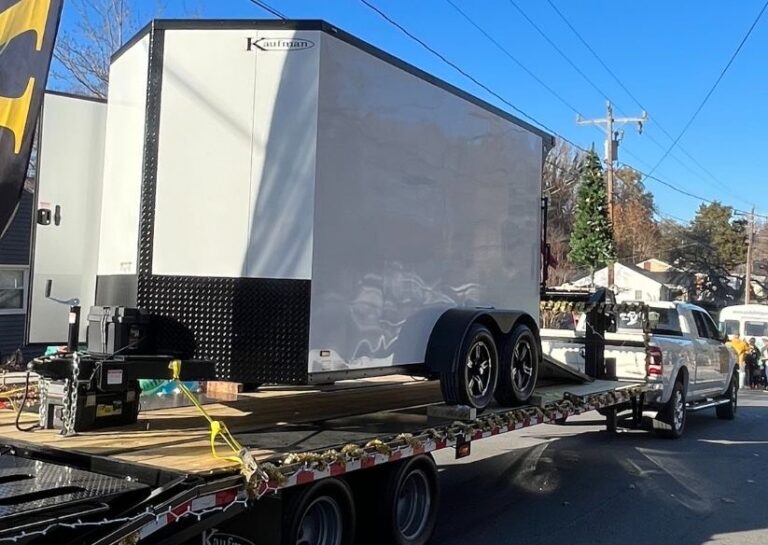
A single-axle enclosed trailer uses one axle with wheels on both sides to support the trailer.
Single-axle configurations are common on smaller and lighter enclosed cargo trailers.
They can be useful for buyers who prioritize:
- Compact size
- Maneuverability
- Simpler maintenance
- Lower empty weight in some configurations
- Easier storage
However, the fact that a trailer has one axle does not automatically determine its payload.
The actual capacity depends on the complete trailer specification, including the axle, tires, frame, coupler, suspension, brakes, and GVWR.
What Is a Tandem-Axle Enclosed Trailer?
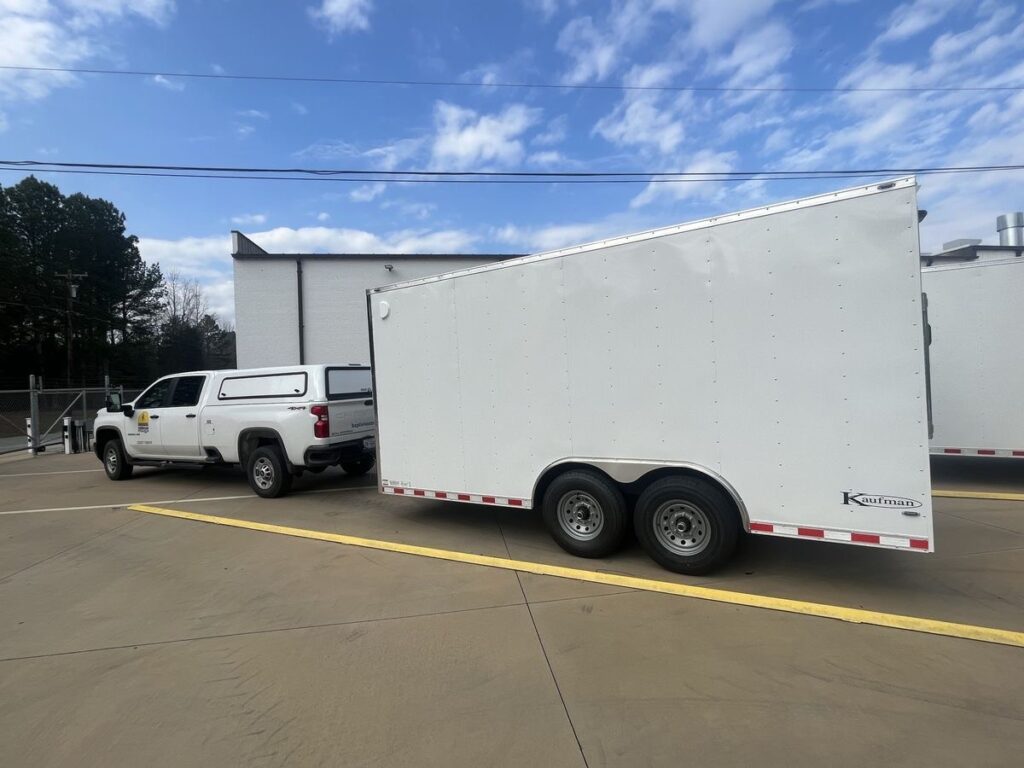
A tandem-axle enclosed trailer has two axles.
This configuration is commonly used when additional load capacity and stability are needed, although the actual ratings vary by trailer.
Potential advantages can include:
- Higher capacity in applicable configurations
- Greater stability
- Additional load support
- Better suitability for heavier cargo
- Greater flexibility for larger enclosed trailers
A tandem-axle trailer can also have more components to maintain, including additional tires, wheels, bearings, and braking components where equipped.
Single Axle vs. Tandem Axle at a Glance
Feature | Single Axle | Tandem Axle |
|---|---|---|
Number of axles | 1 | 2 |
Typical use | Lighter applications | Heavier applications |
Maneuverability | Generally easier | Generally more demanding |
Empty weight | Often lower | Often higher |
Stability | Suitable for many applications | Can provide additional stability |
Tires | Fewer | More |
Maintenance components | Fewer | More |
Load capacity | Depends on specifications | Often available in higher-capacity configurations |
Towing requirements | Often lower | Can be higher |
Parking/storage | Generally easier | Requires more consideration |
These are general characteristics. The specifications of the individual trailer should always take priority over axle count alone.
Payload and Weight Capacity
One of the biggest reasons buyers consider tandem axles is payload.
However, axle count does not equal payload capacity.
To understand how much cargo a trailer can carry, you need to consider:
- GVWR
- Empty trailer weight
- Axle rating
- Tire rating
- Wheel rating
- Frame capacity
- Coupler rating
- Braking system
A basic payload calculation is:
Payload = GVWR − Empty Trailer Weight
For example, suppose a trailer has:
- GVWR: 7,000 lbs
- Empty weight: 2,800 lbs
The theoretical remaining capacity would be:
7,000 − 2,800 = 4,200 lbs
That is only an example.
Never assume a single-axle or tandem-axle trailer has a specific payload without checking the manufacturer’s specifications.
Stability and Towing
Tandem axles can provide additional support under heavier loads.
With two axles, the trailer has more wheels supporting the load and can have characteristics that make it suitable for heavier applications.
However, stability also depends on:
- Load distribution
- Tongue weight
- Tire pressure
- Suspension
- Trailer design
- Cargo securement
- Road conditions
- Towing vehicle
A tandem axle does not eliminate the need for proper loading.
A poorly distributed load can still create handling problems.
Before towing, make sure the cargo is appropriately distributed and secured.
Maneuverability
Single-axle trailers are generally easier to maneuver in tight spaces.
This can be useful when:
- Backing into a driveway
- Parking in a small lot
- Positioning the trailer beside a building
- Moving the trailer around a work site
- Storing the trailer at home
Tandem-axle trailers can require more attention when making tight turns because the additional axle configuration affects how the trailer tracks through a turn.
For buyers who frequently move their trailer manually or operate in tight spaces, maneuverability can be an important consideration.
Braking Systems
Brakes are an important part of trailer selection, especially as trailer size and loaded weight increase.
Depending on the trailer configuration and applicable requirements, enclosed trailers may use different braking arrangements.
When comparing trailers, check:
- Whether brakes are installed
- Which axle or axles are equipped with brakes
- Brake type
- Brake controller requirements
- Manufacturer specifications
- Applicable legal requirements
Don’t select a trailer based solely on axle count.
A larger trailer carrying heavy cargo requires careful attention to its braking system and the tow vehicle’s ability to control the loaded trailer.
Tire and Wheel Considerations
A tandem-axle trailer has more tires than a single-axle trailer.
That means there are additional components to inspect and maintain.
For either configuration, regularly check:
- Tire pressure
- Tread depth
- Sidewall condition
- Cracks
- Uneven wear
- Tire age
- Load rating
For tandem axles, you also have additional tires and wheels to monitor.
Proper tire maintenance is especially important because trailer tires carry significant loads.
Maintenance Differences
Both configurations require routine maintenance, but tandem axles have additional components.
Maintenance Item | Single Axle | Tandem Axle |
|---|---|---|
Tires | Fewer to inspect | More to inspect |
Wheels | Fewer | More |
Bearings | Fewer assemblies | More assemblies |
Suspension components | Fewer | More |
Brake components | Depends on setup | Potentially more |
Tire replacement cost | Generally lower | Generally higher |
Inspection time | Generally shorter | Generally longer |
This doesn’t mean tandem axles are difficult to maintain.
It simply means there are more components to inspect.
Following the manufacturer’s maintenance schedule is important for either configuration.
Fuel and Operating Considerations
Trailer weight can affect towing demands.
A heavier trailer may require more energy to accelerate and maintain speed, although actual fuel consumption depends on many factors, including:
- Tow vehicle
- Trailer weight
- Cargo weight
- Aerodynamics
- Speed
- Road conditions
- Driving habits
Because tandem-axle trailers are often built for larger or heavier applications, they can have higher overall weight than comparable single-axle configurations.
When comparing trailers, consider the loaded weight, not just the empty trailer.
Single-Axle Enclosed Trailer Applications
Single-axle enclosed trailers can be useful for lighter cargo and compact applications.
Common uses include:
- Hand tools
- Small equipment
- Lawn-care equipment
- Business supplies
- Boxes
- Inventory
- Recreational equipment
- Smaller motorcycles
They can also be convenient for buyers who prioritize easy maneuverability and storage.
For example, a compact enclosed trailer can be useful for a contractor who mainly needs protected storage for hand tools rather than heavy machinery.
You can compare available Enclosed Cargo Trailers when looking at different configurations.
Tandem-Axle Enclosed Trailer Applications
Tandem-axle configurations can be appropriate for applications requiring more capacity or a larger trailer.
Potential uses include:
- Heavy contractor equipment
- Multiple motorcycles
- Larger landscaping equipment
- Commercial inventory
- Event equipment
- Construction supplies
- Larger machinery
The appropriate configuration depends on the actual weight and dimensions of the cargo.
A tandem axle should not be selected simply because it appears more capable. The trailer still needs to match the tow vehicle and the job.
Single Axle vs. Tandem Axle for Contractors
Contractors should start with the equipment they need to transport.
Single axle may suit:
- Hand tools
- Small equipment
- Building supplies
- Light job-site materials
- Compact equipment
Tandem axle may suit:
- Heavier machinery
- Multiple large tools
- Larger quantities of materials
- More demanding commercial applications
For contractors, payload is often more important than simply having a larger trailer.
A trailer that provides plenty of floor space but insufficient payload capacity may not solve the actual problem.
Single Axle vs. Tandem Axle for Landscaping
Landscaping businesses often transport a combination of tools and equipment.
A single axle can work for lighter setups involving:
- Trimmers
- Blowers
- Hand tools
- Smaller equipment
- Supplies
A tandem axle may be more appropriate when the trailer needs to accommodate heavier equipment or larger loads, depending on the trailer’s specifications.
For open-deck landscaping applications, Utility Trailers can provide easier access from the sides and top.
Single Axle vs. Tandem Axle for Motorcycles
Motorcycle transportation requires careful attention to both space and weight.
A single axle may be appropriate for a smaller enclosed trailer carrying a motorcycle and limited additional cargo.
A tandem axle can provide a different configuration for buyers transporting multiple motorcycles or additional equipment, depending on the trailer’s capacity.
Before purchasing, calculate:
Motorcycle weight + accessories + equipment + other cargo
Then compare that total with the trailer’s rated payload.
Also measure:
- Motorcycle length
- Motorcycle width
- Handlebar width
- Height
- Door opening
Single Axle vs. Tandem Axle for Businesses
Businesses should think about both current and future requirements.
A single axle can make sense for businesses transporting:
- Tools
- Small inventory
- Supplies
- Promotional equipment
A tandem axle may be useful for businesses transporting:
- Heavier inventory
- Equipment
- Larger quantities of products
- Event equipment
- Commercial machinery
However, don’t buy more trailer than the business actually needs.
Additional capacity can also mean additional:
- Weight
- Purchase cost
- Maintenance
- Storage requirements
- Towing demands
Which Trailer Sizes Typically Use Each Configuration?
Axle configuration varies by manufacturer, so there is no universal size-to-axle rule.
However, the following is a useful general way to think about the market:
Trailer Size | Common Consideration |
|---|---|
5×8 | Often suitable for lighter single-axle applications |
5×10 | Often available in compact configurations |
6×12 | Can be available in single or tandem configurations depending on specifications |
7×14 | Often requires closer attention to axle capacity and GVWR |
7×16 | Commonly considered for larger/heavier applications |
Larger enclosed trailers | Tandem or higher-capacity configurations become increasingly relevant |
These are general guidelines, not specifications for every trailer.
Always check the actual product information.
How Tow Vehicle Requirements Differ
The tow vehicle is just as important as the trailer.
Before purchasing, verify:
- Maximum towing capacity
- Vehicle payload capacity
- Hitch rating
- Tongue-weight rating
- Trailer GVWR
- Trailer empty weight
- Expected cargo weight
For example, a buyer may choose a tandem-axle trailer because they need greater payload, only to discover that their tow vehicle isn’t appropriate for the loaded trailer.
Always evaluate the complete towing combination.
New vs. Used Axle Configurations
If you’re buying a used enclosed trailer, the axle configuration should be inspected carefully.
For a single axle, check:
- Axle condition
- Bearings
- Tires
- Wheels
- Suspension
- Brakes, where equipped
For a tandem axle, inspect all of those components across both axles.
Also look for:
- Uneven tire wear
- Bent suspension components
- Corrosion
- Bearing issues
- Damaged wheels
- Brake problems
- Previous repairs
A used trailer’s condition can be just as important as its original axle configuration.
Axle Configuration Buying Checklist
Before choosing between single and tandem axle, ask:
Question | Why It Matters |
|---|---|
How much does my cargo weigh? | Determines required payload |
What is the trailer’s GVWR? | Establishes maximum loaded rating |
What is the empty trailer weight? | Helps calculate available payload |
How large is my equipment? | Determines trailer dimensions |
Do I need maximum maneuverability? | May favor a more compact setup |
How often will I tow? | Affects operating considerations |
What does my vehicle tow? | Determines compatibility |
Do I need trailer brakes? | Depends on configuration and requirements |
How much storage space do I have? | Larger trailers need more room |
Will my needs grow? | Helps avoid buying too small |
Frequently Asked Questions
Is a single axle or tandem axle better?
Neither configuration is universally better. The appropriate choice depends on the trailer’s GVWR, payload, cargo, tow vehicle, maneuverability requirements, and intended use.
Does a tandem axle carry more weight?
Tandem-axle trailers are often available in higher-capacity configurations, but axle count alone does not determine payload. Always check the trailer’s certified ratings.
Is a single axle easier to maneuver?
A single-axle trailer is generally easier to maneuver in tight spaces, although actual handling depends on the trailer and towing setup.
Is a tandem axle more stable?
A tandem configuration can provide additional stability and load support in applicable designs, but proper loading, tire pressure, tongue weight, and securement remain essential.
Are tandem-axle trailers more expensive to maintain?
They can have higher maintenance requirements because they have additional tires, wheels, bearings, suspension components, and potentially braking components.
Is a single axle good for a 5×10 enclosed trailer?
It can be suitable for many 5×10 applications, but the actual trailer’s GVWR and payload should determine whether the configuration meets your needs.
Is tandem axle better for a 7×16?
A tandem configuration can be appropriate for larger or heavier applications, but the correct choice depends on the specific 7×16’s ratings and your cargo.
Can I tow a tandem-axle enclosed trailer with an SUV?
Some SUVs can tow certain tandem-axle trailers, but you must compare the loaded trailer weight and ratings with the specific SUV’s certified towing and payload limits.
Final Thoughts
Choosing between a single axle and tandem axle enclosed cargo trailer should start with your actual cargo rather than the number of axles.
A single-axle configuration can offer a compact, maneuverable solution for many lighter applications.
A tandem-axle configuration can provide additional load support and stability in appropriately rated trailers, making it useful for many larger or heavier applications.
Before making your decision, compare:
- GVWR
- Payload
- Empty trailer weight
- Axle ratings
- Tire ratings
- Braking system
- Cargo dimensions
- Tow vehicle capacity
- Maintenance requirements
- Storage space
If you’re still deciding what size trailer you need, read Enclosed Cargo Trailer Sizes: How to Choose the Right Size.
For the complete purchasing process, see Enclosed Cargo Trailer Buying Guide: How to Choose the Right Trailer for Secure Transport.
If you already know you need a larger enclosed trailer, explore Enclosed Cargo Trailers.
For open-deck equipment hauling, Utility Trailers provide a different configuration. For wide equipment, Deck-Over Trailers may be worth considering. And for horses or livestock, Horse & Stock Trailers are designed specifically for that type of transportation.
The right axle configuration is the one that matches your cargo, trailer rating, towing vehicle, and everyday use. Instead of choosing based only on axle count, compare the complete specifications and choose a trailer that gives you the capacity and control you actually need.
For safe towing and loading practices, visit the NHTSA trailer safety guidelines.
