
Table of Contents
ToggleWhat Is a Deck-Over Trailer? Everything You Need to Know
If you’re shopping for a trailer to haul heavy equipment, machinery, vehicles, or wide loads, you may have come across the term deck-over trailer.
But what exactly does it mean?
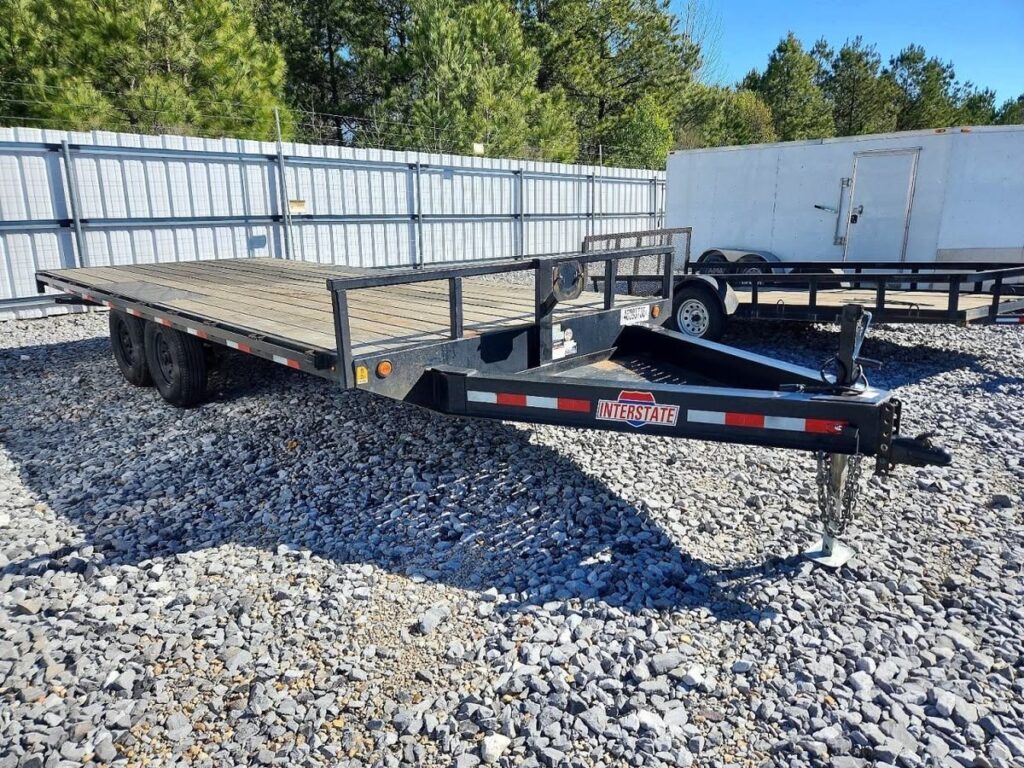
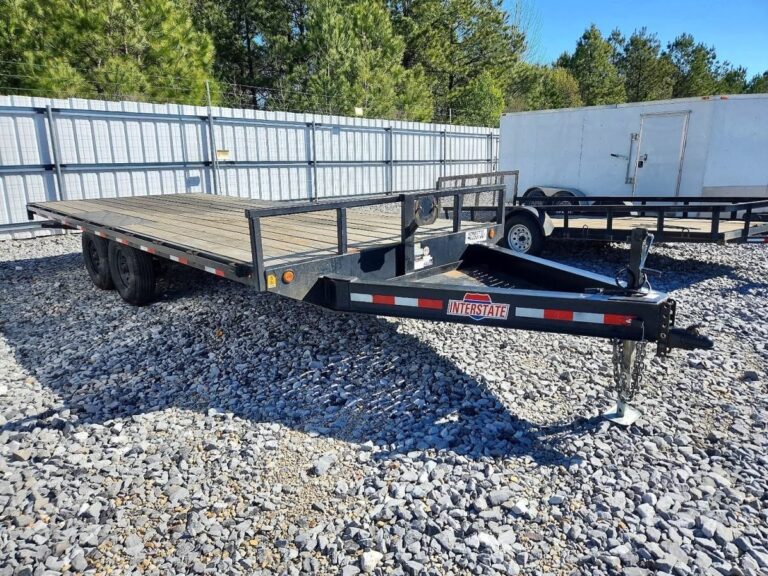
A deck-over trailer is a trailer designed with its loading deck positioned above the wheels. This creates a flat, full-width loading surface without wheel wells extending into the main deck area.
That design is one of the main reasons deck-over trailers are popular for transporting wide cargo and heavy equipment.
This article is part of our Deck-Over Trailer Buying Guide: How to Choose the Best Trailer for Heavy Equipment and Wide Loads, which covers the broader buying process and helps buyers understand how to choose the right trailer for their hauling needs.
You can also explore our Deck-Over Trailers category to see available deck-over trailer options.
What Makes a Trailer a Deck-Over Trailer?
The name deck-over simply describes the position of the trailer’s deck.
Instead of having the loading area positioned between the wheels, the deck is raised so it sits over the wheels.
This creates a loading platform with more usable width.
On many conventional trailers, wheel wells can extend into the loading area and restrict where equipment can be positioned. A deck-over trailer avoids this by placing the wheels underneath the deck.
The result is a flat platform that can make hauling wide equipment and materials much easier.
How Does a Deck-Over Trailer Work?
The basic design is relatively simple.
The trailer frame supports an elevated deck positioned above the wheels and axles. Cargo is then loaded onto the flat platform and secured for transportation.
Depending on the configuration, a deck-over trailer may include:
- A full-width flat deck
- Single or multiple axles
- Loading ramps
- Tie-down points
- Stake pockets
- Rub rails
- Trailer brakes
- A bumper-pull or gooseneck connection
The exact features and specifications depend on the trailer’s size, capacity, and intended application.
Why Is the Deck Positioned Above the Wheels?
The biggest advantage is usable deck width.
When wheels and fenders extend into a trailer’s loading area, they can limit the width of equipment that can be loaded.
A deck-over design gives you a more open platform from one side of the trailer to the other.
This can be particularly useful when hauling:
- Wide equipment
- Construction machinery
- Agricultural equipment
- Palletized materials
- Building supplies
- Machinery
- Vehicles
- Commercial cargo
The additional usable width is one of the main reasons buyers choose a deck-over design.
The Main Advantages of a Deck-Over Trailer
Deck-over trailers offer several important advantages for the right type of hauling.
Advantage | Why It Matters |
|---|---|
Full-width deck | Provides more usable loading space |
Flat loading surface | Makes positioning certain cargo easier |
No wheel wells in the deck | Helps accommodate wider loads |
Heavy-duty configurations | Suitable for demanding hauling needs |
Versatile platform | Can be used for equipment, machinery and materials |
However, more deck width does not automatically mean a deck-over trailer is the right choice for every situation.
Your intended cargo should always guide your decision.
What Are Deck-Over Trailers Commonly Used For?
Deck-over trailers are commonly used when buyers need a wide and versatile loading platform.
Construction Equipment and Machinery
Construction companies and contractors may need to move machinery, tools, equipment, and building materials between job sites.
Depending on the trailer’s specifications and capacity, a deck-over trailer can be suitable for hauling equipment that benefits from a wide, flat platform.
The trailer’s GVWR and payload capacity should always be sufficient for the equipment being transported.
Agricultural Equipment
Farmers and agricultural operators may transport machinery, implements, and other equipment that requires significant loading space.
The full-width deck can provide flexibility when positioning certain types of agricultural equipment.
Before choosing a trailer, buyers should consider:
- Equipment weight
- Equipment width
- Equipment length
- Loading method
- Required trailer capacity
Wide Loads
Wide cargo is one of the most natural applications for a deck-over trailer.
Because the wheels sit beneath the loading platform, there are no wheel wells taking up space across the main deck.
This can make the trailer a practical option for equipment and materials that would be difficult to position on a narrower loading area.
Commercial Hauling
Businesses that transport equipment and materials regularly often need a trailer that provides both durability and flexibility.
A deck-over configuration can be useful for commercial applications where buyers prioritize:
- Usable deck space
- Capacity
- Cargo securement
- Loading flexibility
- Heavy-duty construction
For available options designed for these types of hauling needs, visit our Deck-Over Trailers category.
Deck-Over Trailer vs Utility Trailer
A deck-over trailer and a utility trailer can both be useful for hauling equipment and cargo, but they are not necessarily designed for exactly the same needs.
Many utility trailers have a lower deck height and may include wheel wells within or alongside the loading area.
Deck-over trailers prioritize a full-width loading platform.
Feature | Deck-Over Trailer | Utility Trailer |
|---|---|---|
Deck position | Above the wheels | Often lower to the ground |
Usable width | Full-width platform | May be affected by wheel wells |
Deck height | Generally higher | Generally lower |
Wide loads | Often a strong option | Depends on the design |
General hauling | Excellent for suitable applications | Common choice for everyday hauling |
For lighter-duty and general hauling needs, buyers can explore our Utility Trailers category.
You can also read our existing Utility Trailer Buying Guide to understand how utility trailers fit different hauling requirements.
The right choice depends on what you need to haul—not simply which trailer is larger.
Deck-Over Trailer vs Lowdeck Trailer
Deck height is another important consideration when choosing a trailer.
A deck-over trailer provides the advantage of a full-width deck above the wheels, while a lowdeck design may be more suitable when lower loading height is the priority.
A lower deck can make loading certain types of equipment easier because there is less height between the ground and the trailer platform.
That means the decision often comes down to a trade-off:
Deck-Over Trailer
Best when maximum usable width is a priority.
Lowdeck Trailer
Worth considering when a lower loading height is especially important.
Buyers comparing these designs can explore our Lowdeck Trailers category to better understand the available options.
Is a Deck-Over Trailer Higher Off the Ground?
Generally, yes.
Because the deck sits above the wheels, a deck-over trailer typically has a higher loading platform than a trailer with a lower deck positioned between the wheels.
This creates both an advantage and an important consideration.
The Advantage
You gain a wider and more open loading surface.
The Consideration
Loading equipment onto a higher deck requires an appropriate loading system.
This is why ramps and loading equipment should be considered before purchasing a trailer.
A trailer may have excellent deck space, but it still needs to be practical for loading the equipment you intend to transport.
Are Deck-Over Trailers Good for Heavy Equipment?
Deck-over trailers can be a good option for heavy equipment when the trailer is properly rated for the load.
This is extremely important.
A buyer should never assume that a trailer can carry heavy equipment simply because it has a large deck.
Before loading equipment, consider:
- Trailer GVWR
- Payload capacity
- Trailer weight
- Axle capacity
- Tire ratings
- Brake system
- Equipment weight
- Cargo securement requirements
The trailer must be properly matched to the load.
For a broader explanation of how these buying decisions fit together, see Deck-Over Trailer Buying Guide: How to Choose the Best Trailer for Heavy Equipment and Wide Loads.
What Types of Deck-Over Trailers Are Available?
Deck-over trailers can come in different configurations based on their intended hauling applications.
Bumper-Pull Deck-Over Trailers
These trailers connect behind the towing vehicle through a hitch system.
They can be suitable for a variety of applications depending on their specifications and capacity.
Gooseneck Deck-Over Trailers
Gooseneck trailers connect to a compatible pickup truck through the truck bed.
This type of connection is commonly used for larger and heavier trailer configurations.
The towing setup can affect:
- Weight distribution
- Towing characteristics
- Maneuverability
- Vehicle requirements
The trailer and tow vehicle should always be properly matched.
What Features Should You Look for in a Deck-Over Trailer?
Understanding the basic design is important, but buyers should also examine the features that affect everyday use.
Deck Size
The trailer should provide enough length and width for your equipment.
Remember to account for space needed to properly position and secure the load.
Weight Capacity
Capacity should always match your expected cargo.
Know the approximate weight of the equipment you plan to haul before selecting a trailer.
Axle Configuration
Axles play an important role in determining a trailer’s capacity and hauling characteristics.
The right configuration depends on the loads you expect to transport.
Loading System
Consider how equipment will be loaded onto and unloaded from the trailer.
Ramps and other loading features should be appropriate for the type of equipment you use.
Cargo Securement Features
Tie-down points, stake pockets, and other securement features can make a significant difference when hauling equipment and materials.
For trailer-related additions and equipment that may support your setup, you can also explore Accessories.
Is a Deck-Over Trailer Right for You?
A deck-over trailer may be a strong choice if you regularly need:
- A wide loading surface
- Maximum usable deck width
- Space for wide equipment
- A flat deck without wheel wells restricting the loading area
- A trailer suited to demanding hauling applications
However, it may not be the best option for every buyer.
If your priority is general-purpose hauling, a Utility Trailer may better match your needs.
If a lower loading height is especially important, you may also want to consider Lowdeck Trailers.
The best choice depends on your specific hauling requirements.
Final Thoughts
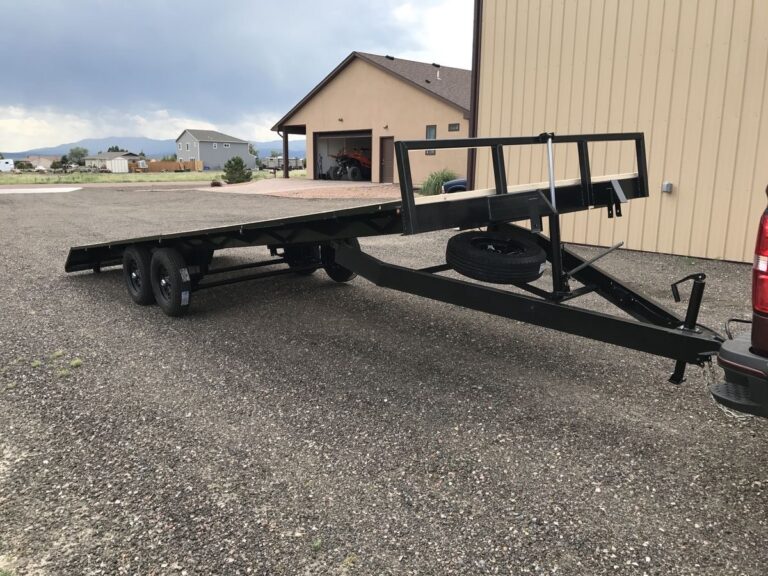
A deck-over trailer is defined by one important design feature: its loading deck sits above the wheels.
This creates a full-width, flat loading platform that can be particularly useful for wide cargo, machinery, equipment, and demanding hauling applications.
Understanding this basic design is the first step in deciding whether a deck-over trailer is right for you.
From here, buyers should continue by considering what they actually plan to haul, because the intended use will influence the right size, capacity, axle setup, and features.
To understand the complete buying process, visit our Deck-Over Trailer Buying Guide: How to Choose the Best Trailer for Heavy Equipment and Wide Loads.
You can also browse our Deck-Over Trailers category to explore available options.
For other hauling requirements, explore our Utility Trailers, Deck-Over Trailers, Lowdeck Trailers, Enclosed Cargo Trailers, Horse Trailers & Stock Trailers, and Accessories.
For safe towing and loading practices, visit the NHTSA trailer safety guidelines.
