

Table of Contents
ToggleDo You Need Trailer Brakes on a Utility Trailer? A Complete Guide
When buying a utility trailer, size, payload capacity, axle configuration, and features are all important decisions. Another major question buyers often ask is whether they need trailer brakes on a utility trailer.
The answer depends on several factors, including the trailer’s weight, how much cargo you plan to haul, your towing vehicle, and the regulations that apply where you operate the trailer.
Before going deeper into specific buying decisions like brakes, start with our Utility Trailer Buying Guide: How to Choose the Right Utility Trailer for Your Needs, which covers the complete process of choosing the right trailer.
Trailer brakes can improve control and braking performance when used as part of an appropriate towing setup, particularly with heavier trailers and loads.
What Are Trailer Brakes?
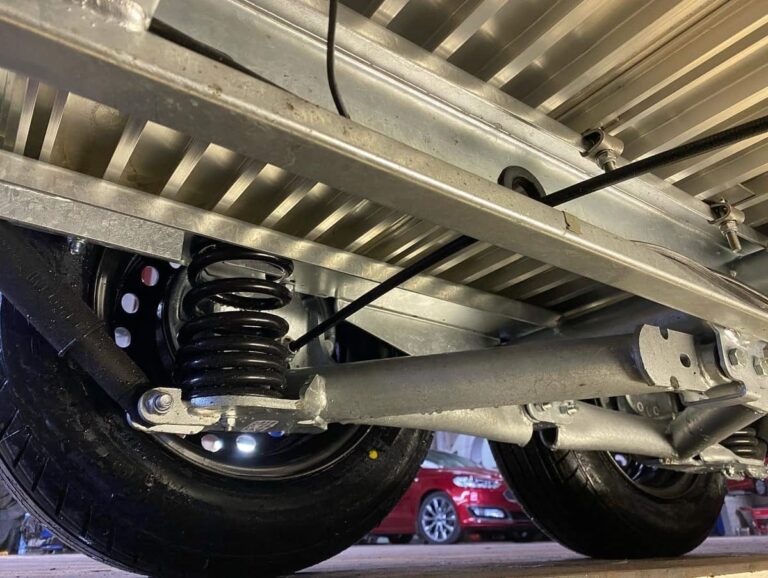
Trailer brakes are braking systems installed on the trailer itself.
Unlike a trailer without its own braking system, trailer brakes help the trailer contribute to slowing down the overall towing combination.
Common trailer braking systems include:
- Electric trailer brakes
- Hydraulic trailer brakes
- Surge brake systems
The type of braking system depends on the trailer and its intended use.
For many utility trailer buyers, electric brakes are a common option on appropriately equipped trailers.
Do All Utility Trailers Need Brakes?
No. Not every utility trailer has or needs the same braking setup.
Smaller and lighter trailers may not be equipped with brakes, while larger or heavier trailers may include braking systems.
The important thing is understanding the complete combination of:
- Trailer weight
- Cargo weight
- Gross Vehicle Weight Rating (GVWR)
- Towing vehicle capacity
- Applicable laws and regulations
This is why understanding weight capacity should come before making decisions about braking systems.
For a detailed explanation, see How Much Weight Can a Utility Trailer Carry? Understanding Payload and GVWR.
Why Does Trailer Weight Matter?
The heavier the overall trailer and cargo combination becomes, the more important proper braking performance becomes.
There are several different weight measurements buyers should understand.
Weight Term | What It Means |
|---|---|
Empty Trailer Weight | The weight of the trailer without cargo |
Payload Capacity | The amount of cargo the trailer is designed to carry |
GVWR | The maximum loaded weight rating of the trailer |
Tongue Weight | The downward force placed on the towing vehicle’s hitch |
Understanding these numbers helps you choose a trailer that is appropriate for your hauling needs.
A buyer hauling light household equipment occasionally may have very different requirements from someone hauling landscaping machinery or heavy equipment regularly.
When Should You Consider a Utility Trailer With Brakes?
You should carefully consider trailer brakes when your hauling needs involve heavier loads or a larger trailer.
For example, brakes may be an important consideration when hauling:
- Heavy landscaping equipment
- Large commercial mowers
- Construction materials
- Heavy machinery
- Multiple ATVs or UTVs
- Frequently loaded trailers
The specific requirements will depend on the trailer and your local regulations.
For landscaping applications, you can also read How to Choose the Right Utility Trailer for Landscaping and Lawn Equipment.
Single Axle vs Tandem Axle: How Do Brakes Fit In?
Axle configuration can also be connected to your overall braking considerations.
A smaller single-axle trailer may be designed for lighter-duty applications, while larger tandem-axle trailers are often used for heavier loads.
Trailer Type | Typical Considerations |
|---|---|
Single Axle | Often used for lighter loads and smaller trailer setups |
Tandem Axle | Often provides higher capacity options for heavier hauling needs |
However, you should never assume that axle configuration alone determines whether a trailer requires brakes.
Always check the specifications of the individual trailer.
For more information, read Single Axle vs Tandem Axle Utility Trailers: Which One Should You Choose?
How Trailer Brakes Work
Trailer brakes are designed to work with the towing setup to help slow the trailer.
With an electric braking system, the towing vehicle and trailer can be connected through an electrical system that allows braking signals to operate the trailer brakes.
The exact setup can vary depending on:
- The trailer
- The braking system
- The towing vehicle
- The brake controller or other equipment
Proper installation and compatibility are important.
Can Trailer Brakes Improve Towing Control?
A properly configured braking system can help improve the overall control of a towing combination.
This can be especially important when:
- Carrying heavier cargo
- Traveling at highway speeds
- Driving on hills
- Making longer trips
- Frequently hauling commercial equipment
However, trailer brakes are only one part of safe towing.
You should also consider:
- Proper weight distribution
- Correct hitch setup
- Tire condition
- Cargo securement
- Towing vehicle capacity
Don’t Forget About Payload Capacity
One common mistake is focusing only on whether a trailer has brakes while ignoring how much weight it can safely carry.
Before selecting a trailer, determine what you actually plan to haul.
For example, if you plan to transport:
- Lawn mowers
- ATVs
- Building materials
- Equipment
- General cargo
You first need to know the weight of that cargo.
Our What Can You Haul With a Utility Trailer? guide can help you understand how different hauling needs affect your trailer choice.
Once you know what you plan to haul, you can better evaluate the trailer’s capacity, axle configuration, and braking setup.
Are Trailer Brakes Important for Landscaping Trailers?
They can become an important consideration depending on the equipment being transported.
A landscaper hauling one lightweight mower may have different requirements from a commercial landscaping business transporting:
- Multiple mowers
- Heavy lawn equipment
- Tools
- Materials
- Additional cargo
The total loaded weight is what matters.
This is why choosing the right trailer size and capacity is essential before focusing on additional equipment.
Read What Size Utility Trailer Do You Need? A Complete Size Guide to understand how your intended use affects your trailer selection.
What Should You Check Before Buying a Trailer With Brakes?
Before purchasing a utility trailer with brakes, check the specifications carefully.
Important things to review include:
What to Check | Why It Matters |
|---|---|
Trailer GVWR | Helps determine the trailer’s rated loaded capacity |
Brake System Type | Different systems operate differently |
Axle Configuration | Important for the overall trailer setup |
Towing Vehicle Compatibility | Your vehicle must be suitable for the combination |
Electrical Connection | Important for applicable electric brake systems |
Local Regulations | Requirements can vary depending on location and weight |
Always verify the current legal requirements that apply where you will operate the trailer.
Trailer Brakes vs Other Important Utility Trailer Features
Brakes are important, but they are only one part of choosing the right trailer.
Depending on your needs, you may also need to consider:
- Loading ramps
- Tie-down points
- Side rails
- Flooring
- Axle configuration
- Trailer jack
- Lighting
For a complete breakdown, see What Features Should You Look for When Buying a Utility Trailer?
Choosing the right combination of features can make your trailer much more practical for everyday use.
Do You Need Brakes for Your Specific Trailer?
The best way to answer this question is to work through your buying requirements in order:
What will you haul? → How much does it weigh? → What size trailer do you need? → What payload capacity is required? → Which axle configuration is appropriate? → Does the trailer need brakes based on its specifications and applicable requirements?
This is the logical buying journey that helps prevent choosing a trailer based on only one feature.
You can browse our Utility Trailers category to compare available options based on your specific hauling needs.
Final Thoughts
So, do you need trailer brakes on a utility trailer?
The answer depends on the specific trailer, its loaded weight, your towing setup, and the regulations that apply where you operate it.
Trailer brakes become an increasingly important consideration as your overall hauling requirements become heavier.
Before buying, make sure you understand:
- Your expected cargo weight
- Trailer payload capacity
- GVWR
- Axle configuration
- Towing vehicle capacity
- Applicable braking requirements
For the complete buying journey, return to our Utility Trailer Buying Guide: How to Choose the Right Utility Trailer for Your Needs.
For other hauling requirements, explore our Utility Trailers, Deck-Over Trailers, Lowdeck Trailers, Enclosed Cargo Trailers, Horse Trailers & Stock Trailers, and Accessories.
For safe towing and loading practices, visit the NHTSA trailer safety guidelines.
