
Table of Contents
ToggleGooseneck Dump Trailer Buying Guide: How to Choose the Best Heavy-Duty Trailer for Commercial Hauling
When standard bumper-pull dump trailers are no longer sufficient, many contractors and commercial haulers upgrade to a gooseneck dump trailer. This gooseneck dump trailer buying guide explains everything you need to know before investing in one of the most capable dump trailers available.
Gooseneck dump trailers are engineered for higher payload capacities, improved towing stability, and better weight distribution than conventional bumper-pull trailers. They are widely used in construction, excavation, agriculture, municipalities, and commercial hauling because they provide exceptional performance on demanding job sites.
If you’re still comparing different trailer types, start with our Trailer Buying Guide, which explains the advantages of every trailer category.
What Is a Gooseneck Dump Trailer?
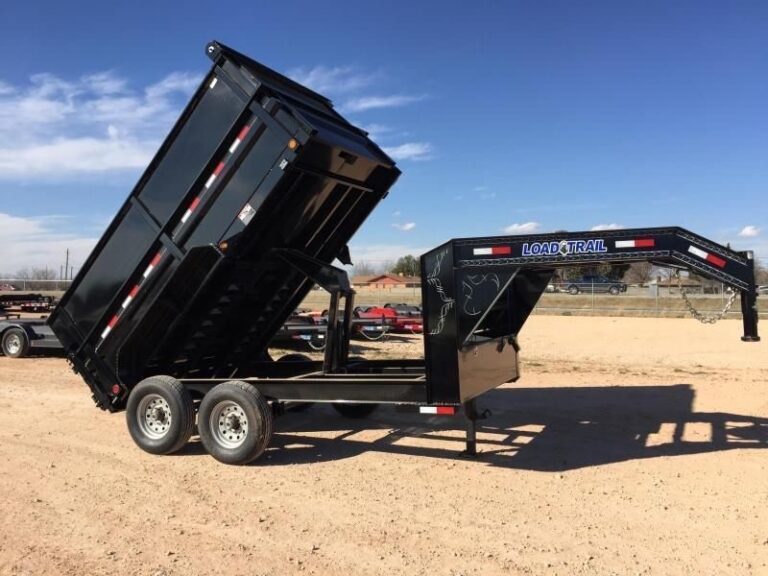
A gooseneck dump trailer connects to a hitch installed inside the bed of a pickup truck rather than attaching to the rear bumper.
This design provides:
- Better weight distribution.
- Increased towing stability.
- Higher payload capacity.
- Improved turning radius.
- Better control on highways and uneven terrain.
Many buyers compare gooseneck models with our 6×10 Dump Trailer Buying Guide before deciding whether they need additional hauling capacity.
Why Choose a Gooseneck Dump Trailer?
Superior Towing Stability
One of the biggest advantages of a gooseneck hitch is improved stability at highway speeds.
The hitch position places more weight directly over the truck’s rear axle, reducing trailer sway and improving driver confidence.
Higher Payload Capacity
Gooseneck dump trailers are commonly used for hauling:
- Gravel
- Asphalt
- Concrete
- Demolition debris
- Large quantities of soil
- Construction materials
Their higher weight ratings make them ideal for demanding commercial work.
Excellent for Construction Companies
Construction contractors frequently use gooseneck dump trailers for:
- Demolition cleanup
- Excavation projects
- Road construction
- Commercial site development
- Concrete removal
When transporting heavy machinery instead of loose materials, many contractors also rely on Deck-Over Trailers and Lowdeck Trailers.
Agricultural Applications
Large farms use gooseneck dump trailers for:
- Feed transportation
- Fertilizer
- Grain handling
- Fence materials
- Equipment supplies
Livestock owners may also benefit from browsing our Horse Trailers & Stock Trailers collection.
Hydraulic Dump Systems
A heavy-duty hydraulic system is essential.
Look for:
- Dual hydraulic cylinders
- Heavy-duty electric pumps
- Protected battery systems
- Reinforced steel beds
- High dump angles
These features improve reliability and productivity under heavy loads.
Choosing the Right GVWR
Common weight ratings include:
- 12,000 lbs
- 14,000 lbs
- 16,000 lbs
- 20,000 lbs
Always choose a trailer that safely accommodates both your current and future hauling needs.
Gooseneck vs Bumper Pull Dump Trailer
Gooseneck Advantages
- Better stability.
- Higher towing capacity.
- Greater payload.
- Better weight distribution.
- Improved maneuverability while reversing.
Bumper Pull Advantages
- Lower purchase cost.
- Simpler hitch setup.
- Easier compatibility with more vehicles.
For smaller residential projects, many buyers still prefer our 5×10 Dump Trailer Buying Guide or Single Axle Dump Trailer Buying Guide.
Best Industries for Gooseneck Dump Trailers
Ideal for:
- Commercial construction
- Excavation
- Municipal projects
- Agriculture
- Landscaping businesses
- Material suppliers
Smaller companies that transport lawn equipment may also use Utility Trailers, while businesses transporting enclosed equipment often prefer Enclosed Cargo Trailers.
Essential Accessories
Popular upgrades include:
- Heavy-duty tarp systems
- Toolboxes
- Spare tire kits
- LED lighting
- Loading ramps
- Battery chargers
Browse our Accessories collection for trailer upgrades that improve safety and productivity.
Common Buying Mistakes
Avoid these mistakes:
- Buying without verifying truck towing capacity.
- Choosing insufficient GVWR.
- Ignoring hydraulic quality.
- Purchasing without electric brakes.
- Overlooking future hauling requirements.
Conclusion
This gooseneck dump trailer buying guide demonstrates why these trailers are trusted by commercial contractors, farmers, and heavy-duty hauling professionals.
Their superior towing stability, high payload capacity, and long-term durability make them one of the best investments for demanding jobs.
If you’re still comparing dump trailer sizes and configurations, continue reading our Dump Trailer Buying Guide, 5×8 Dump Trailer Buying Guide, 5×10 Dump Trailer Buying Guide, 6×10 Dump Trailer Buying Guide, and Single Axle Dump Trailer Buying Guide. For other hauling needs, browse our Dump Trailers, Utility Trailers, Deck-Over Trailers, Lowdeck Trailers, Enclosed Cargo Trailers, Horse Trailers & Stock Trailers, and Accessories.
Before purchasing any trailer, it’s important to understand federal trailer safety standards, braking requirements, and towing regulations. The NHTSA Trailer Safety Resources provide useful guidance for new trailer owners and buyers.
