

Table of Contents
ToggleSingle Axle Dump Trailer Buying Guide: How to Choose the Best Trailer for Small Jobs and Everyday Hauling
Choosing the right dump trailer can dramatically improve productivity, reduce operating costs, and simplify everyday hauling tasks. This single axle dump trailer buying guide is designed to help homeowners, landscapers, contractors, and small business owners determine whether a single axle trailer is the right investment for their needs.
While tandem axle dump trailers often dominate large commercial projects, single axle models continue to be one of the most popular choices for light-duty hauling because they offer lower ownership costs, easier maneuverability, and reduced towing requirements.
For many buyers, a single axle dump trailer becomes the perfect balance between affordability, versatility, and practicality.
If you’re comparing trailer categories, don’t forget to revisit our complete Trailer Buying Guide for a full overview of every trailer type available today.
What Is a Single Axle Dump Trailer?
A single axle dump trailer uses one axle with two wheels to support both the trailer and its payload.
Unlike larger tandem axle configurations that focus on maximum payload capacity, single axle trailers prioritize:
- Lower overall weight
- Easier maintenance
- Better maneuverability
- Lower operating costs
- Simpler towing requirements
Most single axle dump trailers are commonly available in sizes such as:
- 5×8 dump trailers
- 5×10 dump trailers
- 6×10 dump trailers
Many buyers researching axle configurations first compare them with our 5×8 Dump Trailer Buying Guide before making a final decision.
Why Choose a Single Axle Dump Trailer?
1. Lower Purchase Cost
One of the biggest advantages of single axle trailers is affordability.
Compared with tandem axle models, buyers often benefit from:
- Lower purchase prices
- Lower registration costs
- Lower insurance premiums
- Fewer tires to replace
- Reduced brake maintenance costs
For first-time trailer buyers, this lower entry cost makes ownership much more accessible.
2. Easier Maintenance
With fewer components to maintain, single axle trailers are generally less expensive to own over the long term.
Owners typically deal with:
- Fewer tires
- Fewer wheel bearings
- Fewer brake assemblies
- Less suspension maintenance
This simplicity is one of the biggest reasons landscapers and homeowners prefer them.
3. Superior Maneuverability
Single axle trailers are significantly easier to:
- Back into driveways
- Navigate tight neighborhoods
- Position on small job sites
- Store in garages and yards
For residential contractors, this flexibility can save considerable time every week.
4. Reduced Tow Vehicle Requirements
Many single axle dump trailers can comfortably be towed using:
- Half-ton pickup trucks
- Mid-size pickup trucks
- SUVs with towing packages
- Commercial vans
This allows buyers to avoid upgrading to a larger tow vehicle.
Best Uses for Single Axle Dump Trailers
Landscaping Projects
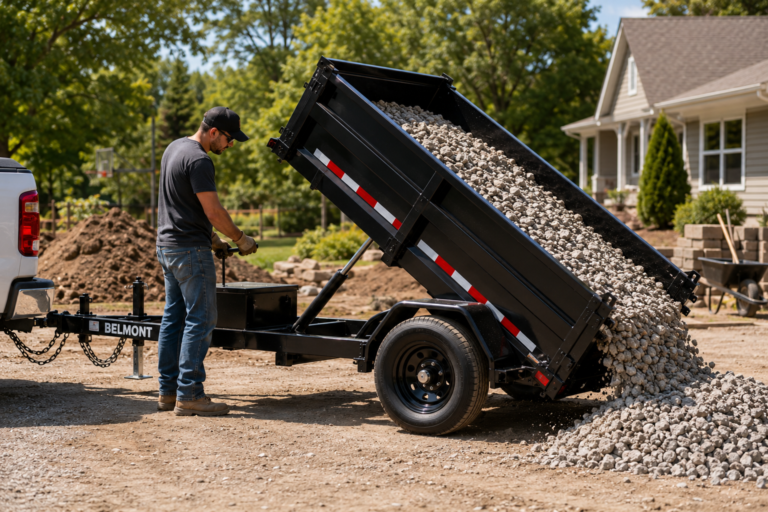
Landscapers commonly use single axle trailers for transporting:
- Mulch
- Decorative stone
- Gravel
- Sand
- Topsoil
The hydraulic dumping system dramatically reduces unloading time and labor costs.
Residential Construction
Contractors frequently use them for:
- Roofing tear-offs
- Remodeling debris
- Drywall disposal
- Lumber scraps
- Concrete removal
Property Maintenance
Homeowners often use dump trailers for:
- Storm cleanup
- Tree trimming debris
- Firewood transportation
- Yard renovations
Agricultural Applications
Small farms frequently transport:
- Feed
- Soil
- Fence materials
- Equipment
Livestock operations may also benefit from exploring Horse & Stock Trailers for animal transportation solutions.
Understanding Weight Ratings
One of the most important buying considerations is payload capacity.
Most single axle dump trailers typically range between:
- 3,000 lbs GVWR
- 5,000 lbs GVWR
- 7,000 lbs GVWR
Choosing insufficient capacity remains one of the most common mistakes buyers make.
Single Axle vs Tandem Axle
Single Axle Advantages
- Lower purchase cost
- Lower maintenance expenses
- Easier maneuverability
- Reduced trailer weight
Tandem Axle Advantages
- Higher payload capacities
- Better braking performance
- Improved highway stability
- Better performance on long-distance routes
Buyers hauling large quantities of gravel or demolition debris often transition toward larger Dump Trailers with tandem axle configurations.
Hydraulic Systems Matter
The hydraulic system is the heart of every dump trailer.
When comparing trailers, pay attention to:
- Hydraulic cylinder quality
- Pump reliability
- Battery protection systems
- Dump angle
- Maintenance accessibility
A quality hydraulic system often determines long-term reliability.
Essential Accessories
Several upgrades can dramatically improve ownership experience:
- Tarp kits
- Spare tire mounts
- Toolboxes
- Battery chargers
- Loading ramps
- Tie-down systems
These naturally connect to your Accessories category.
Common Buying Mistakes
Avoid these common mistakes:
- Buying too little payload capacity
- Ignoring tow vehicle limitations
- Choosing the wrong trailer size
- Purchasing without electric brakes
- Failing to plan for future growth
How Does a Single Axle Dump Trailer Compare to Other Trailer Types?
Single axle dump trailers excel at landscaping, residential construction, and light-duty hauling.
However, other trailer categories may be better suited for specific applications:
- Heavy machinery transport → Lowdeck Trailers
- Equipment hauling → Deck-Over Trailers
- Livestock transportation → Horse & Stock Trailers
- Secure cargo transportation → Enclosed Cargo Trailers
- General-purpose hauling → Utility Trailers
This internal linking structure helps reinforce your overall trailer topical authority.
Conclusion
This single axle dump trailer buying guide demonstrates why these trailers continue to be one of the most popular options for homeowners, landscapers, and contractors.
Their combination of affordability, maneuverability, and low maintenance makes them an excellent choice for light-duty hauling applications.
If you’re comparing options, revisit our 5×8 Dump Trailer Buying Guide, our Dump Trailer Buying Guide, and our Trailer Buying Guide to explore additional trailer configurations and capacities.
Before purchasing any trailer, it’s important to understand federal trailer safety standards, braking requirements, and towing regulations. The NHTSA Trailer Safety Resources provide useful guidance for new trailer owners and buyers.
