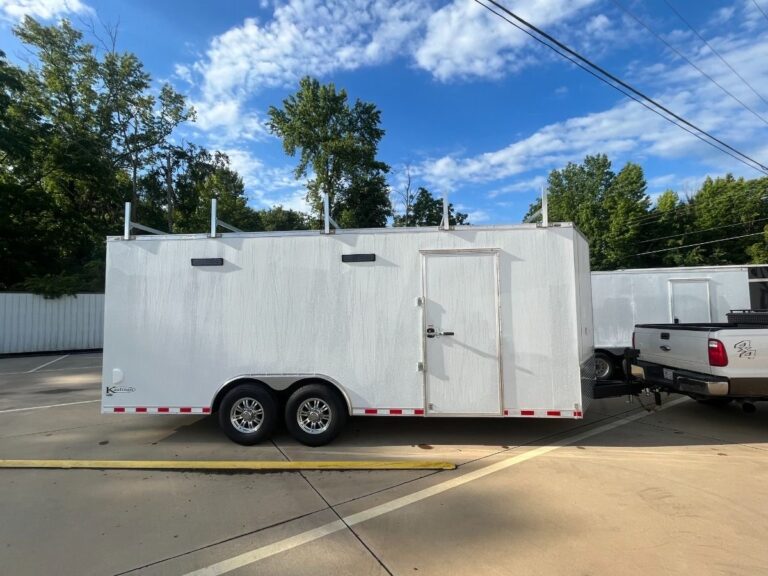

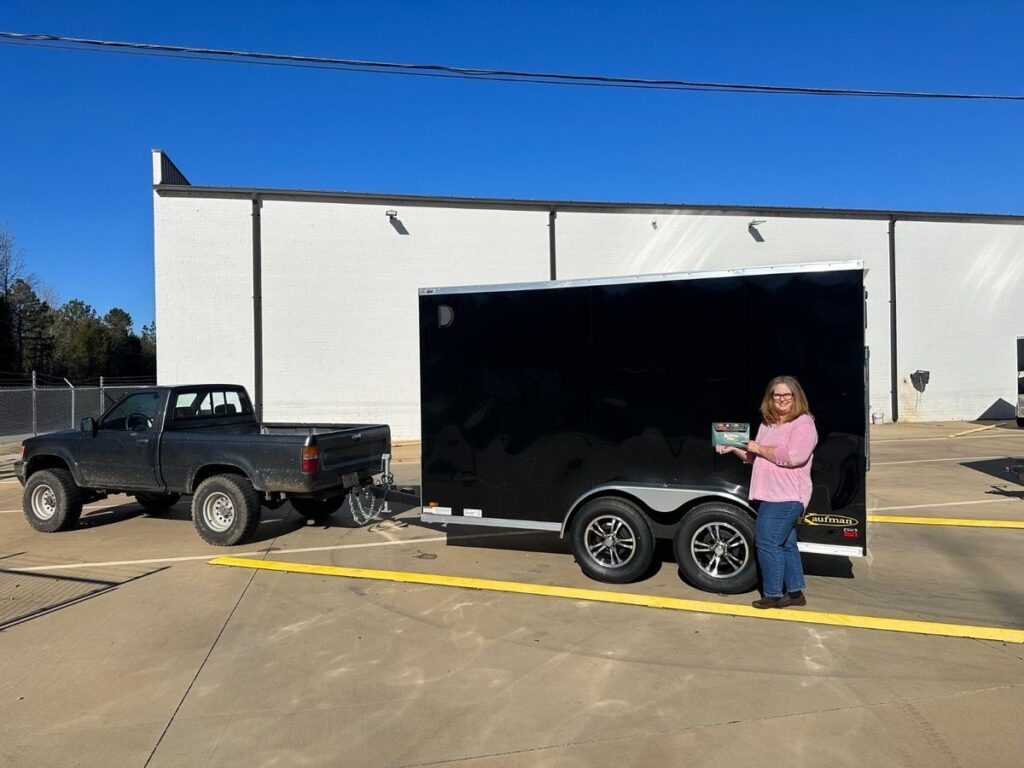
For contractors, an enclosed cargo trailer can be much more than a way to transport equipment.
With the right setup, it can become a mobile tool storage area, equipment transporter, organized workspace, and secure extension of your business.
Electricians, plumbers, carpenters, HVAC technicians, remodelers, flooring installers, general contractors, and other trades can all benefit from an enclosed trailer. But choosing the right one requires more than simply picking the biggest trailer you can afford.
You need to consider:
- Trailer size
- Payload
- GVWR
- Door configuration
- Ramp access
- Interior height
- Storage
- Security
- Towing requirements
- Frequency of use
- Type of equipment
If you’re starting your research, Enclosed Cargo Trailer Buying Guide: How to Choose the Right Trailer for Secure Transport provides the broader framework for choosing an enclosed trailer.
This guide focuses specifically on what contractors should look for.
Why Contractors Use Enclosed Cargo Trailers
A contractor’s equipment often represents a significant investment.
Leaving expensive tools exposed in an open trailer or truck bed can create unnecessary security and weather concerns.
An enclosed cargo trailer provides a protected environment for transporting and organizing equipment.
Depending on the configuration, contractors can use one to carry:
- Power tools
- Hand tools
- Compressors
- Generators
- Ladders
- Extension cords
- Building materials
- Safety equipment
- Replacement parts
- Job-site supplies
It can also help keep equipment organized between jobs.
For contractors who need a trailer specifically for equipment hauling but don’t need an enclosed environment, Utility Trailers can be an alternative worth considering.
What Makes a Good Contractor Trailer?
There isn’t one perfect trailer for every trade.
A good contractor trailer should match the way you actually work.
The most important characteristics usually include:
1. Enough interior space
You need room for your equipment without making the trailer unnecessarily difficult to tow.
2. Sufficient payload
Your trailer must be rated for the combined weight of your tools, equipment, storage systems, and other cargo.
3. Convenient loading
A ramp can be extremely useful for wheeled equipment and heavy tool carts.
4. Organization
Shelving and storage can turn a trailer into an efficient mobile workspace.
5. Security
Locks, secure doors, and organized storage can help protect expensive equipment.
6. Appropriate towing requirements
Your tow vehicle must be capable of handling the trailer and its loaded weight.
Choosing the Right Trailer Size
Trailer size should be based on your equipment rather than simply choosing the largest option available.
Start by making a list of everything you expect to carry.
Then measure:
- Longest equipment
- Widest equipment
- Tallest equipment
- Number of shelves
- Required walking space
- Door opening requirements
For example, a contractor carrying only hand tools may not need the same trailer as a remodeling company transporting large equipment.
Our Enclosed Cargo Trailer Sizes: How to Choose the Right Size explains how trailer length, width, height, and interior layout affect your decision.
How Much Payload Do Contractors Need?
Payload is one of the most important specifications for a work trailer.
A trailer’s payload is generally calculated from its GVWR and empty weight:
Payload = GVWR − Empty Trailer Weight
Consider a simplified example:
Specification | Example |
|---|---|
GVWR | 7,000 lbs |
Empty trailer weight | 2,800 lbs |
Theoretical remaining capacity | 4,200 lbs |
Now imagine installing:
- 300 lbs of shelving
- 200 lbs of cabinets
- 100 lbs of additional equipment
The available capacity decreases accordingly.
That’s why contractors should calculate the complete working load, rather than estimating the weight of their tools alone.
For a deeper explanation, see Enclosed Cargo Trailer GVWR & Payload: Complete Weight Guide.
Ramp Door vs. Barn Doors
Door configuration can make a major difference on a contractor trailer.
Ramp Door
A ramp door can be particularly useful when you regularly load:
- Tool carts
- Compressors
- Generators
- Mowers
- Motorcycles
- Small equipment
You can roll equipment directly into the trailer instead of lifting it over the rear floor.
Barn Doors
Barn doors can work well for:
- Boxes
- Hand tools
- Supplies
- Inventory
- Building materials
They also provide convenient access when you don’t need a ramp.
For a detailed comparison, see Ramp Door vs. Barn Doors: Which Enclosed Trailer Door Is Best?
Why Interior Height Matters
Contractors often overlook interior height.
A trailer may have enough floor space but still be unsuitable if your equipment doesn’t fit vertically.
Think about:
- Ladders
- Tall cabinets
- Tool racks
- Equipment
- Shelving
- Vertical storage
Measure your tallest item before purchasing.
Also consider the difference between interior height and exterior height because a taller trailer can affect your overall towing profile.
Storage and Organization
A disorganized contractor trailer can waste time.
If you have to search through piles of tools every morning, the trailer isn’t working efficiently.
Consider creating dedicated areas for:
- Hand tools
- Power tools
- Fasteners
- Electrical supplies
- Plumbing supplies
- Safety equipment
- Replacement parts
- Consumables
Shelving and storage systems can help keep frequently used equipment accessible.
Shelving and Cabinets
Built-in storage can transform an empty trailer into a mobile workshop.
Common options include:
- Wall shelving
- Base cabinets
- Tool cabinets
- Overhead storage
- Drawer systems
- Vertical racks
But remember that storage systems add weight.
A heavy shelving system may consume hundreds of pounds of payload before you load a single tool.
That’s why storage should be included when calculating your trailer’s available capacity.
E-Track and Cargo Securement
E-track systems can provide convenient attachment points for securing equipment and cargo.
Depending on the configuration, they can be used with:
- Straps
- Tie-downs
- Cargo bars
- Adjustable fittings
The goal is to prevent equipment from shifting while the trailer is moving.
The National Highway Traffic Safety Administration provides guidance on securing loads: NHTSA – Secure Your Load.
Proper cargo securement is particularly important when transporting heavy equipment or loose materials.
Flooring for Contractor Use
The floor takes a lot of abuse in a work trailer.
Contractors may regularly move:
- Heavy toolboxes
- Carts
- Equipment
- Materials
- Machinery
When comparing trailers, inspect the flooring construction and consider whether it matches your intended load.
Also think about:
- Moisture exposure
- Cleaning
- Chemical spills
- Heavy point loads
- Wheel traffic
- Long-term wear
A good floor can make the trailer easier to maintain throughout its working life.
Trailer Security
Contractor tools can be expensive.
A trailer may contain thousands of dollars in equipment, making security an important consideration.
Look for features such as:
- Lockable rear doors
- Secure side-entry doors
- Heavy-duty latches
- Quality locks
- Interior organization
- Secure tool storage
You can also consider additional security equipment appropriate for your trailer and parking environment.
Remember that no trailer security system eliminates theft risk completely.
Good parking practices and responsible security habits remain important.
Electrical and Lighting
Contractors who work early mornings, evenings, or inside the trailer may benefit from a proper electrical and lighting setup.
Depending on your needs, you may want:
- Interior LED lighting
- Exterior lighting
- Electrical outlets
- Battery systems
- Charging areas
- Work lights
If you install additional electrical equipment, make sure the system is properly designed and installed.
Additional electrical components also add weight, so remember to include them in your overall payload calculations.
Single Axle vs. Tandem Axle
Axle configuration should be selected according to the trailer’s intended load and manufacturer’s specifications.
A single-axle trailer can be attractive for smaller and lighter applications.
A tandem-axle trailer can provide a different combination of:
- Load capacity
- Stability
- Tire redundancy
- Braking configuration
However, don’t choose tandem axles simply because you think “more axles always means better.”
The complete trailer specification matters.
For a detailed comparison, see Single Axle vs. Tandem Axle Enclosed Cargo Trailers: How to Choose.
Steel vs. Aluminum Construction
Contractors also need to consider the trailer’s construction material.
Steel can provide a robust and familiar construction, while aluminum can reduce trailer weight and offer strong resistance to conventional rust.
Your decision should consider:
- Trailer weight
- Payload
- Corrosion exposure
- Purchase price
- Repair availability
- Frequency of towing
For a detailed comparison, see Steel vs. Aluminum Enclosed Cargo Trailers: Complete Guide.
Towing Requirements
The trailer must be compatible with the tow vehicle.
Check the vehicle manufacturer’s specifications for:
- Maximum towing capacity
- Payload capacity
- Hitch rating
- Tongue-weight rating
Also consider the actual loaded trailer weight, not just the trailer’s empty weight.
For example, a contractor may buy a trailer weighing 2,500 pounds empty but then add:
- 500 lbs of shelving
- 300 lbs of tools
- 1,500 lbs of equipment
- 300 lbs of materials
The loaded trailer could weigh significantly more than expected.
Best Trailer Sizes for Different Contractors
There is no universal “best” size.
Here’s a simplified starting point:
Contractor Type | Potential Size Range | Main Priorities |
|---|---|---|
Handyman | 5×8–6×12 | Compact storage |
Electrician | 5×10–6×12 | Shelving and organization |
Plumber | 6×12–7×14 | Tools and materials |
HVAC contractor | 6×12–7×14 | Equipment and storage |
Carpenter | 6×12–7×16 | Long tools and materials |
Remodeler | 7×14–7×16 | Equipment and materials |
General contractor | 7×14+ | Maximum flexibility |
These are starting points rather than universal recommendations.
Your actual equipment and weight requirements should determine the final size.
Contractor Trailer Comparison
Priority | What to Look For |
|---|---|
Tool storage | Shelving, cabinets, drawers |
Heavy equipment | High GVWR and appropriate payload |
Wheeled equipment | Ramp door |
Boxed supplies | Barn doors or ramp |
Frequent towing | Appropriate trailer weight |
Security | Quality doors and locking hardware |
Long equipment | Sufficient interior length |
Tall equipment | Adequate interior height |
Organization | E-track and storage systems |
Wet conditions | Appropriate corrosion protection |
Common Mistakes Contractors Make
Choosing the Largest Trailer
Bigger isn’t automatically better.
A larger trailer can increase:
- Purchase price
- Empty weight
- Towing requirements
- Maintenance
- Parking difficulty
Choose enough space for your equipment with reasonable room for growth.
Ignoring Payload
A trailer can have plenty of floor space but insufficient payload for your equipment.
Always calculate the combined weight of:
trailer + storage + tools + equipment + supplies.
Forgetting Storage Weight
Shelving, cabinets, racks, and workbenches can add substantial weight.
Include them in your calculations.
Choosing the Wrong Door
If you’re constantly moving wheeled equipment, a trailer without a convenient loading solution can become frustrating.
Ignoring Door Dimensions
Your equipment needs to physically fit through the opening.
Measure both the equipment and the door.
Choosing Based Only on Price
The cheapest trailer isn’t necessarily the lowest-cost solution over several years.
Consider:
- Construction
- Payload
- Storage
- Maintenance
- Towing requirements
- Intended workload
Contractor Trailer Buying Checklist
Before purchasing, check:
- Trailer size
- Interior length
- Interior width
- Interior height
- GVWR
- Empty weight
- Payload
- Axle configuration
- Tire ratings
- Brake configuration
- Ramp or barn doors
- Door opening dimensions
- Floor construction
- Shelving requirements
- Security
- Electrical requirements
- Tow vehicle compatibility
- Parking/storage location
Frequently Asked Questions
What is the best enclosed cargo trailer size for contractors?
There isn’t one universal size. Smaller contractors may find a 5×8 or 5×10 sufficient, while businesses carrying more equipment may need a 6×12, 7×14, 7×16, or larger configuration.
Is a ramp door better for contractors?
It can be, especially when contractors regularly transport wheeled equipment, carts, or machinery. Barn doors may be more convenient for boxed cargo and supplies.
How much payload does a contractor trailer need?
That depends on the total weight of your tools, equipment, materials, storage systems, and other cargo. Calculate your expected loaded weight before selecting the trailer.
Should contractors choose tandem axles?
A tandem-axle configuration can be appropriate for heavier applications, but the decision should be based on the trailer’s complete specifications and your expected load.
Is steel or aluminum better for contractors?
Both can work well. Steel may appeal to buyers prioritizing traditional construction and initial value, while aluminum may appeal to contractors who prioritize lower trailer weight and corrosion resistance.
Should a contractor buy an enclosed or utility trailer?
An enclosed trailer provides weather protection and security, while a utility trailer provides an open deck and easy access. The better option depends on the equipment and environment.