

Table of Contents
ToggleSingle Axle vs Tandem Axle Utility Trailers: Which One Should You Choose?
When buying a utility trailer, one of the most important decisions is choosing between a single axle and a tandem axleconfiguration.
The right choice can affect:
- How much weight you can carry
- How the trailer handles on the road
- Maneuverability
- Maintenance requirements
- Purchase cost
- Your overall hauling experience
Before choosing an axle configuration, it helps to understand the complete utility trailer buying process. Read our Utility Trailer Buying Guide: How to Choose the Right Utility Trailer for Your Needs for a broader look at choosing the right trailer based on your cargo, towing needs, size requirements, and intended use.
In this guide, we’ll focus specifically on the differences between single axle and tandem axle utility trailers and help you understand which configuration may make more sense for your hauling needs.
What Is a Single Axle Utility Trailer?
A single axle utility trailer has one axle with one wheel on each side.
These trailers are commonly used for lighter-duty hauling and everyday transportation needs.
Single axle trailers are often popular for hauling:
- Lawn equipment
- Garden supplies
- Small ATVs
- Tools
- Furniture
- Light building materials
- General household cargo
Because they have fewer components than tandem axle trailers, they can offer a simpler trailer configuration.
However, whether a single axle trailer is right for you depends on the actual weight of your cargo, not simply the type of items you plan to haul.
If you’re still determining the dimensions you need before comparing axle configurations, read What Size Utility Trailer Do You Need? A Complete Size Guide to understand how trailer length and width should match your equipment.
What Is a Tandem Axle Utility Trailer?
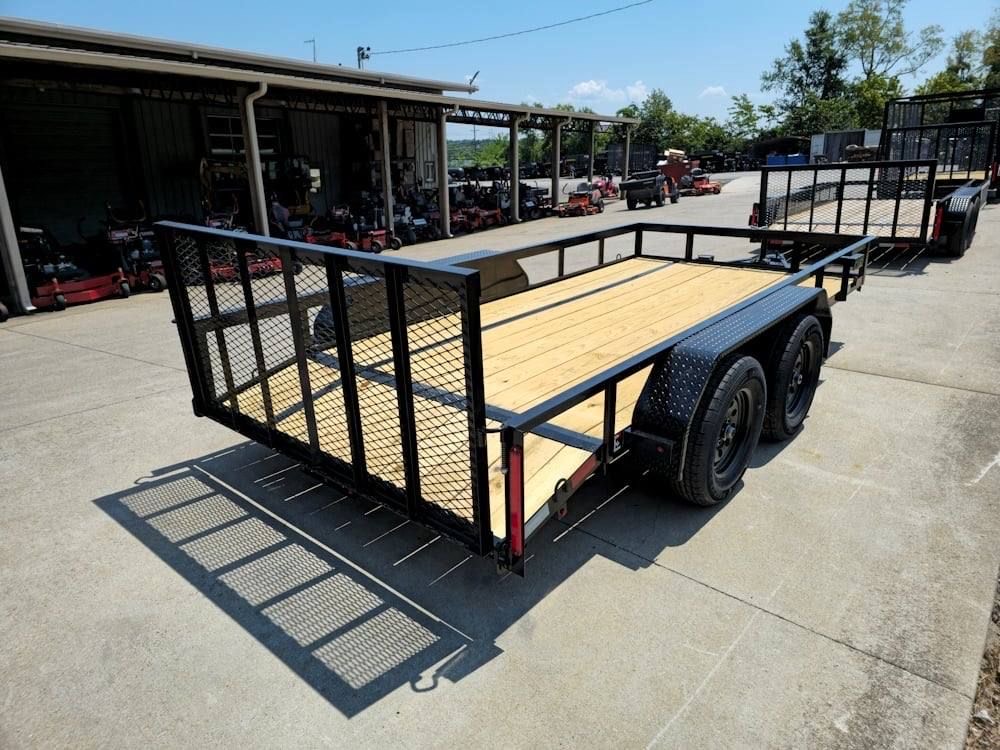
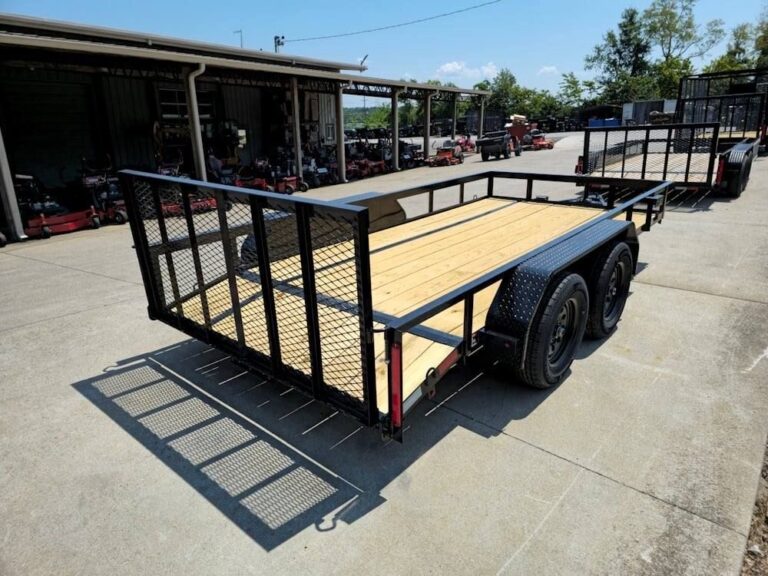
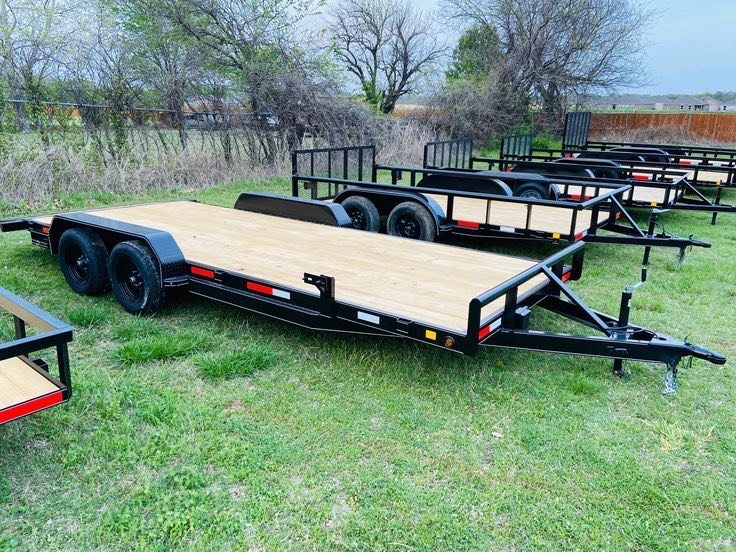
A tandem axle utility trailer has two axles, typically with two wheels on each side of the trailer.
This configuration is commonly used for larger or heavier-duty trailers.
Tandem axle utility trailers may be better suited for applications involving:
- Heavier equipment
- Commercial hauling
- Multiple pieces of equipment
- Larger landscaping operations
- Heavy building materials
- Larger recreational equipment
A tandem axle configuration can provide a different level of load distribution and road handling compared with a single axle trailer.
However, more axles do not automatically mean every tandem axle trailer is the right choice for every buyer.
Your decision should still be based on your intended cargo, trailer specifications, and towing setup.
Single Axle vs Tandem Axle: The Main Differences
Feature | Single Axle Utility Trailer | Tandem Axle Utility Trailer |
|---|---|---|
Number of axles | One | Two |
Typical use | Light to moderate hauling | Moderate to heavier hauling |
Maneuverability | Often easier in tight spaces | Can be more difficult in tight spaces |
Maintenance | Fewer components to maintain | More tires, wheels, and components |
Purchase cost | Often lower | Often higher |
Weight capacity | Depends on trailer specifications | Often designed for higher-capacity applications |
Road handling | Suitable for many everyday loads | Often preferred for larger and heavier loads |
The most important point is that the actual specifications of the individual trailer always matter.
You should never choose a trailer based only on the number of axles.
Which Trailer Can Carry More Weight?
In many cases, tandem axle utility trailers are designed for heavier hauling applications.
This is because the load can be supported by a two-axle configuration rather than a single axle.
However, you should always check the actual:
- GVWR
- Payload capacity
- Axle ratings
- Tire ratings
- Manufacturer specifications
A tandem axle trailer may have a higher overall capacity, but the exact carrying limit depends on the specific trailer.
Before deciding which configuration you need, it is important to understand how trailer capacity works. Read How Much Weight Can a Utility Trailer Carry? Understanding Payload and GVWR to learn how GVWR, empty weight, and payload capacity affect your hauling decisions.
The key question should be:
How much weight do I actually need to haul regularly?
Is a Single Axle Trailer Easier to Maneuver?
For many buyers, a single axle trailer can be easier to maneuver.
Because these trailers are often smaller and have a simpler configuration, they may be more convenient when:
- Backing into tight spaces
- Moving around smaller properties
- Parking
- Storing the trailer
This can make a single axle trailer attractive for homeowners and buyers who use a trailer occasionally.
However, the actual length and design of the trailer also affect maneuverability.
A large single axle trailer may still be more difficult to maneuver than a smaller trailer.
That is why trailer size and axle configuration should be considered together.
Are Tandem Axle Trailers Better for Heavy Loads?
Tandem axle trailers are commonly used for heavier-duty applications.
They may be a better choice when regularly hauling:
- Heavy machinery
- Multiple lawn mowers
- Commercial landscaping equipment
- Larger equipment
- Heavy construction materials
The additional axle configuration can make tandem axle trailers more suitable for certain larger and heavier applications.
However, buyers should not simply assume that they need a tandem axle trailer because they occasionally carry a heavy load.
Instead, consider your regular hauling requirements.
If your heaviest loads are occasional, your buying decision may be different from someone who transports heavy equipment every day.
Always compare your expected load with the trailer’s actual ratings.
Single Axle vs Tandem Axle for Landscaping
The right choice for landscaping depends largely on the size of your operation and the equipment you transport.
Small Landscaping Operations
A single axle utility trailer may be sufficient for a smaller operation hauling:
- One mower
- Trimmers
- Blowers
- Hand tools
- Light equipment
Larger Landscaping Operations
A tandem axle trailer may make more sense when regularly hauling:
- Multiple mowers
- Larger landscaping equipment
- Additional tools
- Heavy commercial equipment
Your decision should be based on the combined weight and physical size of all the equipment you normally transport.
If your landscaping work also involves hauling loose materials such as:
- Mulch
- Gravel
- Soil
- Stone
- Debris
you may want to consider whether Dump Trailers would be more practical for those specific jobs.
Single Axle vs Tandem Axle for ATVs
The number and size of ATVs you transport can also influence your choice.
A single axle utility trailer may be suitable for lighter recreational hauling, depending on the weight and dimensions of the ATV.
A tandem axle configuration may be more appropriate when hauling:
- Multiple ATVs
- Larger recreational vehicles
- Additional equipment
Before choosing, measure and weigh your equipment.
A trailer may have enough physical deck space while still lacking sufficient payload capacity.
This is why understanding both size and weight is essential.
Stability and Road Handling
Trailer handling can be influenced by several factors, including:
- Trailer design
- Weight distribution
- Cargo placement
- Suspension
- Axle configuration
- Tire condition
- Road conditions
Tandem axle trailers are commonly preferred for larger and heavier hauling applications because of their configuration and load distribution.
However, proper loading remains important regardless of how many axles a trailer has.
An improperly loaded trailer can create handling problems whether it has one axle or two.
Always make sure your cargo is loaded and secured appropriately according to the trailer and equipment manufacturer’s recommendations.
Maintenance Differences
Another important difference between single and tandem axle trailers is maintenance.
Single Axle Trailer Maintenance
A single axle trailer generally has fewer components to maintain.
This may include fewer:
- Tires
- Wheels
- Bearings
- Brake components, depending on configuration
This can make maintenance simpler.
Tandem Axle Trailer Maintenance
A tandem axle trailer has more components.
This means there may be:
- More tires to inspect
- More wheels
- Additional bearings
- Additional brake components, depending on the trailer
Regular inspection and maintenance are important for both configurations.
Cost Differences
Single axle trailers are often less expensive than comparable tandem axle trailers because they generally have a simpler configuration.
Tandem axle trailers may cost more due to:
- Additional axle components
- Additional wheels and tires
- Larger or heavier-duty construction
However, purchase price should not be the only factor in your decision.
Buying a less expensive trailer that does not meet your regular hauling needs can become more costly in the long term.
The best value is a trailer that appropriately matches your actual requirements.
Do You Really Need a Tandem Axle Trailer?
You may want to consider a tandem axle utility trailer if you regularly:
✔ Haul heavier loads
✔ Transport multiple pieces of equipment
✔ Use the trailer for commercial work
✔ Carry larger landscaping equipment
✔ Need a heavier-duty trailer configuration
A single axle trailer may be a practical option if you primarily:
✔ Haul lighter loads
✔ Use your trailer occasionally
✔ Need easier maneuverability
✔ Have limited storage space
✔ Transport smaller equipment
Again, these are general guidelines.
The actual trailer specifications should always determine whether it is suitable for your intended load.
Consider Your Tow Vehicle
Your tow vehicle is an important part of the decision.
A larger tandem axle trailer may have greater overall weight and capacity, but your vehicle must still be capable of safely towing the loaded combination.
Before choosing a trailer, check your vehicle manufacturer’s specifications for:
- Maximum towing capacity
- Hitch capacity
- Tongue weight limits
- Other towing requirements
Remember:
A trailer’s capacity does not automatically mean your tow vehicle can tow it fully loaded.
Your complete towing setup must be appropriate for the trailer and cargo.
When Another Trailer Type May Be Better
Sometimes the choice is not simply between a single axle and tandem axle utility trailer.
Your cargo may require an entirely different trailer category.
Hauling Wide or Large Equipment?
For certain equipment that requires additional deck width or a different loading platform, Deck-Over Trailers may be worth considering.
Hauling Loose Materials?
If your primary cargo includes gravel, mulch, soil, or construction debris, Dump Trailers may provide a more practical solution.
Protecting Equipment From Weather?
If you regularly haul valuable equipment, tools, or cargo that needs protection from rain and road exposure, Enclosed Cargo Trailers may be a better option.
Choosing the right trailer starts with understanding exactly what you need to transport.
Single Axle vs Tandem Axle: Which Should You Choose?
The best choice depends on your individual hauling requirements.
Choose a Single Axle Utility Trailer When:
- Your loads are generally lighter
- You need easier maneuverability
- You have limited storage space
- You use the trailer occasionally
- Your equipment fits within the trailer’s specifications
Consider a Tandem Axle Utility Trailer When:
- You regularly haul heavier loads
- You transport larger equipment
- You operate commercially
- You need greater capacity
- Your hauling requirements justify a larger configuration
The most important thing is to choose based on your actual cargo and specifications, rather than assuming that one configuration is automatically better than the other.
Final Thoughts: Single Axle vs Tandem Axle Utility Trailers
Both single axle and tandem axle utility trailers can be excellent choices for the right application.
A single axle trailer can be practical for lighter-duty hauling and buyers who value simplicity and maneuverability.
A tandem axle trailer may be better suited for larger and heavier-duty hauling requirements.
Before making your decision, consider the complete buying process:
What are you hauling? → What size do you need? → How much weight will you carry? → Which axle configuration best matches those requirements?
If you are still comparing your options, start with our complete Utility Trailer Buying Guide to understand the major factors involved in choosing the right trailer.
Once you know what configuration fits your needs, browse our available Utility Trailers to explore suitable options.
For other hauling requirements, explore our Utility Trailers, Deck-Over Trailers, Lowdeck Trailers, Enclosed Cargo Trailers, Horse Trailers & Stock Trailers, and Accessories.
For safe towing and loading practices, visit the NHTSA trailer safety guidelines.
Final Thoughts: Single Axle vs Tandem Axle Utility Trailers
Both single axle and tandem axle utility trailers can be excellent choices for the right application.
A single axle trailer can be practical for lighter-duty hauling and buyers who value simplicity and maneuverability.
A tandem axle trailer may be better suited for larger and heavier-duty hauling requirements.
Before making your decision, consider the complete buying process:
What are you hauling? → What size do you need? → How much weight will you carry? → Which axle configuration best matches those requirements?
If you are still comparing your options, start with our complete Utility Trailer Buying Guide to understand the major factors involved in choosing the right trailer.
Once you know what configuration fits your needs, browse our available Utility Trailers to explore suitable options.
For other hauling requirements, explore our Utility Trailers, Deck-Over Trailers, Lowdeck Trailers, Enclosed Cargo Trailers, Horse Trailers & Stock Trailers, and Accessories.
For safe towing and loading practices, visit the NHTSA trailer safety guidelines.
