

Table of Contents
ToggleHow Much Weight Can a Utility Trailer Carry? Understanding Payload and GVWR
One of the most important questions to answer before buying or loading a utility trailer is: How much weight can a utility trailer carry?
The answer depends on the specific trailer. Utility trailers come in different sizes and configurations, and their carrying capacity can vary significantly.
Before diving into payload and GVWR, it’s helpful to understand the complete buying process. Read our Utility Trailer Buying Guide: How to Choose the Right Utility Trailer for Your Needs to learn how trailer size, intended use, towing requirements, features, and capacity all work together when choosing the right trailer.
Once you’ve identified the type of utility trailer that fits your needs, understanding its weight capacity is essential before you start hauling equipment or materials.
A utility trailer’s carrying capacity depends on several factors, including:
- GVWR
- Empty weight
- Payload capacity
- Axle configuration
- Tires and wheels
- Frame construction
This guide explains what these terms mean and how to determine whether a utility trailer can safely handle your intended load.
What Determines How Much Weight a Utility Trailer Can Carry?
A utility trailer’s capacity is determined by its overall design and components.
The most important specifications include:
- GVWR
- Empty trailer weight
- Payload capacity
- Axle capacity
- Tire ratings
Understanding these terms can help you avoid one of the most common trailer-buying mistakes: choosing a trailer that is physically large enough for your cargo but not strong enough to safely carry its weight.
If you have already determined the dimensions you need, read What Size Utility Trailer Do You Need? A Complete Size Guide to understand how trailer length and width should match your cargo.
Once you understand both your size and weight requirements, you can browse our available Utility Trailers and compare configurations that fit your hauling needs.
What Is GVWR?
GVWR stands for Gross Vehicle Weight Rating.
For a trailer, GVWR represents the maximum total weight the trailer is designed to weigh when fully loaded.
This includes:
The weight of the trailer + the weight of the cargo
For example, imagine a utility trailer has a GVWR of 7,000 lbs.
That does not mean you can automatically put 7,000 lbs of cargo on the trailer.
You first need to subtract the trailer’s own empty weight.
This is where payload capacity becomes important.
What Is Payload Capacity?
Payload capacity is the amount of cargo a trailer can carry within its rated limits.
A simple way to understand it is:
Payload Capacity = GVWR − Empty Trailer Weight
Example
Suppose a trailer has:
- GVWR: 7,000 lbs
- Empty trailer weight: 2,000 lbs
The approximate payload capacity would be:
7,000 lbs − 2,000 lbs = 5,000 lbs
That means the trailer could carry approximately 5,000 lbs of cargo, assuming all applicable ratings and operating limits are respected.
This is why buyers should never look at GVWR alone when determining how much weight they can haul.
Utility Trailer Weight Capacity Examples
Utility trailers come in many different sizes and configurations, so their capacities can vary significantly.
Here is a general example:
Trailer Type | Typical Use | Capacity Depends On |
|---|---|---|
Small utility trailer | Light household hauling | Frame, axle and tire ratings |
Medium utility trailer | Lawn equipment and ATVs | GVWR and trailer configuration |
Larger utility trailer | Commercial equipment | Axles, frame and overall ratings |
Heavy-duty utility trailer | Heavier equipment and materials | Full trailer specifications |
The actual capacity of any trailer should always be confirmed using the manufacturer’s specifications and ratings.
Never assume that two trailers with the same dimensions have the same payload capacity.
Why Trailer Size Does Not Equal Weight Capacity
A common misunderstanding is believing that a larger trailer automatically carries more weight.
That is not always true.
For example, a larger trailer with lighter-duty components could have a lower payload capacity than a smaller trailer built with heavier-duty axles and a stronger frame.
When choosing a trailer, you need to consider both:
Physical Capacity
Does the trailer have enough deck space for your cargo?
Weight Capacity
Can the trailer safely support the weight of your cargo?
This is why choosing the right trailer requires looking at both dimensions and specifications.
What Size Utility Trailer Do You Need? A Complete Size Guide can help you determine the physical dimensions needed for your equipment before comparing payload requirements.
How Do Axles Affect Utility Trailer Capacity?
The axle configuration plays an important role in determining a trailer’s overall design and intended capacity.
Utility trailers may use:
- A single axle
- Tandem axles
Single-Axle Utility Trailers
Single-axle trailers are commonly used for lighter-duty hauling applications.
They may be easier to maneuver and can be a practical option for smaller loads and everyday use.
However, the actual capacity depends on the complete trailer specifications—not simply the fact that it has one axle.
Tandem-Axle Utility Trailers
Tandem-axle trailers use two axles and are commonly found on larger or heavier-duty trailers.
They may be better suited for applications requiring greater load capacity and stability.
However, buyers should always compare the complete specifications of the trailer they are considering.
The number of axles alone does not tell you everything about how much weight a trailer can safely carry.
Tires and Wheels Also Matter
The trailer’s tires and wheels are an important part of its overall load-carrying system.
Even if the frame and axles are designed for a particular load, the tires must also be properly rated for the trailer’s intended use.
Before hauling heavy cargo, check:
- Tire load ratings
- Tire condition
- Tire pressure requirements
- Wheel ratings
Never overload a trailer based on assumptions about what its tires or wheels can handle.
The trailer should always be operated within its manufacturer’s specified limits.
How Much Weight Can You Safely Put on a Utility Trailer?
The safest answer is:
Only as much as the trailer is rated to carry.
To determine whether your load is appropriate:
1. Find the Trailer’s GVWR
This is usually listed on the manufacturer’s documentation or trailer certification label.
2. Determine the Trailer’s Empty Weight
This is the weight of the trailer without cargo.
3. Calculate the Available Payload
Use:
GVWR − Empty Trailer Weight = Approximate Payload Capacity
4. Weigh Your Cargo
Estimate or confirm the total weight of everything being loaded.
5. Check All Relevant Ratings
Your cargo should remain within the applicable ratings for the trailer and its components.
What Happens If You Overload a Utility Trailer?
Overloading a utility trailer can create serious problems.
An overloaded trailer may place excessive stress on:
- Axles
- Tires
- Wheels
- Frame
- Suspension components
- Hitch and coupler systems
It can also negatively affect:
- Braking
- Steering
- Stability
- Tire performance
Overloading may increase the risk of equipment damage and unsafe towing conditions.
For this reason, buyers should choose a trailer based on their heaviest expected regular load, not simply their lightest or occasional loads.
Consider the Weight of Everything You Load
When calculating your cargo weight, don’t forget additional items.
For example, if you’re hauling landscaping equipment, the total load may include:
- Lawn mower
- Trimmers
- Blowers
- Fuel containers
- Hand tools
- Additional equipment
The weight of these items can add up.
The same applies to construction work, recreational equipment, and commercial hauling.
Always consider the total loaded weight, not just the weight of the largest item.
Utility Trailer Capacity for Landscaping Equipment
Landscaping is one of the most common uses for utility trailers.
However, buyers should carefully calculate the combined weight of their equipment.
A trailer carrying one mower may have very different requirements from a trailer carrying:
- Multiple mowers
- Trimmers
- Blowers
- Tools
- Additional landscaping equipment
If your work regularly involves hauling loose materials such as mulch, soil, gravel, or debris, a utility trailer may not always be the most practical choice.
For jobs where bulk materials need to be unloaded efficiently, Dump Trailers may be a better option.
The best trailer depends on whether you are primarily hauling equipment or loose materials.
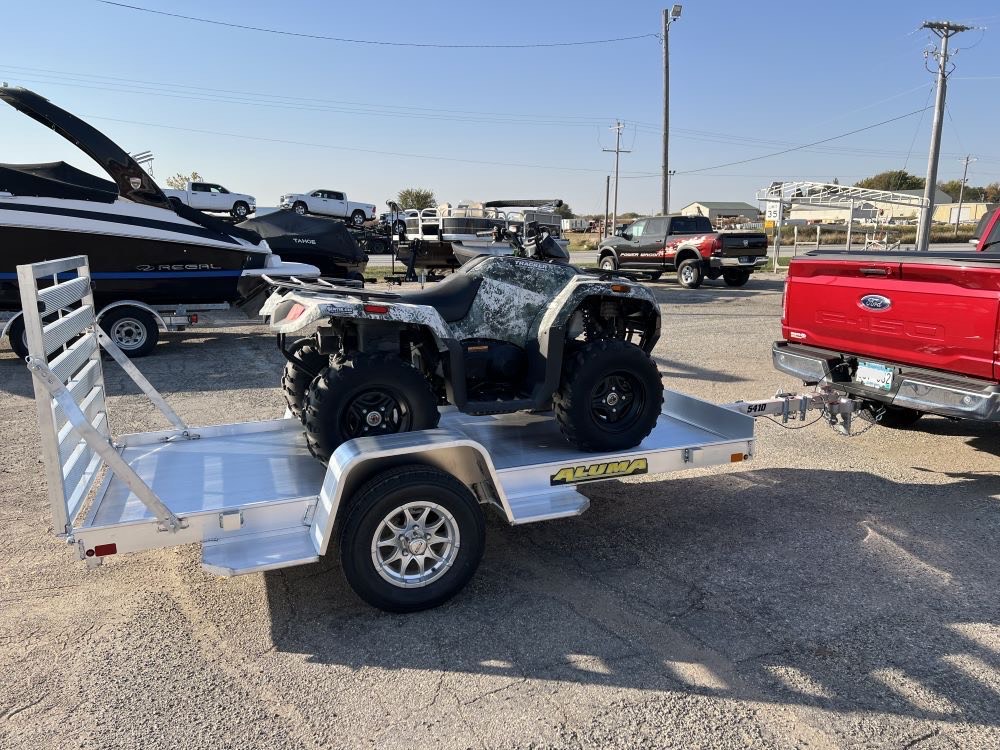
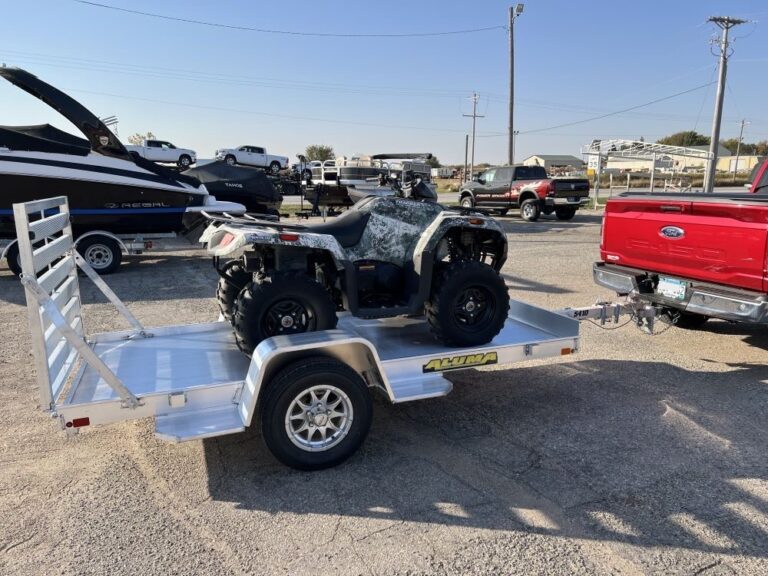
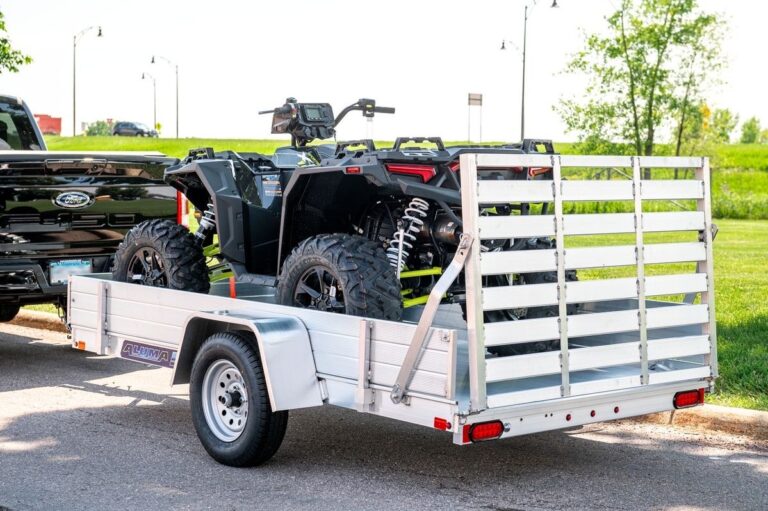
Utility Trailer Capacity for ATVs and Equipment
ATVs and other equipment should be evaluated based on their actual weight—not simply whether they physically fit on the trailer.
Before loading, consider:
- The weight of each ATV
- The number of vehicles
- Additional equipment
- Fuel and accessories
A trailer may have enough deck space for multiple ATVs while still having insufficient payload capacity for their combined weight.
This is another example of why size and capacity must always be considered together.
Your Tow Vehicle Also Has Limits
The utility trailer itself is only one part of the towing combination.
Your tow vehicle must also be capable of safely towing the loaded trailer.
Before hauling, check your vehicle manufacturer’s specifications for:
- Maximum towing capacity
- Hitch capacity
- Tongue weight limits
- Other applicable towing recommendations
Remember:
Trailer Capacity ≠ Tow Vehicle Towing Capacity
A trailer may be rated to carry a particular load, but your tow vehicle may have a lower towing limit.
The entire towing setup must be appropriate for the loaded trailer.
For a broader explanation of choosing the right trailer based on your complete hauling needs, return to our Utility Trailer Buying Guide.
When Should You Consider a Different Trailer Type?
A utility trailer is highly versatile, but heavier or specialized loads may require another trailer configuration.
Heavy or Wide Equipment
If your equipment requires a different loading platform or additional usable deck width, Deck-Over Trailers may be worth considering.
Loose Materials
For gravel, soil, mulch, debris, and other bulk materials, Dump Trailers can provide a more practical unloading solution.
Equipment That Needs Weather Protection
If protecting your cargo from rain and weather is important, Enclosed Cargo Trailers may be a better fit.
Choosing the right trailer category should always begin with understanding what you actually plan to haul.
How to Choose the Right Utility Trailer Capacity
Before purchasing a utility trailer, ask yourself:
What Is My Heaviest Regular Load?
Choose based on the loads you expect to haul frequently.
What Additional Equipment Will Be on the Trailer?
Don’t forget tools, accessories, and other cargo.
Do I Need Room for Future Growth?
Your hauling needs may increase over time.
What Can My Tow Vehicle Safely Handle?
Check your vehicle’s manufacturer specifications.
Do I Need a Different Trailer Configuration?
The type of cargo may determine whether a utility trailer is the best choice.
Once you’ve considered these factors, explore our Utility Trailer collection to compare available options.
Quick Utility Trailer Weight Checklist
Before loading your trailer:
✔ Know the trailer’s GVWR
✔ Know the trailer’s empty weight
✔ Understand its payload capacity
✔ Calculate the weight of your cargo
✔ Check axle and tire ratings
✔ Consider additional equipment and accessories
✔ Make sure your tow vehicle is appropriately rated
✔ Never exceed the manufacturer’s specified limits
Final Thoughts: How Much Weight Can a Utility Trailer Carry?
The amount of weight a utility trailer can carry depends on its specific design and ratings.
The most important number for buyers is often the payload capacity, which is determined by the difference between the trailer’s GVWR and its empty weight.
Before purchasing or loading a trailer, make sure you understand:
How much space you need → How much weight you need to carry → What configuration best suits the job.
If you already know the type of load you plan to haul, browse our available Utility Trailers to compare options that may suit your needs.
And if you’re still working through the complete buying process, read our Utility Trailer Buying Guide for a broader look at choosing the right utility trailer.
For other hauling requirements, explore our Utility Trailers, Deck-Over Trailers, Lowdeck Trailers, Enclosed Cargo Trailers, Horse Trailers & Stock Trailers, and Accessories.
For safe towing and loading practices, visit the NHTSA trailer safety guidelines.
